Alex Eala: A Rising Tennis Star with Massive Potential
On a humid New York afternoon, long before the stars wander onto Arthur Ashe, a different kind of main event is unfolding on the outer courts. It is only a practice session, technically. Yet fans are packed three and four deep, phones raised, flags draped over shoulders. All of it for a 21-year-old from the Philippines whose rise is starting to feel less like a tennis story and more like a movement.
Alex Eala hasn’t yet won a Grand Slam. Her global breakthrough is still being written in real time. But the money, the marketing muscle, the sheer gravitational pull around her — those are already operating at elite level.
And one of the sport’s most powerful dealmakers believes this is only the warm-up act.
A Bold Prediction From Tennis’ Power Broker
Max Eisenbud, the man who helped turn Maria Sharapova, Coco Gauff and Emma Raducanu into commercial juggernauts, is not given to timid forecasts. As head of client representation at WME Sports and IMG Tennis, he lives in the hard numbers of contracts and campaigns.
His view of Eala’s ceiling is staggering.
“I feel very confident that by 2027, she will be the second-highest-paid female athlete in the world, behind Coco [Gauff],” Eisenbud told Forbes.
Strip away the hype and the projection still lands with force. To sit just behind Gauff on the global earnings table would mean vaulting past established stars from multiple sports — and doing it in barely a three-year window. For a player still carving out her place in the top 20, that sounds audacious.
Yet when you follow the money, the picture sharpens.
Seven Figures Off the Court — And Rising
Over the last 12 months, Forbes estimates Eala has earned more than $5 million off the court before taxes and management fees. Add $1.7 million in prize money from the 2026 season, and the financial base of her rise comes into view.
This is not a sudden rush of opportunistic brands. It is a portfolio built over time, now accelerating.
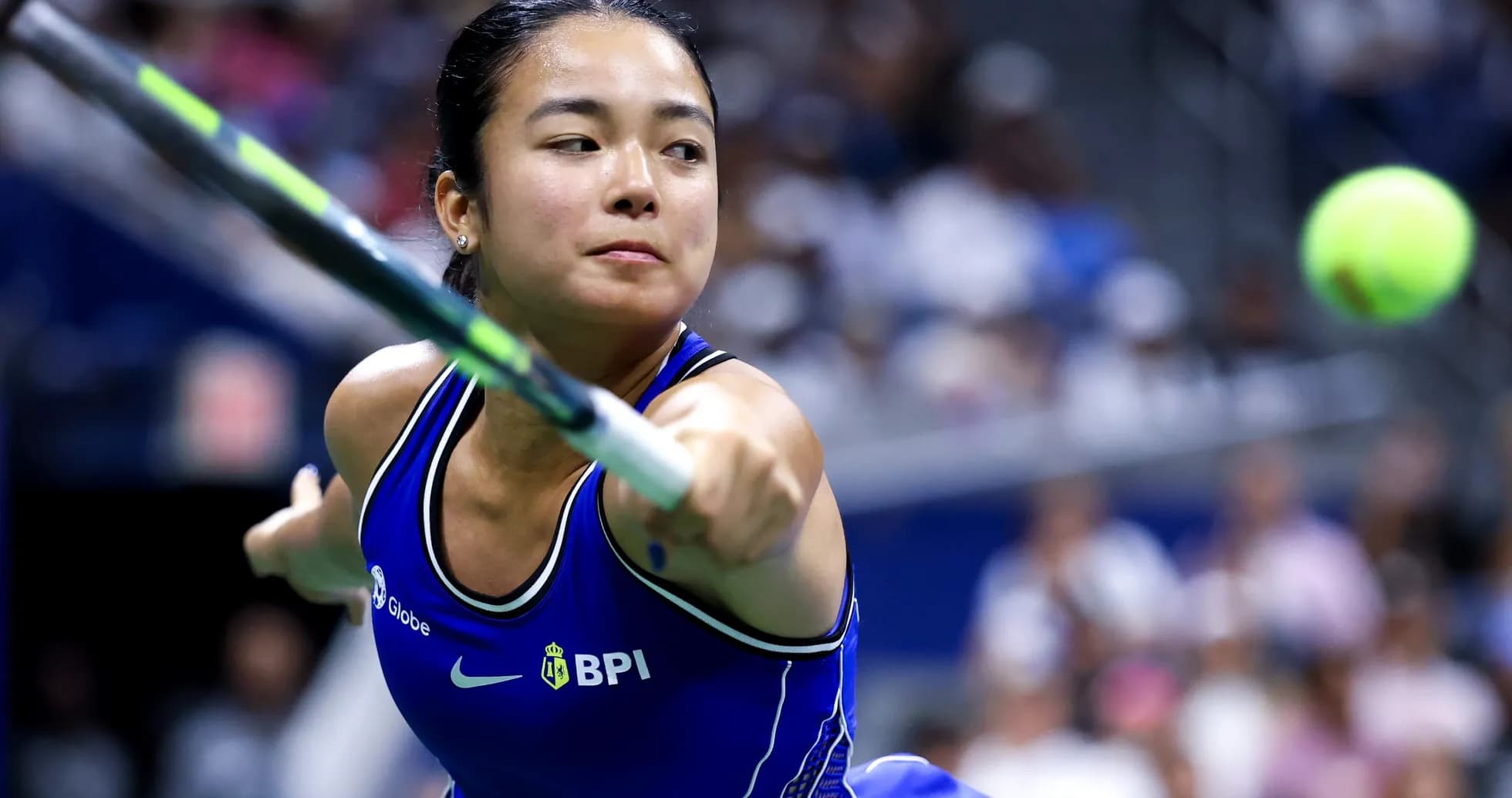
Globe Telecom spotted her before almost anyone else, signing her as an ambassador when she was just 8. Babolat backed her through her junior years. Nike came on board in 2019. Bank of the Philippine Islands joined in 2022. Locally arrived in 2025, Milo in February 2026.
Those early bets are now paying off — for both sides.
Nike has leaned into her heritage, rolling out sampaguita-inspired merchandise and apparel that speak directly to Filipino pride. It is not just a logo on a dress; it is a story on a global stage.
And the value of that space on her kit has exploded. According to Forbes, Globe and BPI signed new four-year agreements at the start of 2026, each worth more than $1 million annually just for patches on her Nike outfit. Eisenbud says seven figures is now essentially the entry fee for any brand wanting to join the queue.
The numbers are no longer speculative. They are baked into contracts, locked in for years.
New York Gets a First-Hand Look
The balance sheet only tells part of it. The rest is playing out in real time at the U.S. Open.
During Fan Week, Eala’s practice sessions turned into events. Courts that usually host sleepy tune-ups suddenly looked like mini stadiums, packed with Filipino fans waving flags, chanting, turning routine drills into must-see viewing around the grounds.
Tournament organizers noticed. So did other players.
Then came the Stars of the Open exhibition at Arthur Ashe Stadium. Eala shared the biggest stage in tennis with American rising star Iva Jovic, and the atmosphere crackled. It was an exhibition in name, but the crowd response said something else: this was a preview.
The U.S. Open reacted decisively. Eala’s opening-round match against American qualifier Mary Stoiana has been slated for Louis Armstrong Stadium, the second-largest arena at the USTA Billie Jean King National Tennis Center.
For a player ranked No. 18 in the world, Armstrong is not a given. It is a choice. Tournament director Eric Butorac has acknowledged that organizers felt compelled to put her on a major court after seeing the frenzy around her during Fan Week. Ticket prices have surged accordingly.
For an athlete trying to convert national adoration into global superstardom, that kind of stage is priceless.
Chasing Gauff, Chasing the Summit
The gap she must close to reach Eisenbud’s prediction remains steep.
Forbes estimated that Coco Gauff earned $25 million off the court in 2025. Freestyle skier Eileen Gu followed at $23 million, Chinese tennis star Qinwen Zheng at $21 million. Aryna Sabalenka and Iga Swiatek each sat at an estimated $15 million.
Eala is not in that neighborhood yet. But she has something many of them did not possess at 21: an enormous, unified, and mobilized fan base that travels.
On the court, the progress is clear. She is already up to No. 18 in the world after a season highlighted by her first WTA singles title in Washington, where she became the first Filipino to win a WTA Tour-level singles championship. That kind of milestone matters in the sport’s history books — and in the boardrooms where global campaigns are drawn up.
Off the court, the differentiator is the scale and intensity of her following. Filipino fans have trailed her from Washington to New York, filling practice courts, injecting life into exhibitions, and helping push her U.S. Open debut onto Louis Armstrong.
Brands can buy billboards and commercials. They cannot buy that.
Former world No. 1 Andy Roddick told Forbes that Eala is bringing a massive new audience to tennis. Eisenbud, who has already ridden the commercial waves of Sharapova, Gauff and Raducanu, now sees many of the same elements coalescing around Eala: youth, results, charisma, and a country that rallies behind her every swing.
The Missing Piece
There is still one box left to tick.
The attention is there. The sponsors are in. The stadiums are filling. What remains is the hardest part: turning promise into Grand Slam permanence.
Sustained success at the majors is what separates a lucrative career from a generational one. It is what turned Sharapova into a global icon, what propelled Gauff into that $25 million off-court stratosphere, what keeps Swiatek and Sabalenka at the center of the conversation.
If Eala can push deep into the second weeks of Slams — if she can turn Armstrong nights into Ashe nights, and Ashe nights into trophy Sundays — the projections Eisenbud is making will stop sounding bold and start sounding inevitable.
For now, the scenes in New York feel like a hinge moment. Packed practice courts. Exhibition roars on Ashe. A prime-time slot on Armstrong. An army of Filipino fans making their presence felt at every turn.
Years from now, those images may be remembered as the instant when the rest of the sports business finally caught up to what her supporters already believed: Alex Eala was never just another rising player.
She was the start of something much bigger.