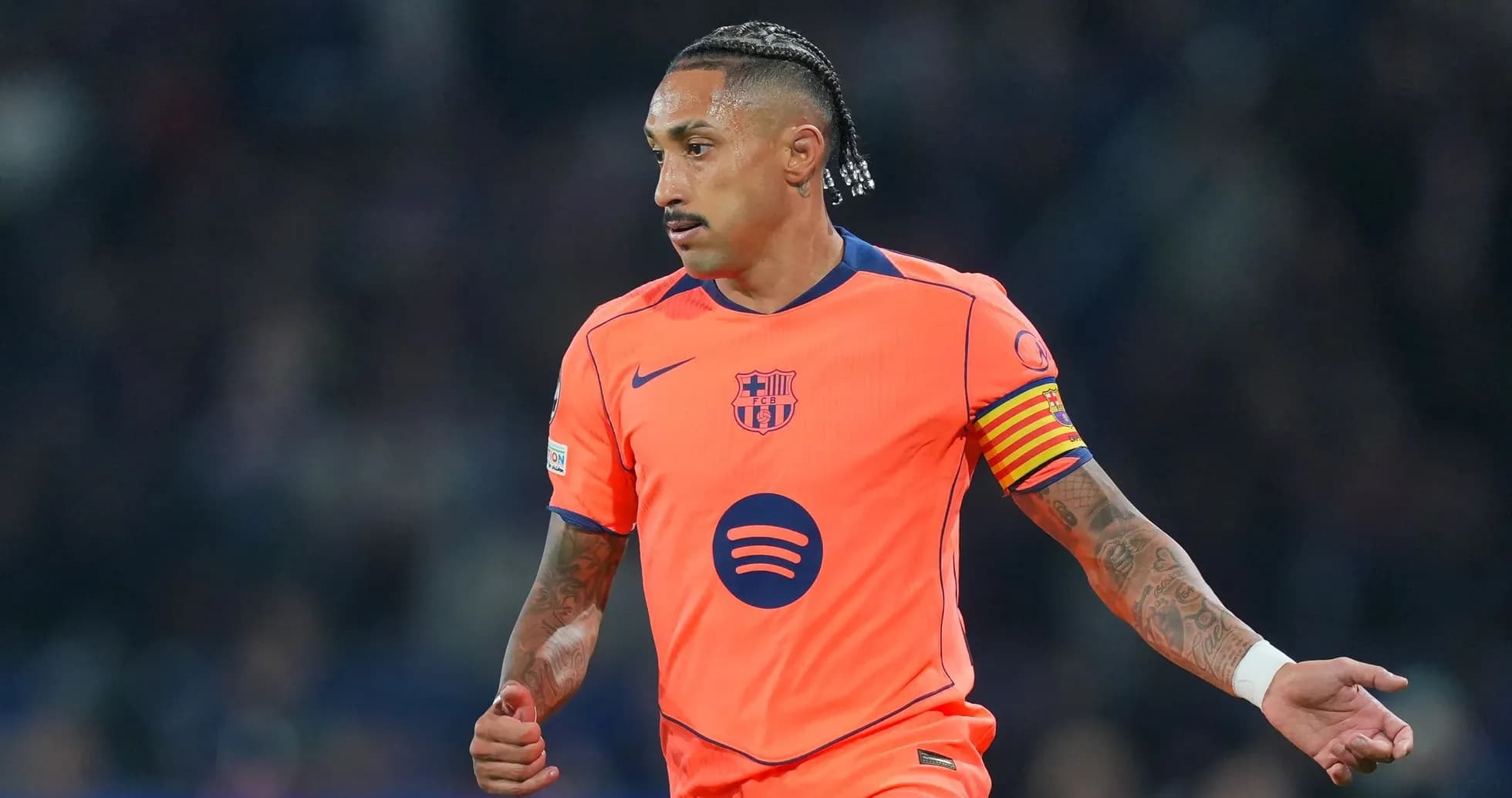
Ancelotti Stands Firm on Raphinha Inclusion for Brazil
Carlo Ancelotti has never been one to flinch in the face of club pressure, and he is not starting now.
Despite pointed complaints from Barcelona president Joan Laporta, the Brazil head coach has named Raphinha in his squad for the Selecao’s upcoming friendlies in Singapore, a decision that reopens an old fault line between European powerhouses and national teams over player welfare and control.
Ancelotti draws his line
On Thursday, at CBF headquarters in Rio de Janeiro, Ancelotti confirmed that the 29-year-old winger will board the long-haul flight to Asia for matches against Japan and the hosts. It is a bold call.
Raphinha has only just returned from a muscular injury picked up on Brazil duty in Australia during the last international break. Now he faces another gruelling trip of almost 22,000 kilometres from Barcelona to Singapore and back, a logistical headache that has left nerves frayed at the Spotify Camp Nou.
Laporta has already gone public with his frustration over the congested international calendar, arguing that clubs are being stretched to breaking point. Ancelotti listened. He did not bend.
“We maintain good relations with Brazilian clubs and with European clubs, with whom we share information about the players. In general, this relationship is good,” he said, as quoted by SPORT, calmly asserting that the final word on Brazil’s squad remains his.
The message was unmistakable: consultation, yes. Concessions, only on his terms.
Country before club
When the conversation turned to pressure from European directors, Ancelotti’s tone hardened. The Brazil job is not a side project for him; it is a reconstruction.
He is charged with rebuilding a national team that has faltered in recent major tournaments, and he treats every FIFA window as non-negotiable preparation time. In that context, compromise has limits.
On one front, he has shown a softer hand. Brazilian clubs locked in a domestic title fight, such as Flamengo and Palmeiras, have been spared. Ancelotti has decided not to disrupt squads in the decisive phase of the league, limiting his calls to one player per Brazilian team and leaving those two giants untouched.
“This is a sensitive moment, that's why we've only called up one player per team and decided not to bring anyone from Flamengo or Palmeiras because they are fighting for the title,” he explained.
European clubs, though, do not get the same protection. For them, Ancelotti insists his “spine” must travel, regardless of fixture congestion or the noise from boardrooms across the Atlantic.
“We have no particular requests, nor do we need them. In the FIFA dates, we will call the players that we consider important for the Brazilian national team,” he said. No caveats, no apologies.
Raphinha as a pillar of the new cycle
Raphinha is not just another name on the list. In Ancelotti’s mind, he is one of the five pillars of a new World Cup cycle.
The Italian is trying to blend a wave of young talent with a core of seasoned figures who know the demands of the highest level. This squad contains fifteen players under the age of 23, including nine of Olympic age, a clear signal that the long-term rebuild has already begun.
“We have started a renewal project and now is the ideal time to do it. In September, we started evaluating younger players and now we continue doing so with these players who can be the future of the Selecao. We have made a balanced call-up, but in which there are nine players of Olympic age and up to fifteen under 23 years old,” Ancelotti said.
Against that backdrop, he has ring-fenced experience. Five players from the last World Cup — Marquinhos, Gabriel Magalhaes, Bruno Guimaraes, Vinícius Junior and Raphinha — have been singled out as the backbone of the side that will aim for Copa America and, beyond that, another shot at the World Cup.
“We've chosen five players who were at the last World Cup and who will be important for this new cycle in which we'll compete in the Copa America and another World Cup. These players are Marquinhos, Gabriel Magalhaes, Bruno Guimaraes, Vinícius Junior, and Raphinha.”
From Ancelotti’s perspective, leaving Raphinha out now would not just be a nod to Barcelona’s concerns. It would cut across the architecture of his entire project.
Tactical evolution and the number nine question
The debate is not only about travel and muscle fatigue. It is also about what version of Raphinha Brazil will get.
Under Hansi Flick at Barcelona, the Brazilian has been pushed into new territory, operating at times as a central striker or a roaming number nine rather than his more familiar role on the flanks. That positional shift adds an extra layer of intrigue to his involvement with the national team.
Asked whether he plans to mirror Flick’s experiment, Ancelotti kept his cards close to his chest.
“We have versatile forwards who can occupy various positions. I focus on what we can do and not on the quality of our opponents. We will continue playing with three midfielders and three forwards,” he said.
It was a glimpse into his thinking, not a tactical blueprint. The shape will remain a 4-3-3, the front line fluid, and Raphinha one of several attackers asked to move, interchange and adapt.
What is not in doubt is that, for Ancelotti, Raphinha belongs in that conversation — even after an injury, even with a marathon trip ahead, even with Barcelona protesting from afar.
The friendlies in Singapore may look routine on paper. For Brazil’s coach, they are another step in a carefully plotted rebuild. For Raphinha, they are proof that, in this new Selecao, he is no longer just an option on the wing, but part of the spine Ancelotti refuses to touch.