Atlantic Division Preview: Champions and Contenders
The Atlantic Division has never been quiet. This year, it’s volatile.
A reigning champion in Manhattan. A superstar swap between Boston and Philadelphia. LeBron James walking into the Wells Fargo Center. Brooklyn loading up around a fragile star. Toronto quietly sharpening the edges of a deep, dangerous roster.
Training camp hasn’t even opened, and the Atlantic already feels like the league’s epicenter.
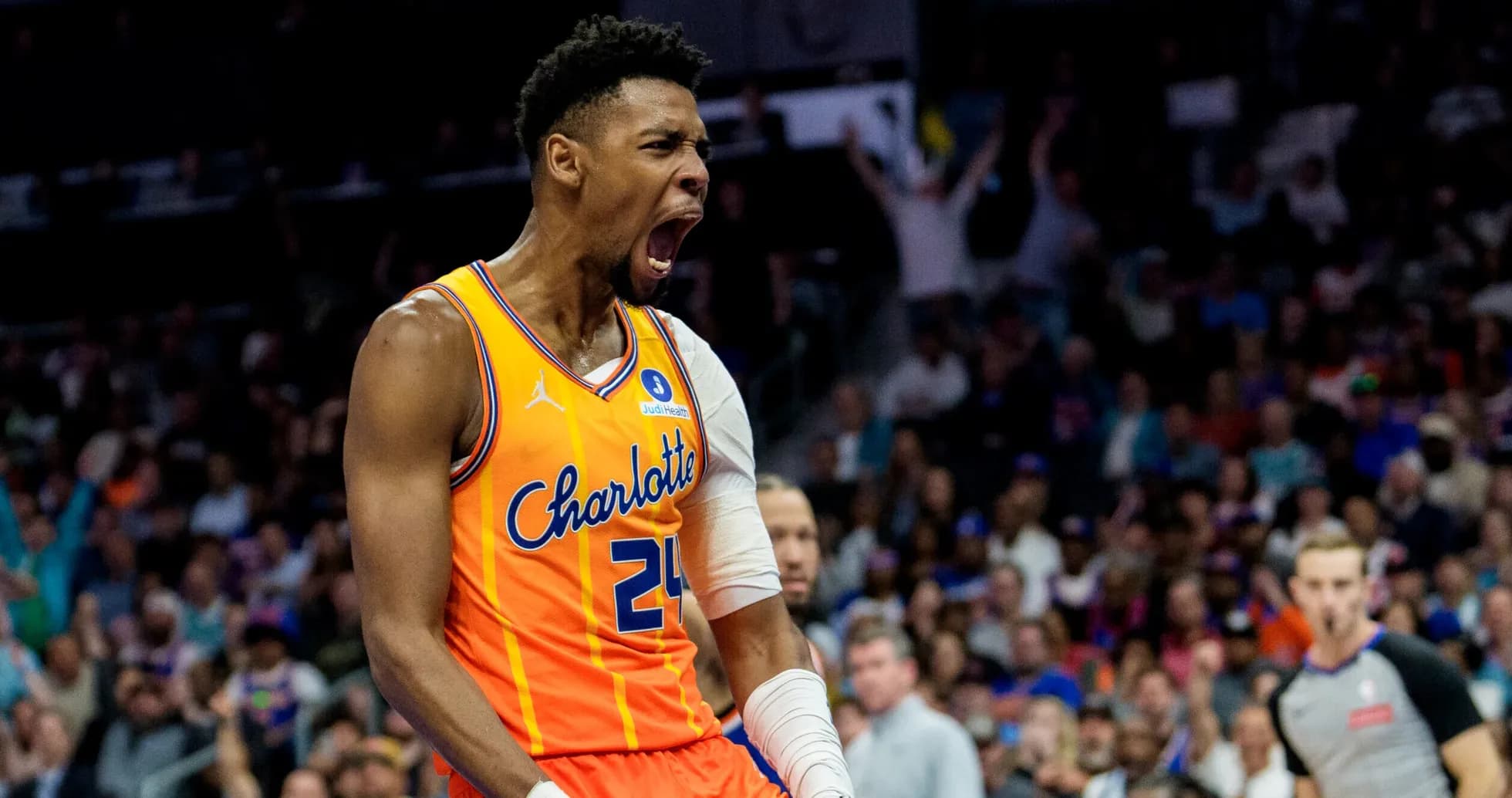
New York Knicks: From parade route to proving ground
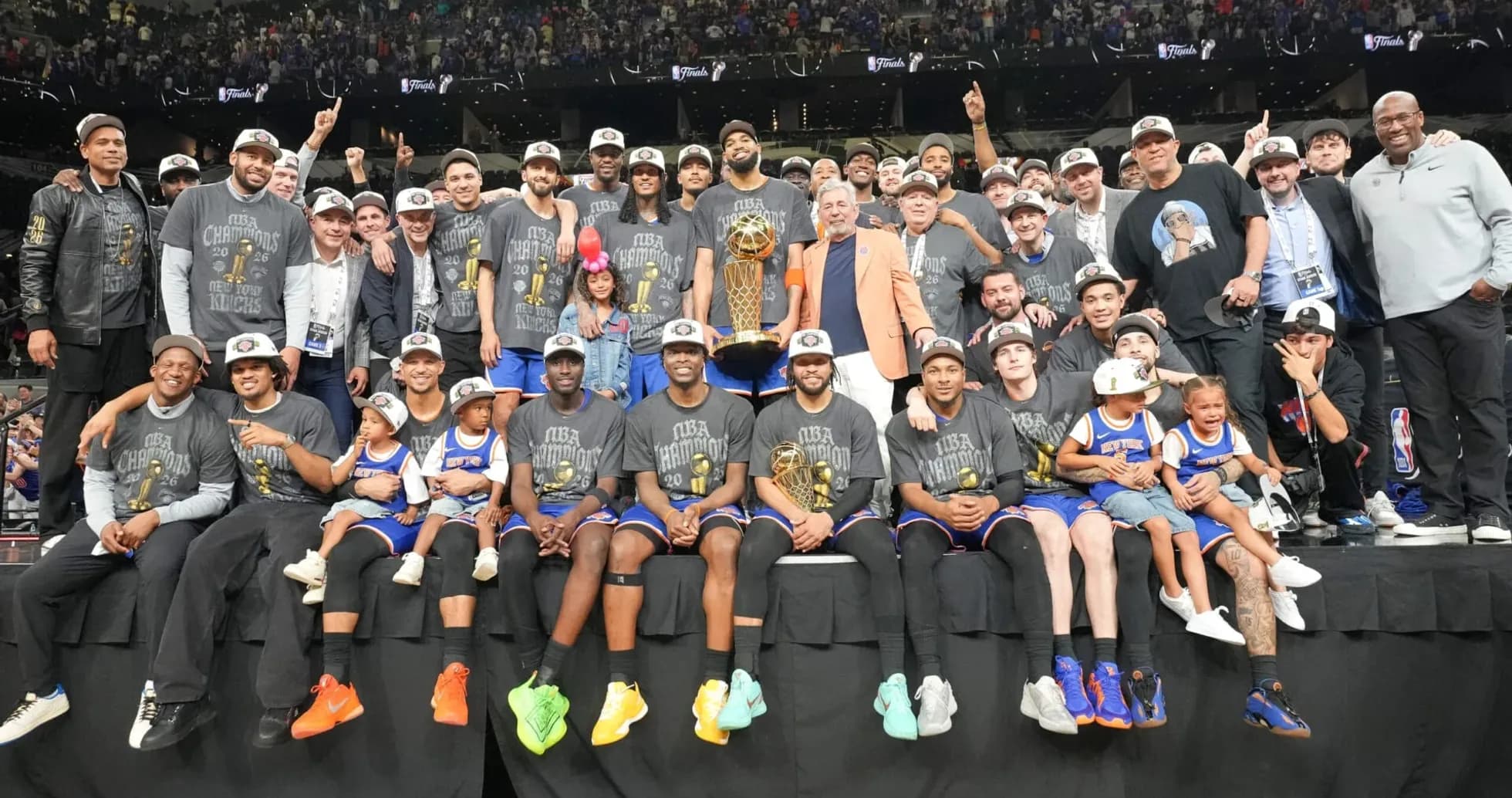
Fifty-three years of frustration ended in a shower of confetti. The Knicks went 53-29, then bulldozed their way to an NBA title and a long-overdue parade down the Canyon of Heroes. In a city that measures success in rings and headlines, they suddenly have both.
This summer, they chose stability over splash.
Mitchell Robinson is gone, cashing in with the Celtics. That’s the one real dent in the championship armor. New York responded with Andre Drummond, a veteran rebounder who knows exactly what his job is: spell Karl-Anthony Towns, own the glass, stay in his lane. Jack Kayil and Tyler Nickel arrive as depth pieces, not centerpieces.
And that’s the point. The core is untouched.
Karl-Anthony Towns. OG Anunoby. Josh Hart. And 2026 Finals MVP Jalen Brunson, the heartbeat of the franchise and the face of the turnaround.
There is no mandate to repeat. Not after half a century of waiting. But this group isn’t built like a one-year wonder. The Knicks have enough shooting, enough defense, and enough late-game shot creation to make the next banner chase feel like a continuation, not a miracle. In New York, the question has flipped: not “can they win one?” but “how long can they keep this window open?”
Boston Celtics: Life after Jaylen
Boston’s season never quite matched its record. Jayson Tatum missed most of the regular season. Jaylen Brown played at an MVP level, dragged the Celtics to 56 wins, and then watched it all unravel in the first round.
Now Brown is in Philadelphia. And the Celtics are trying to reinvent themselves on the fly.
The front office moved quickly. Mitchell Robinson arrives to anchor the paint, a classic rim-protecting big who gives Boston a vertical threat and a defensive backbone. Paul George comes in as the headliner, a two-way wing whose ceiling remains All-NBA if his body cooperates. Mike Conley brings veteran calm and late-game organization. Chris Cenac Jr. and Dillon Mitchell add size and athleticism on the wings.
The price: Brown, Dalano Banton, Chris Boucher, Max Shulga and John Tonje. Most of the emotional weight sits with Brown, the homegrown star who carried them last season and now suits up for a rival.
That leaves Tatum as the clear, undisputed axis of everything. Healthy again, he shoulders the expectations that come with being the franchise player in Boston. If Tatum plays at an MVP level, George and Derrick White rediscover their best form, and Robinson stabilizes the defense, the Celtics won’t just be back in the postseason. They’ll be back in the conversation.
But there’s no hiding the stakes: Boston didn’t just lose a star. It handed him to a team they’ll see four times a year.
Brooklyn Nets: No more slow play
The Nets spent last season in developmental mode, handing minutes to a young core and paying the predictable price: 20-62 and a fifth-place finish in the division. That kind of patience is easier when your draft cupboard is full.
This time, it isn’t. Houston owns swap rights on Brooklyn’s first-round pick. Suddenly, losing big has real consequences.
So the Nets pivoted.
They went out and traded for Julius Randle, a former All-NBA forward who already knows the New York spotlight. At his best, he’s a bruising, playmaking scorer who can ease the burden on Michael Porter Jr., whose workload last season bordered on reckless for a player with his injury history.
Brooklyn didn’t abandon youth, just refined it. Mikel Brown Jr., taken at No. 6, brings combo guard versatility from Louisville and a real chance to crack the rotation immediately. A second first-rounder, acquired in the Randle deal, turned into Joshua Jefferson at No. 28. Keon Ellis and Moritz Wagner arrive as useful role players, Tyler Bilodeau as another forward flier. Nic Claxton and Ziaire Williams exit.
The mandate is clear: be better now.
For a franchise that has spent years bouncing between star-chasing and rebuilding, this version of the Nets sits somewhere in the middle. If Randle and Porter stay on the floor, if Brown Jr. proves ready faster than expected, Brooklyn has enough talent to climb out of the bottom tier. With that pick swap looming, “respectable” might be the most important goal on the board.
Philadelphia 76ers: All in, again
The Sixers know this story too well. Joel Embiid plays at an MVP level, then injuries drag the season into the mud. Last year, they still finished 45-37 and reached the conference semifinals. It wasn’t enough, and it rarely is in Philadelphia.
So they went nuclear.
Jaylen Brown arrives from Boston, bringing elite two-way wing play and a ready-made rivalry. On most summers, that alone would have been the headline.
Then LeBron James chose Philadelphia.
His decision turned a big offseason into a seismic one. LeBron, Brown, Embiid, Tyrese Maxey, and VJ Edgecombe form a starting five that can credibly claim to be the best in the league. Maxey is already an All-NBA-level guard. Embiid is a former MVP. Edgecombe just made the All-Rookie team and looks like the next star in line.
Around them, the Sixers added Kentavious Caldwell-Pope for championship-tested perimeter defense and shooting, Ariel Hukporti as a backup big, Labaron Philon Jr. as another guard prospect, Anfernee Simons as instant offense, and Dean Wade as a stretch forward. Out go Paul George, Kelly Oubre Jr., Quentin Grimes, Andre Drummond, Dalen Terry, Trendon Watford and Johni Broome.
The risk is obvious. LeBron is deep into his 30s. Embiid’s health history is well-documented. But if the legs hold and the medical reports cooperate, the upside is just as clear: this is a roster built to chase the franchise’s first title since 1983, not to “see what happens.”
The league will watch every step. Philadelphia, as always, will demand the last one.
Toronto Raptors: Depth, not drama
While their division rivals traded stars and rewrote storylines, the Raptors chose a different route. They were already good, finishing as the East’s No. 5 seed and pushing their first-round series to a Game 7. They didn’t blow it up. They didn’t chase a headline.
They layered.
Kyle Anderson joins as a smart, versatile forward who can connect lineups and steady possessions. Jaden Bradley and Allen Graves come in as young pieces. Only Sandro Mamukelashvili departs.
Toronto’s strength is balance. On any given night, three — sometimes four — players can hang 20 points on you. They pair that with a collection of capable defenders who don’t need the ball to matter. In an Eastern Conference where nearly every playoff team upgraded, that kind of flexibility is gold.
The real optimism, though, comes from within. Collin Murray-Boyles grew steadily through his rookie season, then outperformed expectations in the postseason with polished post moves and a soft touch around the rim. Ja’Kobe Walter and Jamal Shead appear to be on similar upward curves.
All of that orbits Scottie Barnes.
Toronto is building around its do-everything forward, and the pieces are starting to make sense. With Barnes, RJ Barrett, and an emerging supporting cast, the Raptors don’t need a splashy signing to stay relevant. They need continuity, growth, and health.
In a division suddenly obsessed with superteams and star power, Toronto might be the one that wins by simply getting better at being itself.
The Atlantic has a champion, a superteam in waiting, a retooled contender, a desperate riser, and a deep, dangerous outsider. Someone is going to be disappointed. Someone is going to be exposed.
The only certainty: every night in this division will feel like a playoff game long before the postseason starts.