Carlos Alcaraz Dominates in US Open Return
Carlos Alcaraz did not jog back into Arthur Ashe Stadium on Monday night. He stormed in.
After 139 days of waiting, worrying and watching others lift the biggest trophies, the defending US Open champion finally had a racquet in his hand and a crowd at his back again. Roman Safiullin, ranked 99 in the world, became the first to feel the release of that pent‑up energy as Alcaraz rolled to a 6-4 6-4 6-4 win.
This was less about the scoreline and more about the noise. About the fist pumps, the “vamos” roars, the grin that never seemed to leave his face.
“I missed the crowd, the energy, the competition – I missed everything,” he said on court, smiling as if the four months with a damaged wrist had been four years. “I'm just really, really happy that I was able to compete again.”
The show returns to Ashe
He walked out wearing a compression sleeve on his right arm, the only visible reminder of the wrist injury that kept him out of the French Open and Wimbledon and forced him to watch Alexander Zverev and Jannik Sinner claim the summer’s biggest prizes.
Any doubts about how hard he would hit through that arm vanished almost immediately.
The forehand – that whippy, explosive stroke that has become his signature – cracked through the New York night as if it had never been away. It produced the bulk of his 28 winners, ripping through Safiullin’s defences and dragging the Russian into the kind of chaotic, all-court rallies Alcaraz thrives on.
“I felt great,” Alcaraz said. “I don't know how it looked from outside, but from inside, my feeling was that I was hitting normal. I was playing pretty normal, playing my style, and everything felt great.”
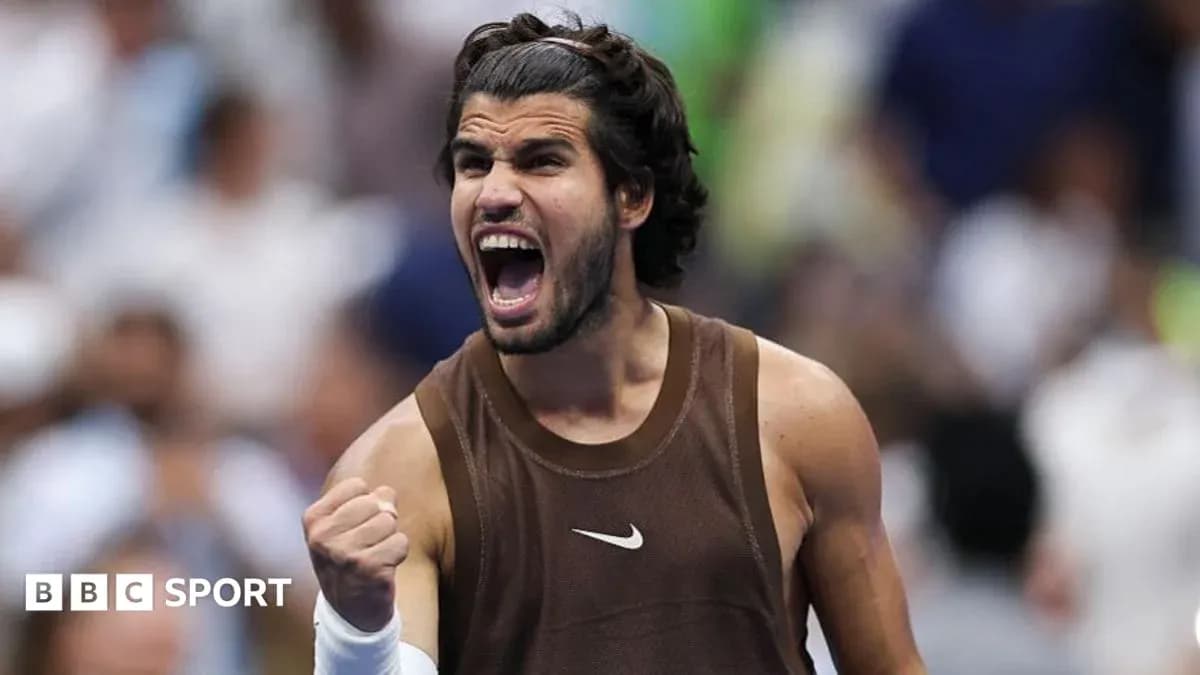
Every time he landed another forehand or feathered another drop shot, the reaction was the same: a clenched fist, a shout of “vamos” at his team, the eyes blazing. At 23, he still plays like a kid who can’t believe he gets to do this for a living.
He smiled between points. He sang along to a Michael Jackson track during a changeover. When he finished an intense rally in his final service game with a delicate drop shot, he raised his fist to the sky, cupped his ear and waved his arms, demanding even more noise from a crowd already on its feet.
Former Wimbledon champion Pat Cash, watching on BBC Radio 5 Sports Extra, noted how “every little win” seemed to spark a celebration. Alcaraz made no apology for that.
“What I really want to do is enjoy every time that I'm going to walk into the court, feeling the energy from the people,” he said. “That's what I'm going do this tournament. The results, it's going to come after all. That's why I enjoyed so much today, and it wasn't a surprise for me, because I came here to enjoy.”
Rust, reality and a vulnerable serve
For all the theatre, this was still a comeback match. And it showed, most clearly, on serve.
The numbers told the story. Two aces. Five double faults. A solid 68% of first serves in, and 66% of points won behind that first delivery, but without the usual sting that has become part of his arsenal.
“The serve is the shot I was struggling [with] the most,” he admitted. Some of that, he explained, was by design – a conscious decision to take pace off, mix things up and disrupt Safiullin’s rhythm. Some of it was simply rust.
“I'm going try to serve better. The point is going to try to serve normal, but it's a shot that I just always struggle [with]. But it will be back, for sure.”
What didn’t look rusty was his movement or his willingness to suffer. The concern coming in was not whether the wrist would hold, but whether his body, untested over five sets since the spring, could cope with the demands of a long night in New York.
“There were some doubts in the match, I'm not going to lie,” he said. “I've been thinking about 'am I going to last the best of five, am I going to last playing four sets, five sets?'”
He never needed to answer that fully against Safiullin. The match stayed in straight-sets territory, and Alcaraz’s legs looked fresh enough as he chased down drop shots, recovered for lobs and turned defence into attack in the way that has already made him a multiple major champion.
“I need more matches under the belt to get again into the rhythm of the tournament,” he added. “I'm pretty sure I'm going to get better and better every day.”
A draw quietly opening up
For a first round, this carried the feel of a statement: the champion is back, the wrist is working, the show is on. The real intrigue, though, sits in the path ahead.
On paper, tougher tests than Safiullin are coming. Next up is Jaime Faria of Portugal, ranked 72 in the world, a different kind of hurdle but not one that should frighten a player of Alcaraz’s pedigree.
Look a little further and the picture becomes even more enticing for the Spaniard.
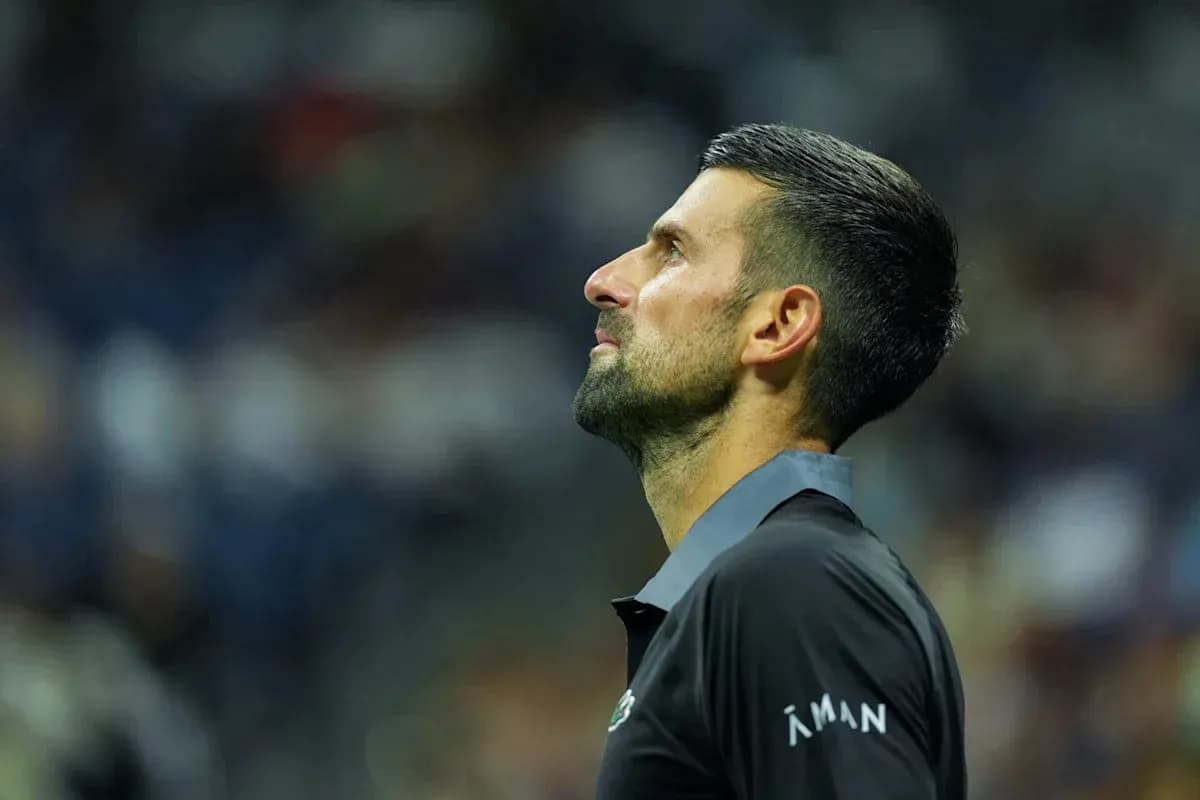
World number one Sinner is not in New York, his knee injury removing one of the biggest threats in the draw. Novak Djokovic, the 24-time Grand Slam champion and the man who has defined this era, is gone too after a stunning first-round defeat to Mariano Navone.
Alcaraz, seeded second, sits on the opposite half of the draw to French Open champion and top seed Zverev. They cannot meet before the final. French 10th seed Arthur Fils, fresh from winning the Cincinnati Masters and touted as a serious contender here, also fell on Monday, beaten by Stefanos Tsitsipas.
The net result? Before the semi-finals, the only top-10 player Alcaraz can face is American Ben Shelton, a potential quarter-final opponent and a man who thrives on big stages and big serves.
For now, Alcaraz is refusing to look that far ahead. The focus is on rhythm, on that troublesome serve, on stacking matches and minutes. But the stadium can see it, the locker room can feel it, and the draw sheet confirms it.
The champion has room to run. The question, after one night back under the Ashe lights, is not whether his body will hold.
It’s how far this new wave of joy, aggression and freedom can carry him in a tournament that suddenly feels there for the taking.