Michael Carrick's Future Hangs in Balance Amidst United Chaos
The farewell never came.
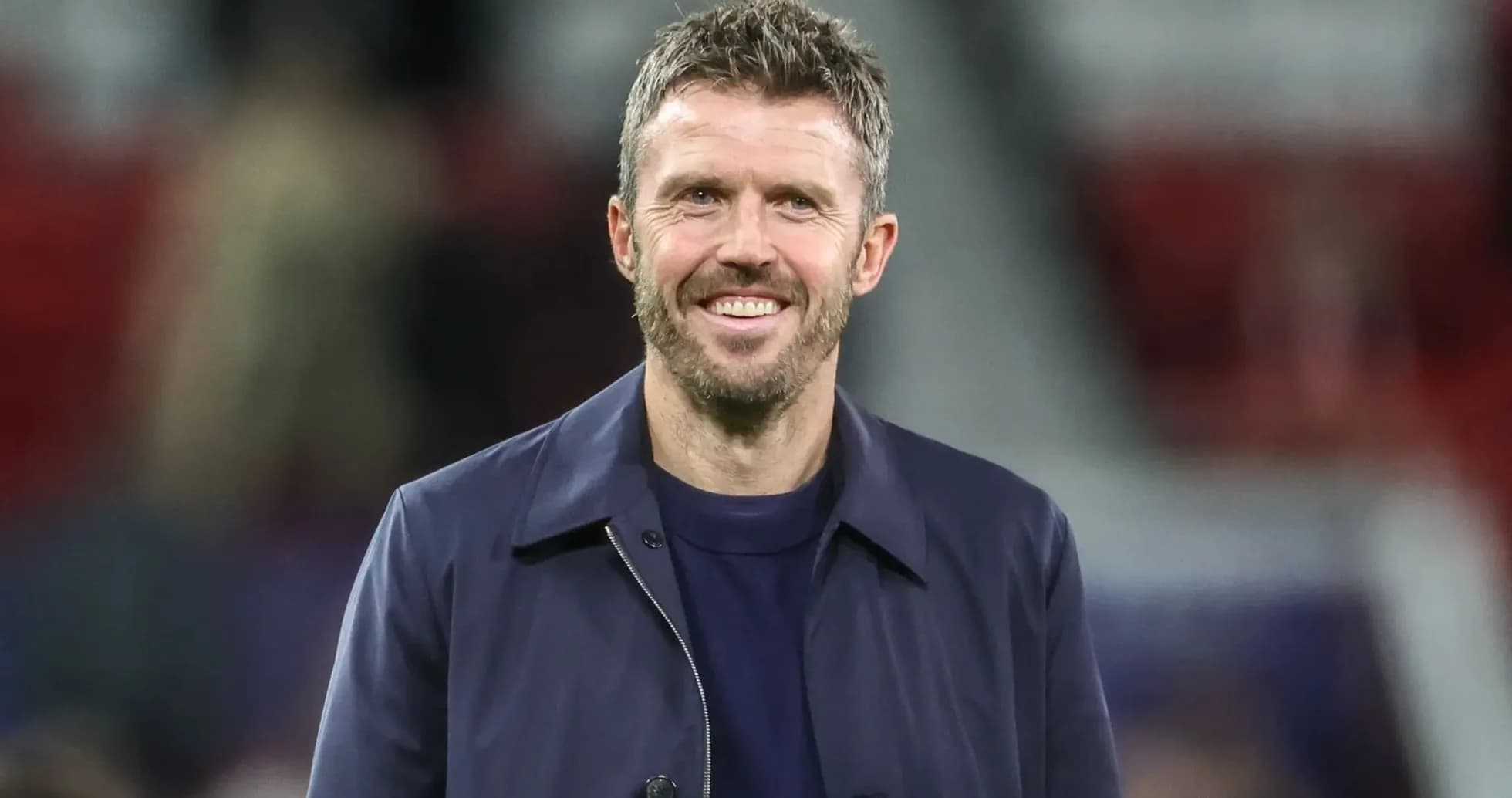
Michael Carrick walked around Old Trafford after the 3-0 humiliation by Bournemouth as if he were saying goodbye, applauded by supporters who had already made peace with the idea that his time was up. His name rang out. The boos were saved for the players and the hierarchy.
Yet when the dust settled, the man everyone expected to go was the one left standing.
Carrick stays. For now. And Stamford Bridge on Saturday suddenly feels less like a routine early‑season away day and more like a trial by fire.
A club that couldn’t pull the trigger
This is not a story of renewed faith so much as one of paralysis.
United’s football operation, reshaped under Sir Jim Ratcliffe, circled around candidate after candidate and still could not land on a successor they truly believed in – or could afford.
Eddie Howe was the frontrunner. The former Newcastle manager had watched United games, made notes, prepared himself for the call that never came. Technical director Jason Wilcox views him as essential: a coach with Premier League scars and solutions, not theories. Ratcliffe, too, has long wanted an Englishman at the helm of what he regards as the country’s biggest club.
Howe fits that brief. But he comes with a cost. Compensation, written into his Newcastle exit, would run into several million. United have already paid heavily for Dan Ashworth. That saga hardly encourages another expensive raid.
Julian Nagelsmann has his backers as well. Head of recruitment Christopher Vivell, who worked with him at RB Leipzig, sees a modern tactician capable of reshaping a club. Antonio Conte’s name sits on the list, too, though without any formal approach.
And still the verdict from inside the corridors of power is stark: “The best ones won’t come.”
Brighton’s Fabian Hurzeler has been admired, then effectively ruled out. The compensation for prising him away from a club sitting third in the table is steep, and he insists he has “unfinished business” on the south coast. Unai Emery, tied to Aston Villa until 2029 and operating as ‘manager’ rather than ‘head coach’, would be even more complicated. United’s new structure under Ratcliffe is built around a head coach working beneath a powerful sporting department. Emery does not fit that template.
So Carrick, in part, survives because United could not agree on – or reach – anyone they considered better value, better aligned, or simply attainable.
Dressing room shock and a generational low
Inside the dressing room, the Bournemouth defeat cut deep.
Players were described as “lost for words” by one source, stunned not just by the performance but by the ferocity of the reaction. United had just sunk to what insiders called a generational low: a third 3-0 home defeat to Bournemouth in three years, each under a different manager. That statistic alone tells its own story.
The Stretford End made theirs crystal clear. Carrick’s name was sung. The players were loudly, specifically booed once he disappeared down the tunnel.
The anger then turned upwards. In the closing stages, chants of “Sell United and f**k off home” were aimed at Ratcliffe and the ownership, followed by more sinister songs about the Glazers and a furious rejection of stadium plans: “Stick your new stadium up your a***.”
In that storm, Carrick found one thing he badly needed – a fanbase that still sees him as more symptom than cause.
Carrick vs the dressing room fault lines
That does not mean all is well. Far from it.
Carrick’s relationship with some senior figures has been tested in public. Bruno Fernandes, fresh from finishing 27th in the 2026 Ballon d’Or after a season of nine goals and a record 22 assists in 37 games, has not started this campaign with the same authority. Under pressure, he spoke his mind after a 4-1 loss to Como in the Champions League.
“Conceding early makes us go into game with a mood of defeat,” he said, openly questioning the team’s approach out of possession. He pointed to a staff decision “to not press man to man,” arguing United needed to be braver, to press higher, to make opponents uncomfortable.
Asked directly if Carrick got things wrong, Fernandes swerved the outright accusation but left little doubt: “That’s on the manager and staff to see, not me.”
Carrick responded the only way a head coach can if he wants to retain authority. He dropped his captain.
Lisandro Martínez had already fired a shot higher up the chain after a Champions League game, directing his frustration more at the directors above Carrick than at the manager himself. He later apologised, but the message lingered. Senior players were no longer just whispering their concerns. They were broadcasting them.
Carrick, already under siege from results, could not allow the impression that the dressing room had taken charge. Something had to give, and Fernandes paid the price. Whether that restores order or deepens the divide will become clear in the coming weeks.
Fans backing the manager, not the model
What makes this crisis different from previous United implosions is the alignment inside Old Trafford.
The supporters have picked a side – and it is not the players or the board. Carrick walked off to applause. The squad, after another limp display, were hammered. The hierarchy, after years of missteps and now a fourth manager looming in under three years, faced open revolt from their own stands.
Ratcliffe’s attempt to impose a new sporting structure – head coach beneath powerful executives – has run into the reality of a club that still craves a commanding figure on the touchline. Emery is one. Conte is another. Nagelsmann, in his own way, too. Yet the new United insist on a model that narrows their options.
Gary Neville has turned his fire on the players, not just the coach. Jamie Carragher, looking from the outside, is blunt in his assessment of Carrick’s prospects. On Sky Sports, he argued that Howe and Nagelsmann are “obvious” upgrades and admitted he never believed Carrick was the man to restore United to the summit.
“It’s fell off a cliff this season,” Carragher said. “Has to be changed.”
For him, Howe would be the pick – Premier League-proven, transformative at Newcastle, a coach who improves players. Yet even he questioned whether Howe has the stature to drag United back to the very top. Right now, though, the conversation is far more basic: can anyone simply haul them back into the top half?
A brutal run and a manager on borrowed time
Carrick’s stay of execution comes with a warning label.
United are 16th, with one win from eight league games. The next fixtures are unforgiving. Chelsea away at 12:30 on Saturday. Then Roma in the Champions League. Aston Villa, fresh from ending Manchester City’s perfect start, visit Old Trafford. After that, a trip to Anfield to face Liverpool.
There is, as Carragher pointed out, “a very, very good chance” United could hit the international break in the bottom three.
Inside Carrington, Carrick reported for duty as usual, taking training, trying to rebuild confidence in a group that has been publicly questioned, privately shaken and tactically pulled in different directions. The numbers from the Bournemouth defeat – 63 per cent possession, 17 shots to 10 – do nothing to disguise the reality. United were out-thought and out-fought. Again.
The message from those close to the football operation is simple: this limbo cannot continue. Back him or sack him.
For now, they have chosen to back him. Or at least, to delay the alternative.
Howe, Nagelsmann and the tug-of-war above Carrick
Behind the scenes, the debate over what comes next has not stopped just because Carrick remains in post.
Howe and Nagelsmann remain the two leading names. Ratcliffe and Wilcox lean towards Howe: English, Premier League-hardened, a coach with a clear identity and a track record of improving squads rather than just inheriting them. Vivell, meanwhile, pushes for Nagelsmann, a man he knows, a strategist he trusts.
Conte and Emery sit as expensive, complicated maybes. Hurzeler insists he is focused on Brighton, who not only sit above United but also knocked them out of the Carabao Cup with a 3-2 comeback at Old Trafford last month.
The common thread is cost, compromise and doubt. Every name comes with a caveat. Every option exposes a club still unsure what it wants to be.
So Carrick remains the man in the dugout not because United are convinced he is the long-term answer, but because they are not yet convinced anyone else is.
Do or die at Stamford Bridge
All of which leads to Stamford Bridge.
Chelsea away has become a line in the sand. Inside the club, the language is stark: “huge day”, “must-win”, “do or die.”
Carrick knows he is a fortunate man. He also knows that fortune does not last long at a club that has burned through managers at this pace. He walks into west London with the backing of the fans but question marks over whether his players are fully with him. Fernandes and Martínez have already shown their frustrations in public. Others, inevitably, will have their own views behind closed doors.
United, under Carrick, need a performance that looks like a team playing for their manager, not just a group waiting for the next man to arrive. They need points, not platitudes.
The board has hesitated. The supporters have chosen their target. The players have been warned.
Now it is Carrick’s turn to answer the only question that matters: can he turn this around quickly enough to stop his stay of execution becoming a delayed inevitability?