Detroit Pistons Offseason Moves: Building for Contention
The Detroit Pistons didn’t detonate the offseason. They just kept building.
Fresh off a 60-win campaign and a season that finally reset expectations in the Motor City, Detroit enters 2026-27 without the headline-grabbing blockbuster — but with a roster that looks sharper, deeper and, if they get their biggest piece signed, dangerously close to contender territory.
A New Look Around a Familiar Core
This is not a tear-down or a reboot. It’s a remodel.
As The Athletic’s Hunter Patterson outlined, the “latest version of the Detroit Pistons has new faces throughout the lineup.” The headliner is veteran forward John Collins, the biggest offseason acquisition and the man expected to slide into the power forward slot once held by Tobias Harris.
Around him, Detroit has quietly stocked the perimeter. Isaiah Joe arrives as a pure shooting threat. Taurean Prince brings size, experience and defensive versatility. Ebuka Okorie adds another fresh, intriguing piece to a rotation that suddenly looks far from thin.
The spine of the team, though, is meant to stay the same. The starting lineup should closely resemble last season’s, with one giant asterisk: Jalen Duren.
If Duren returns, Collins replaces Harris, the rest of the starters hold, and the Pistons roll out something very close to the group that just won 60 games — only with more spacing, more options and more lineup flexibility.
If he doesn’t, everything looks different.
The Duren Stalemate
Detroit’s offseason has revolved around one question: how do they keep Jalen Duren?
The two sides have been locked in a summer stalemate over a new contract, a negotiation that has hovered over every other move. Until Duren’s future is settled, the Pistons’ ceiling — and their willingness to spend assets — stays in limbo.
Lock him in, though, and the landscape changes. A long-term deal for Duren doesn’t just stabilize the frontcourt; it frees the front office to finally lean into a bigger swing.
And that’s where the idea of Derrick White enters the conversation.
A Swing for Derrick White
If Duren signs, Detroit can stop worrying about structural damage and start thinking about upgrades. One hypothetical path: calling the Boston Celtics about Derrick White.
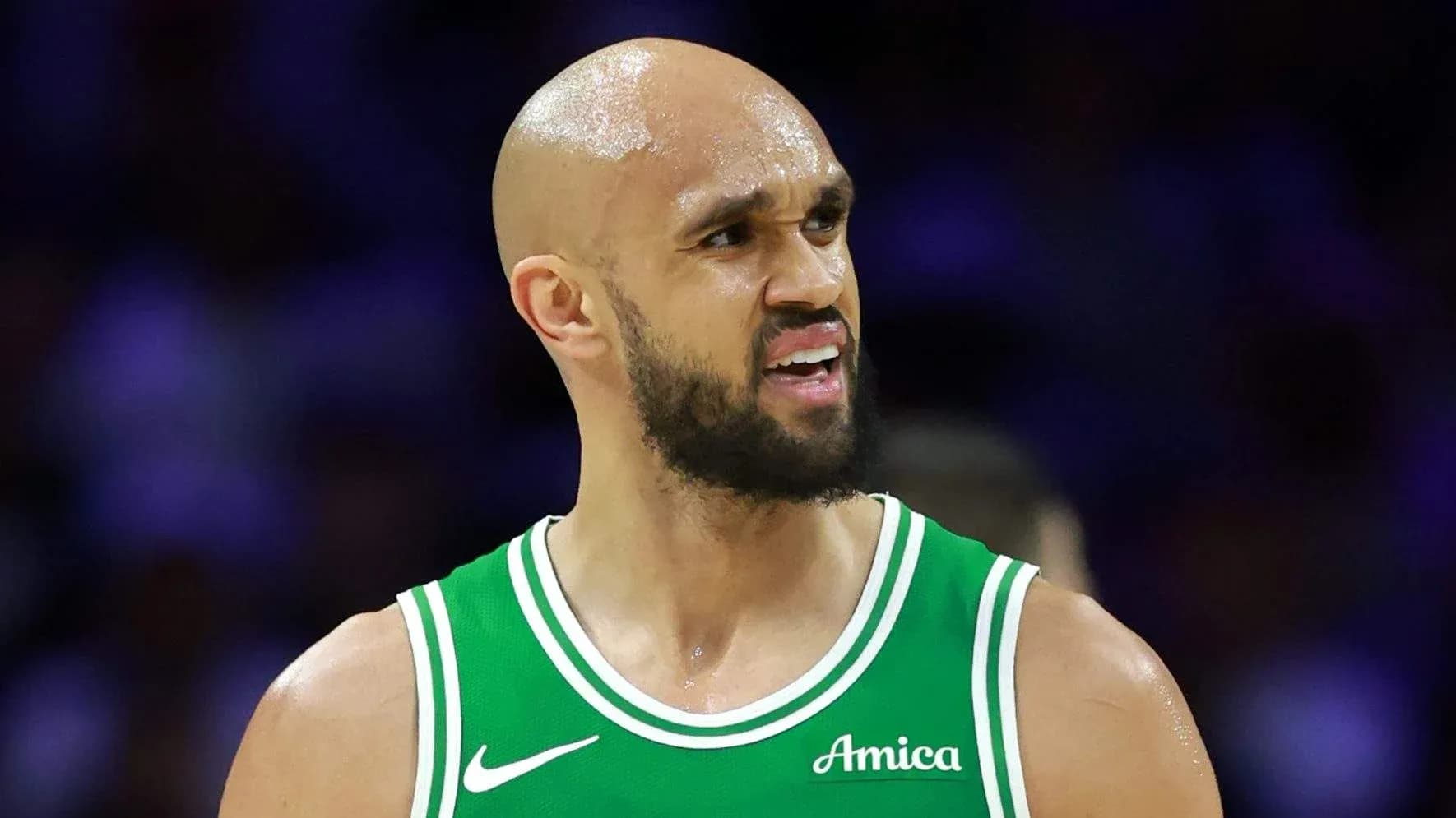
White checks almost every box for a team trying to graduate from “very good” to “legitimately terrifying.” He’s an elite defender in the backcourt, a usually reliable 3-point shooter and a player who has already proven he can function — and thrive — on a championship stage.
The proposed framework is simple enough:
- Pistons receive: Derrick White, 2028 second-round pick, 2030 second-round pick
- Celtics receive: Duncan Robinson, Ron Holland II, 2031 first-round pick
Detroit would be betting on proven impact. Boston would be trading one key piece of its title core for shooting, youth and a future first.
For the Pistons, the cost is real. Duncan Robinson’s shooting stretches defenses to breaking point, and Ron Holland II profiles as a terrific young defender with serious upside. They’d also be giving up a 2031 first-round pick, a meaningful chip for a franchise that has been careful not to drain the cupboard.
But this is why Isaiah Joe matters. His arrival softens the blow of losing Robinson. Joe offers deep-range gravity of his own, giving Detroit a way to maintain spacing even if they ship out one of the league’s most feared shooters.
Holland’s departure would sting in a different way. Sending a young, stifling defender to Boston — a team already built on stops and switchability — is the kind of move that can come back to haunt a front office. Yet White is already the player teams hope their young defenders become: disciplined, tough, positionally smart, and able to stay on the floor in the highest-pressure minutes.
That’s the trade-off. Potential versus proof.
Would Boston Really Let White Go?
This is where the fantasy meets reality.
Derrick White has become a central pillar of Boston’s title-winning core. He’s not a side note. He’s part of the identity. His defense, his shooting, his willingness to do the unglamorous work — all of it has made him one of the most valued guards in the league.
There has been noise around his name this offseason. The Minnesota Timberwolves reportedly showed interest before landing LaMelo Ball from the Charlotte Hornets. Teams understand what White brings, and they’re asking the question: what would it take?
Inside Boston, the answer seems to be: a lot.
“As for White: It would also be a surprise, sources say, if the Celtics cut ties with him,” NBA insider Jake Fischer reported last month. “The 31-year-old is a beloved member of the organization on top of the fact that his two-way backcourt work has put him in annual All-Star contention as a Celtic.”
That’s the starting point. Beloved in the building. Integral on the floor. A two-way guard whose name keeps hovering near All-Star conversations. Not the kind of player you casually move.
Still, look at the hypothetical return. For a 32-year-old White, Boston would gain one of the league’s deadliest movement shooters in Robinson, a premium weapon in any modern offense, plus Holland, whose on-ball defense already draws comparisons to the league’s best stoppers. Add a 2031 first-round pick, and it’s not hard to see why this isn’t dismissed out of hand.
It’s not a giveaway. It’s a retool.
How Far Is Detroit Willing to Go?
From Detroit’s side, this is exactly the kind of trade they’ve been resisting.
The Pistons have spent this offseason guarding their assets. No rash moves. No panic trades. No mortgaging the future just to say they did something big. A package of Robinson, Holland and a future first is not insignificant — but it’s not a reckless all-in shove either.
It’s measured. It’s targeted. It’s the sort of deal a 60-win team considers when it believes it’s one piece away from a deeper playoff run.
White brings championship pedigree, defensive edge and backcourt stability. He fits the timeline of a team ready to compete now, not in three years. He gives Detroit another closer in big moments, another adult in the room when games tighten and possessions shrink.
Everything, though, loops back to Duren.
If the Pistons get him signed, they have the foundation, the flexibility and the justification to chase a player like White. If they don’t, the idea of flipping real assets for a veteran guard looks far riskier.
Detroit has already raised its own bar with 60 wins. The question now isn’t whether the Pistons are good. It’s how aggressive they’re willing to be to turn good into something much harder to ignore.