Emily Owen Critiques Cheltenham Town Women's Culture
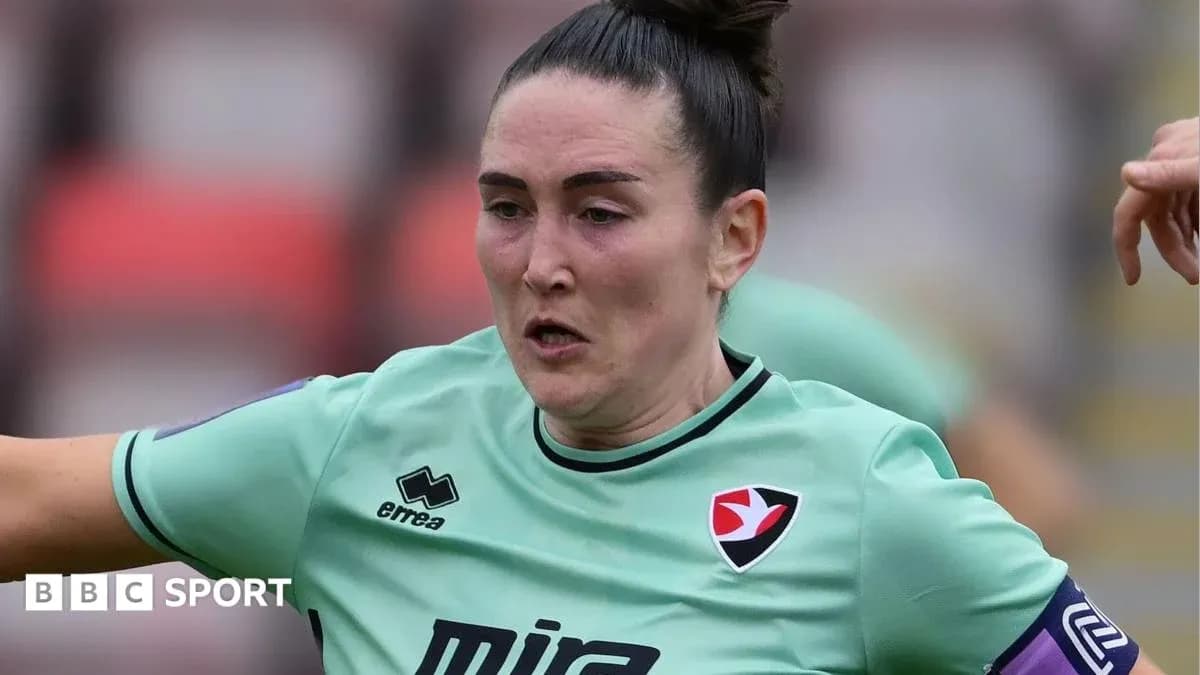
Emily Owen, the long-serving former captain of Cheltenham Town Women, has launched a stinging attack on the club’s internal culture, accusing “an individual” of creating “a dictatorship where players feel psychologically unsafe”.
Owen confirmed her departure from the Women’s National League Southern Premier side on Monday, bringing an end to a four-year spell in which she made more than 130 appearances and became one of the team’s central figures. At first, it looked like the usual farewell: the club announced the news on social media, thanked her, and moved on.
Then Owen answered back.
In a public message following the club’s post, the defender said she had not simply decided to move on, but had left because of “a lack of an individual's principles and outright failures in processes”. The wording was deliberate. So was the timing. She said she “wanted to set the record straight” after hearing rumours about why she had gone.
The 27-year-old did not name the person she believes holds too much sway inside the club, but she did not soften her description of the power dynamic.
“One individual in particular has far too much control within this team, turning the environment into a dictatorship where players feel psychologically unsafe,” she said.
Those are heavy words in any dressing room. In the women’s game, where safeguarding, respect and player welfare sit under a particularly sharp spotlight, they land even harder.
Owen also claimed she was not alone. She said three other players had already walked away “on moral grounds as boundaries were crossed, that shouldn't be crossed in women's football”. Again, no details, no names. But the implication is clear: this, in her view, is not an isolated grievance or a clash of personalities, but a pattern.
Cheltenham Town Women, asked about the allegations, chose not to engage with specifics or individuals. Instead, the club released a carefully worded statement stressing its commitment to player welfare.
“Cheltenham Town Women are committed to ensuring that every player, member of staff and volunteer is treated with respect and feels safe, valued and supported within our environment,” a spokesperson said. “We will ensure that any concerns brought to our attention are treated appropriately, sensitively and in line with all relevant policies and procedures.”
No rebuttal. No direct defence of the unnamed figure at the centre of Owen’s criticism. The club has, for now, taken the route of process and policy, rather than public confrontation.
For a side operating in the Women’s National League Southern Premier, this is not the kind of spotlight they crave. These clubs often run on thin resources and thick bonds of trust; the captain leaving under a cloud, and then speaking of “dictatorship” and “psychologically unsafe” conditions, cuts right into that.
Owen’s departure also strips Cheltenham of experience and continuity on the pitch. More than 130 appearances do not just vanish from a squad without consequence. They take with them leadership, institutional memory and, in this case, a very public challenge to how the club is being run.
The next move belongs to Cheltenham Town Women. Internally, they will have to decide whether Owen’s claims trigger formal investigations, quiet conversations, or a firm defence of their current structure. Externally, they must convince current and future players that the environment is exactly what their statement says it is: safe, respectful, and supportive.
In the modern women’s game, that promise is not a slogan. It is a test they now have to pass.