Gabriel Jesus Rejects Flamengo for Barcelona Out of Loyalty to Palmeiras
Gabriel Jesus had a choice this summer: a hero’s return to Brazil or one more swing at Europe’s elite. He chose the latter, but the real story lies in the door he refused to even open.
The former Arsenal forward has revealed he rejected an approach from Flamengo during the transfer window, turning down one of Brazil’s modern powerhouses out of loyalty to his boyhood club Palmeiras. Instead, the 29-year-old left north London on deadline day to sign for Barcelona, extending his European adventure rather than closing the circle back home.
Flamengo call, Jesus declines
Once it became clear that Mikel Arteta no longer saw him as central to Arsenal’s plans, the market reacted quickly. Clubs across Europe and South America sensed an opportunity. Among them, Flamengo made their move, keen to tempt the Brazil international back to Rio de Janeiro.
On paper, the pitch made sense. A decorated forward, a proven winner from his Manchester City days, and a player still capable of changing games at the highest level. But the reality of his recent years in England complicated things. At the Emirates Stadium, recurring fitness problems repeatedly stalled his rhythm, turning what was supposed to be a defining chapter into a stop-start spell full of questions.
Those doubts did not scare Flamengo. They saw a chance. Jesus, speaking to TV Bandeirantes, made it clear they tried to bring him home.
They never got close.
Roots that run too deep
To understand why, you have to go back to Sao Paulo, to Palmeiras and a teenager breaking through between 2013 and 2015. That is where Jesus’ story really took shape.
He did not just pass through the academy. He exploded out of it. In 2015, he won the Campeonato Brasileiro Serie A Best Newcomer award and lifted the Copa do Brasil. A year later, he claimed the prestigious Bola de Ouro as Palmeiras ended a 22-year wait for a league title. These were not just honours; they were foundational memories.
Across 83 appearances for the club, he scored 28 goals and added nine assists. Those numbers matter, but the bond matters more. Palmeiras is not just a line on his CV; it is the club that launched him towards England and the wider world.
So when Flamengo called, history answered first. Jesus recalled the conversation with striking clarity: “They wanted to talk to me, but I politely said: ‘I really appreciate the contact, but just as there are players from Flamengo's youth academy that you want to come back, I'm also a product of Palmeiras' youth system.’”
In a market where loyalty is often little more than a slogan, that stance cut through. Flamengo were not just competing with Barcelona or any other European side. They were competing with the identity of a player who still sees himself in green.
Barcelona now, Palmeiras later
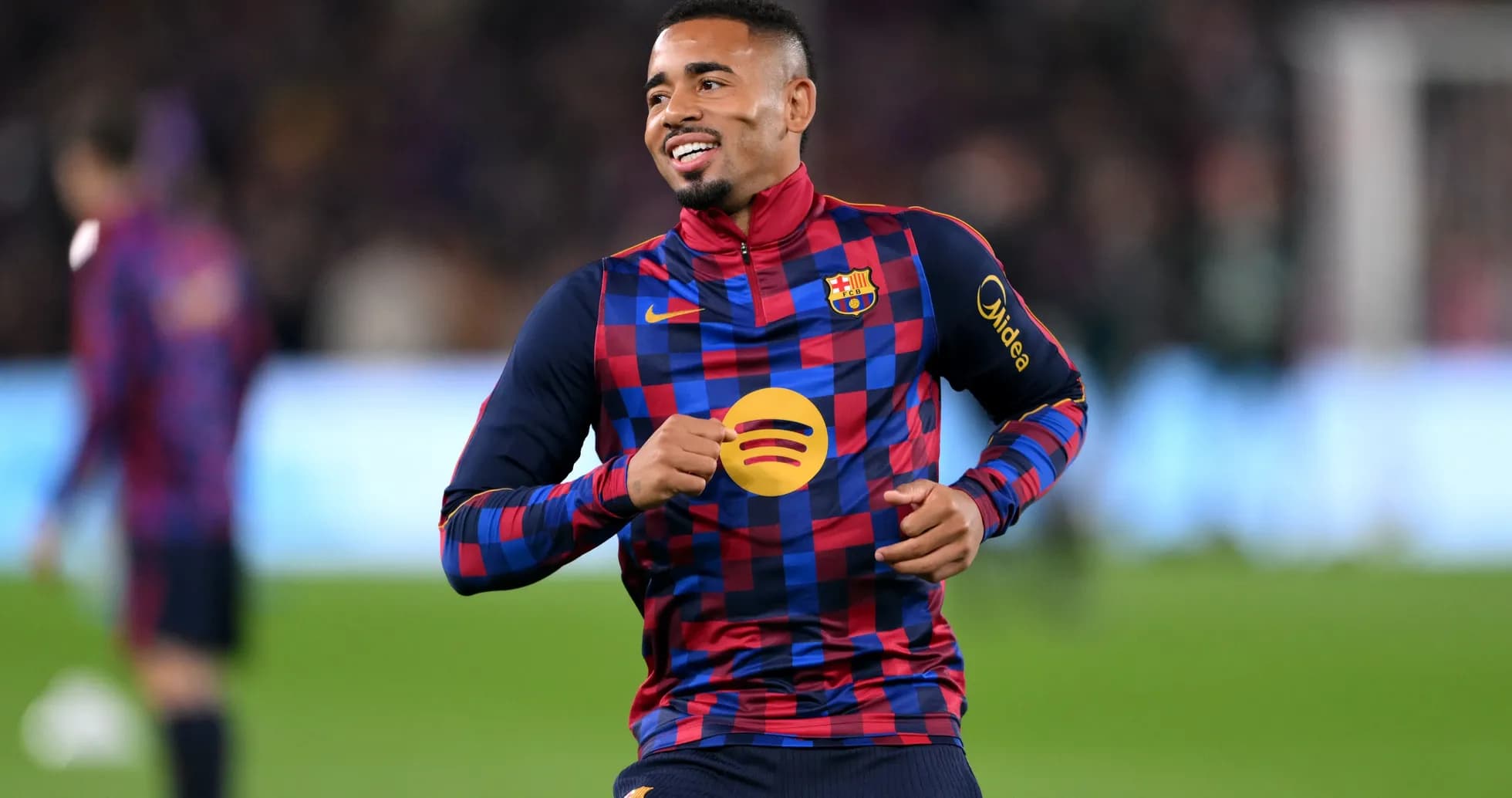
Rather than returning to Brazil, Jesus signed a three-year deal with Barcelona, keeping him in European football until June 2029. For a player still only 29, it is a clear statement: the top level remains his stage of choice.
Barcelona, rebuilding and recalibrating, gain a forward with Champions League pedigree and a point to prove after a bruising spell at Arsenal. For Jesus, it is a chance to reset his narrative, to swap injury questions for decisive contributions in La Liga and beyond.
Yet even as he spoke about the move, his words kept drifting back across the Atlantic. The future, in his mind, has only one Brazilian destination.
“I am Palmeiras, my mind is Palmeiras, 100% Palmeiras in a possible return. I don't know when,” he said.
No promises on timing. No farewell to Europe just yet. But the message is unmistakable: when Gabriel Jesus finally comes home, there will be only one shirt waiting for him.