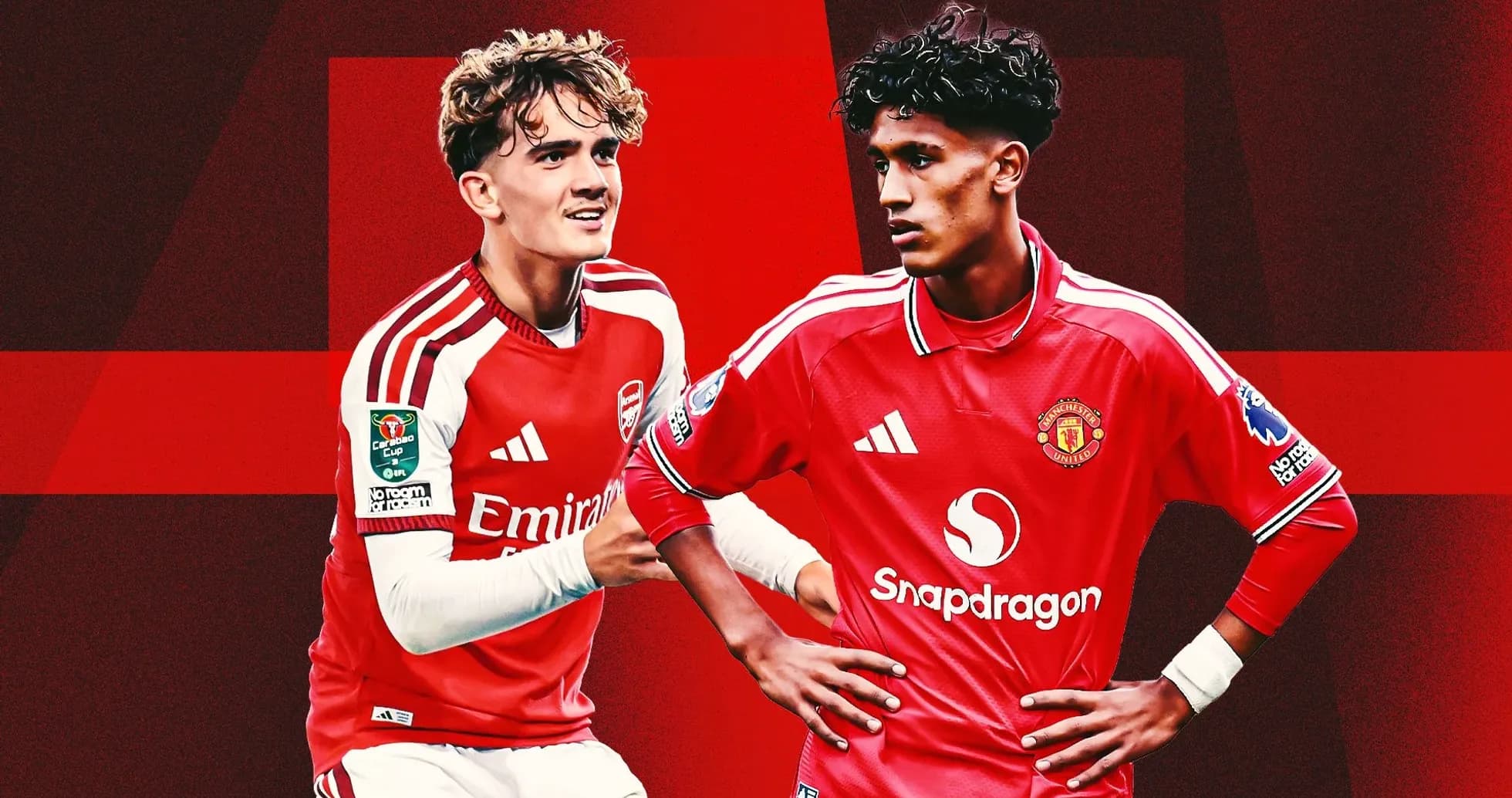
Gabriel: Manchester United's Academy Star at the Center of European Interest
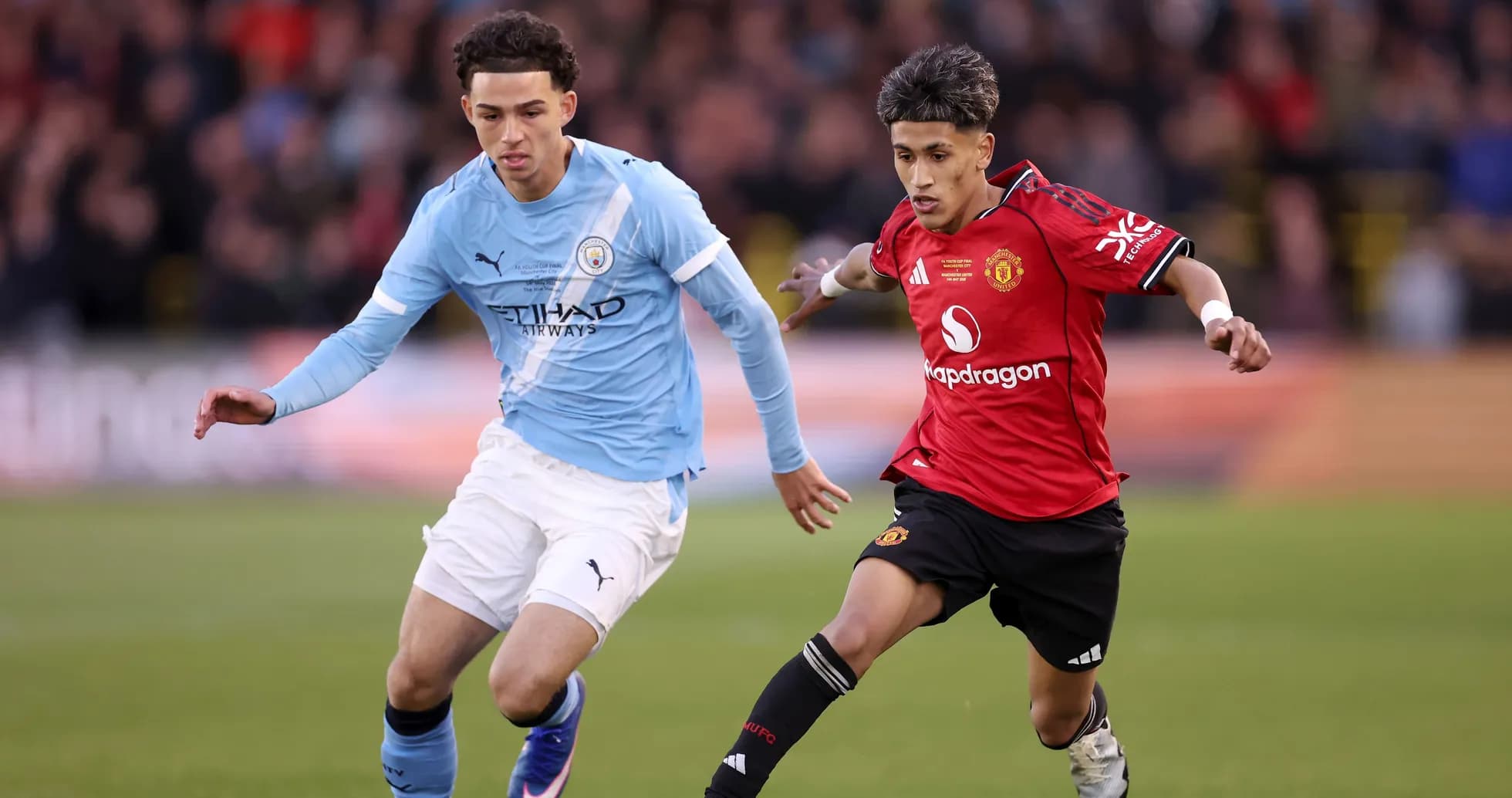
Gabriel, Manchester United’s teenage prodigy, has become the centre of a tug-of-war that stretches from Old Trafford to the giants of Europe. Real Madrid, Barcelona, Paris Saint-Germain and Bayern Munich all want him. United insist he is going nowhere. Right now, the 15-year-old forward is the most contested figure in the club’s academy – and he has not even turned 16.
United’s hierarchy, fronted by INEOS chairman Sir Jim Ratcliffe, know exactly what is at stake. Ratcliffe has already felt the heat from supporters for a string of unpopular calls since taking charge of football operations. Letting a once-in-a-generation academy talent walk away for nothing would ignite a different level of fury. Gabriel is tied to the club until next summer, but not as a full-time scholar, and the clock is ticking towards October 16 – his 16th birthday, and potentially his escape hatch.
A passport, a loophole, and a storm
The battle is no longer just about football. It is about paperwork.
Under post-Brexit rules, English clubs cannot sign overseas players under 18, but dual nationals can move within the European Union before that age. Gabriel’s background makes that a live issue. His father, Joe O’Cearuill, is a former professional who represented Ireland twice. His mother is of Greek Cypriot heritage. If Gabriel holds or can obtain an EU passport, he would be free to leave England when he turns 16.
United are scrambling to clarify that status. The threat is very real. They kept him out of Manchester City’s grasp last year; now they are fending off the biggest clubs on the continent. This time, it feels different. It feels like his head might already be elsewhere.
The signs are worrying. Gabriel was due to join first-team training on Saturday. He did not turn up. He has not been seen at Carrington all week. Those at the club who believed this season would be his gentle introduction to senior life are suddenly facing the possibility that he might never play a competitive minute for United.
Michael Carrick had planned to include him in the squad for Wednesday night’s Carabao Cup third-round tie against Brighton at Old Trafford. A debut would have made Gabriel the youngest player ever to feature for the club’s senior side. That piece of history is now off the table.
The brightest light in a dim decade
For United’s academy, this cuts deep. Since Marcus Rashford burst through, the production line has not delivered a genuine global superstar. Gabriel has been the hope, the poster boy for a new era, ever since he joined at 11.
Those who have watched him closely talk about a two-footed forward who glides through tight spaces, who twists away from pressure and punishes any glimpse of goal. The Lionel Messi comparisons are inevitable and unhelpful. The Neymar parallels are closer to the mark – the low centre of gravity, the flair, the swagger on the ball. He even wears the same Nike model as the Brazilian after signing a lucrative extension with the brand in March 2025.
The numbers back up the hype. At 14, he broke into United’s Under-18s and stayed there, scoring 20 goals in 21 league games. He walked away with the first-ever Premier League U18s Player of the Year award and United’s Jimmy Murphy Young Player of the Year, the youngest winner in the club’s history.
This season he stepped up again. In August, he debuted for the U21s against Ipswich, delivered two assists and finished the night with a delicate chip in a 5-0 win. A week later, he scored again as United’s youngsters hammered Leicester City 4-1. Every level he has met so far, he has bent to his will.
It is no surprise, then, that supporters want to see him in the first team, particularly as United’s senior attack labours and inspiration feels in short supply. Arsenal’s success with Max Dowman has only sharpened the debate.
Dowman, Nwaneri and the lure of fast-tracking
The Premier League has already had a taste of this new generation of wonderkids. Ethan Nwaneri became the youngest player in the competition’s history in September 2022, coming on for Arsenal against Brentford at 15 years and 181 days. His path since has not been straightforward – loans to Marseille and Borussia Dortmund, a stop-start rhythm – but he now has more than 50 appearances for the Gunners at just 19.
Dowman’s rise has been even more explosive. He became the league’s second-youngest player when Mikel Arteta sent him on against Leeds in August 2025. In March, he broke James Vaughan’s record as the Premier League’s youngest scorer with a brilliant solo goal against Everton at 16 years and 139 days. By May, he was the youngest title-winner in history. This week, he joined Wayne Rooney in a tiny club: only the second 16-year-old to score a brace for a Premier League side in a major competition, firing Arsenal to a 4-2 Carabao Cup win over Ipswich.
Dowman already has 14 senior appearances. His mix of flair and physical strength makes him impossible to ignore. Arteta has even mentioned him in the same breath as Messi, but has been careful with his minutes, choosing his moments.
“We have to look after him. He’s 16 years old. You don’t see that in this league,” Arteta said after the Ipswich game, stressing the intensity of English football and the need to protect such a young player.
That is the context in which Gabriel is judging his own situation. But there is a crucial difference.
A fragile frame, a fragile balance
Gabriel is not Dowman physically. Not yet. He is slight, often the smallest player on the pitch. His courage and tenacity narrow that gap, but do not close it. Throwing him into the Premier League too early could go badly wrong – not just for his body, but for his development.
Imagine he comes in, dazzles, and becomes the new obsession. The pressure on Carrick to play him every week would be relentless. United do not have Arsenal’s depth or stability. Arteta can rotate Dowman, drop him out of the spotlight, and still send out a side brimming with confidence and quality.
Carrick does not have that luxury. United’s performances swing wildly. If he introduces Gabriel and then pulls him back, he will be accused of caution, of stifling a generational talent. If Gabriel struggles, the narrative flips and the teenager becomes “overhyped” and “overrated” before his career has started.
Former United defender and academy graduate Danny Simpson believes Carrick has handled the situation correctly so far.
Speaking to GOAL via Free Bets, Simpson said: “You’ve seen Arsenal do it, haven’t you, with Max Dowman. He’s come in, then he takes him out, then we don’t know about him for a bit, then he might come back in. I think it’s easier for Dowman.
“I came through United and United were great. I could come on for 10 minutes because most of the time we were 2-0 up, 3-0 up. I would play, I’d get my debut or a second game and I’d be playing with the second XI who could win the Premier League! I think that’s Max Dowman. He’s coming into a team that’s flying in confidence, full of top, top talent, winning games.
“People in the second XI, a bit like United back in the day, just as good. It’s easy to come on and have an impact and play well. I think maybe United at the minute is a bit different. I will say that. I know we all want to see Gabriel play and it’s exciting, but it’s just a very different situation to Max Dowman at Arsenal.
“I just think that Michael Carrick will know what to do and when to. We’ve seen it a little bit with Shea Lacey. I’ve trained with Shea and I’ve been around him and I’ll say he’s a top talent. Just let him [Gabriel] train and be around the team and his time will come.”
That is the internal view at United: keep him close, expose him gradually, and wait for the right moment. But patience is a hard sell to a teenager watching his peers explode onto the global stage.
Yamal, Europe and the seduction of the shortcut
Even if Gabriel accepts that his case is different to Dowman’s, his eyes will inevitably drift to Barcelona and Lamine Yamal.
Yamal was 15 years, nine months and 16 days old when he made his senior debut in 2023. He was skinny, light, and a clear target for physical defenders. Yet his acceleration, sharp brain and technical precision allowed him to survive and thrive. La Liga, with its emphasis on structure and possession rather than ferocious end-to-end duels, proved a softer landing spot for a pure technician.
Drop that same player into the Premier League at that age and the outcome might not be the same. Time on the ball is shorter. Contact is heavier. Mistakes are punished more ruthlessly. Gabriel might believe that Barca or Real Madrid can fast-track him to stardom the way Yamal has been fast-tracked, but the context has changed.
When Yamal emerged, Barcelona were marching towards the La Liga title under Xavi but had just crashed out of the Champions League group stage. Raphinha, O’usmane Dembele and Ferran Torres were not at their current levels. There was space in the hierarchy for a fearless teenager to disrupt the order.
Now? Barca’s forward line is stacked. Yamal is established. Raphinha is at his peak. Anthony Gordon, Karim Adeyemi and Gabriel Jesus are on the books. At Real Madrid, Jose Mourinho has Kylian Mbappe, Vinicius Junior, Jude Bellingham and Yan Diomande in the dressing room. PSG and Bayern offer no easier route.
Wherever Gabriel goes, he will have to wait his turn. The difference is that at United, the path to a regular role is clearer, the competition less suffocating. The danger is that his desire to have everything now blinds him to that reality.
United’s line in the sand
United cannot allow a 15-year-old, however gifted, to dictate terms to the club. That is the blunt truth being repeated in corridors at Carrington. Gabriel is still 18 months away from sitting his GCSEs. The badge on his chest has been worn by George Best, Sir Bobby Charlton, Ryan Giggs, David Beckham, Paul Scholes and Gary Neville – players who fought their way through setbacks and scrutiny to reach the top.
Nothing was handed to them. Standards at United have always been brutal. Talent is the entry fee, not the guarantee.
Former manager Ruben Amorim, sacked in January after a troubled spell, understood at least one thing clearly. “There is a feeling of entitlement we have in our club,” he said shortly before his dismissal. “Sometimes, difficult moments is not a bad thing for the kids. We don’t always need accolades in everything. We are not helping.
“Nowadays, they [players] speak and go against the club because they feel entitled. Let’s stay. Let’s fight. Let’s overcome. That is the way we can solve things.”
Amorim failed in many areas, but he nailed that diagnosis. If Gabriel continues down a path driven by impatience and a sense of special treatment, he will struggle to become the player he could be in a United shirt.
The club will keep trying to change his mind. Carrick and the academy staff can point to the care they have shown so far, to the tailored plan they believe will give him the best chance of a long career at the top. They can offer opportunity, not guarantees.
What they cannot do is bend the institution to the will of a teenager. No one is bigger than Manchester United. If Gabriel cannot accept that, the club may yet decide that the cleanest solution is to let him go and find out, away from Old Trafford, whether the fast lane is all it promises to be.