John Mahama on Ghana's Football Talent Drain
John Dramani Mahama sat in Jubilee House and spoke like a man watching his favourite league slowly drain away.
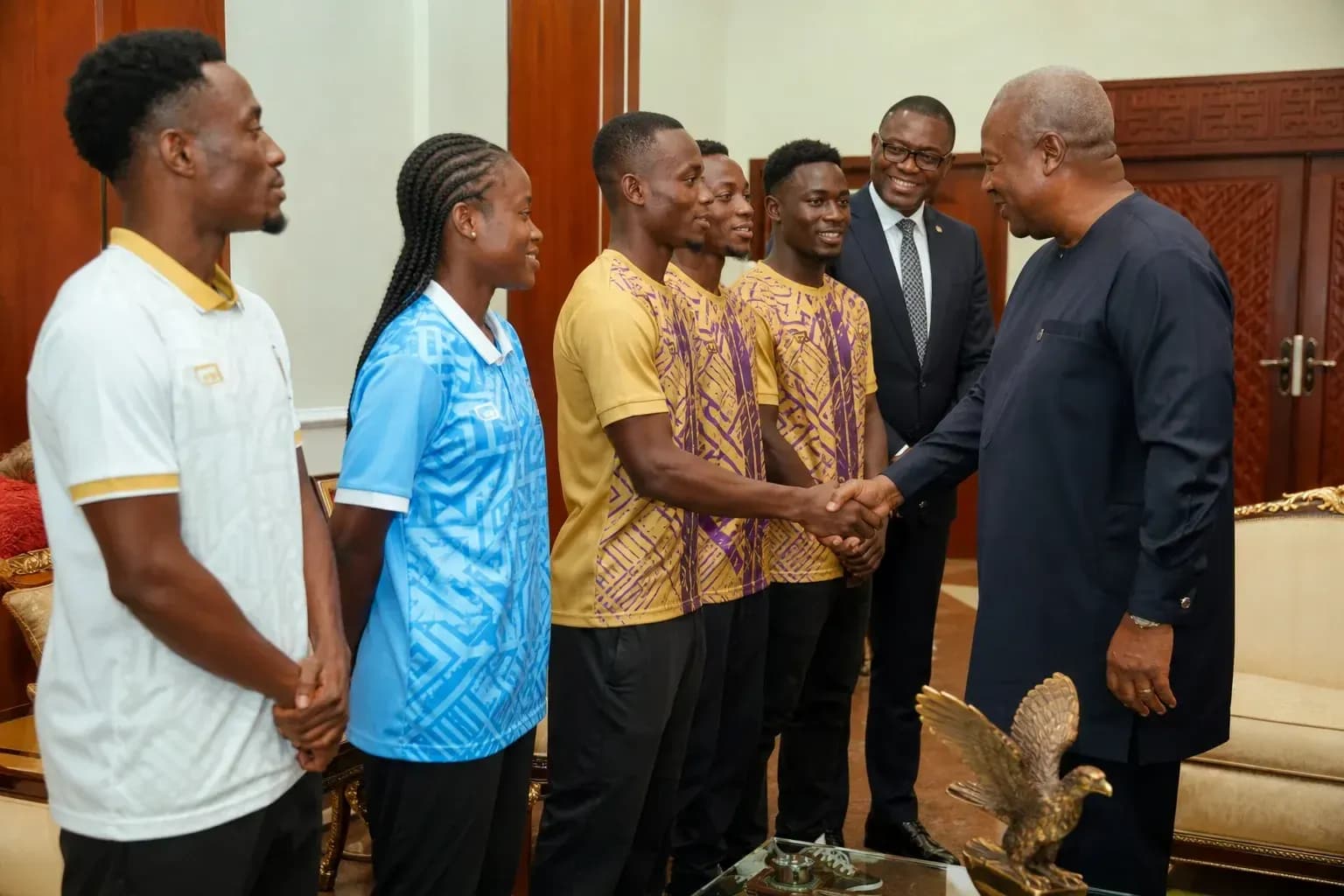
On September 8, 2026, as he met Nations FC, Medeama SC and Ampem Darkoa Ladies, the Ghanaian President cut straight to the point: Ghana is losing its footballers too early, and the domestic game is paying the price.
“We’re selling them too quickly”
Mahama’s concern is not new, but the emphasis was sharper. The pattern is familiar. A teenager strings together a few standout performances in the Ghana Premier League, word spreads, scouts arrive, and within months the player is gone.
For Mahama, that conveyor belt has become a problem, not a triumph.
He argued that as soon as a footballer shows real promise, he is whisked away from the local championship, stripping the league of the very talent it helped create. The result, in his view, is a steady erosion of quality at home. The domestic standard dips, the stadiums lose their stars, and the league struggles to build lasting narratives around its own players.
Ghana, he warned, is surrendering its brightest prospects before they have even grown roots.
Keeping talent at home longer
Mahama called for concrete ways to keep young players in the national league for a longer stretch of their development. Not forever, but long enough for them to mature, dominate locally, and give the Ghanaian game a stronger identity on its own pitches.
He stressed that the country is “losing young talent too early” and that the system needs to be recalibrated so local clubs and fans can enjoy more than just a brief glimpse of their rising stars before they board a plane.
The message was clear: exporting talent cannot be the only measure of success.
The national team as a finishing school
Then came his key proposal. If Ghana wants to raise the ceiling for its players and its league, Mahama believes the national team must play a bigger role.
He suggested that promising footballers should be given the chance to feature for the national team earlier in their careers. That stage, he argued, would serve as a crucial bridge between raw potential and the polished professional ready for the demands of top-level football abroad.
Exposure to international football, in his view, would harden these players, deepen their experience, and allow them to reach a more mature level before they inevitably catch the eye of international or local scouts.
Only then, he implied, should the big move come.
The president’s stance poses a challenge to Ghanaian football: can the country build a league that doesn’t just discover talent, but keeps it long enough to shape the game at home as powerfully as it does abroad?