Kawhi Leonard Returns to Toronto Raptors
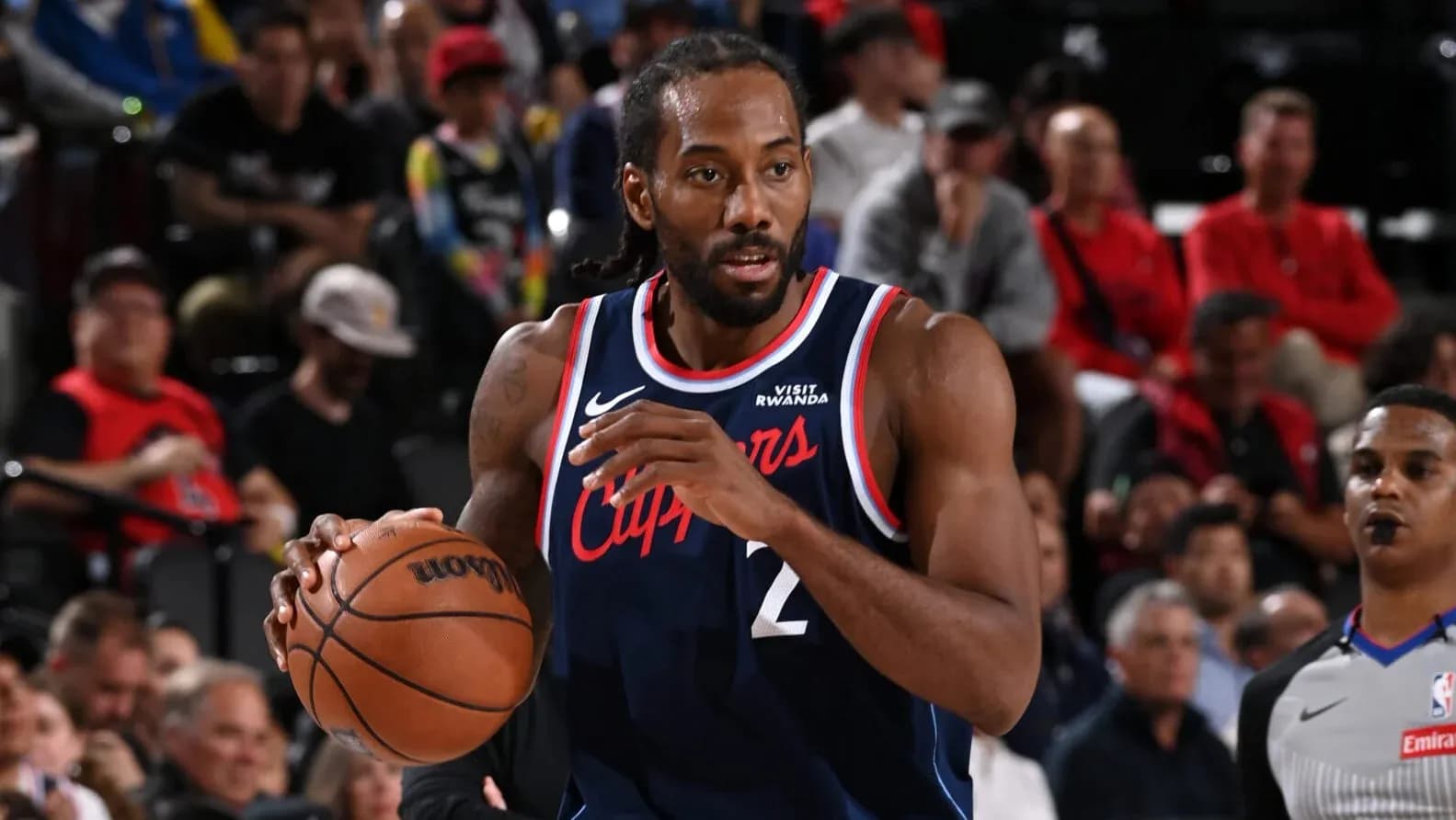
Kawhi Leonard is coming back to Toronto.
Seven years after delivering the Raptors’ lone championship and walking out the door in free agency, the franchise has turned the clock back in the boldest way possible. On Monday, Toronto made it official: their former Finals MVP is returning from the LA Clippers in a blockbuster deal that sends Gradey Dick and Brandon Ingram west, along with two unprotected first-round picks, a first-round pick swap, and two second-rounders.
It’s an enormous price. It’s also a statement. The Raptors believe their window has reopened.
Raptors Push Their Chips In
Toronto just completed its best season in six years by the numbers, finishing plus-2.9 points per 100 possessions and stacking 16 more wins than in 2024-25. That wasn’t a fluke jump from the basement; it was the profile of a team that defends, runs, and thinks it belongs back in the conversation with the Eastern Conference elite.
This trade confirms it. The Raptors aren’t tinkering around the edges. They’re betting that Kawhi Leonard, even in a different phase of his career, is still the kind of player who changes ceilings, not just floors.
Defensively, they already had a strong identity. Toronto finished fifth in the league, giving up just 112.1 points per 100 possessions. They flew around, turned teams over, and made life miserable at the 3-point line. But when the level of competition rose, the armor showed a few dents. Against the league’s top 10 offenses, that fifth-ranked defense slid to 12th, allowing 117.3 per 100. In the first round of the playoffs, same story: 12th again.
They also fouled. A lot. Opponents posted a free throw rate that ranked Toronto 23rd in the regular season, and that number ballooned in the postseason.
Leonard walks into that ecosystem as a cleaner, not a fixer-upper. He’s no longer the terror he was five or six years ago, but he remains a plus defender who rarely bails opponents out. Last season, he piled up 122 steals and 27 blocks against only 78 personal fouls. Among 378 players who logged at least 500 minutes, no one had a better combined steals-and-blocks-to-fouls ratio. Not close.
Pair that with Scottie Barnes and rookie revelation Collin Murray-Boyles and you get a front line that might be undersized on paper but looks vicious on film. Switchable. Long. Relentless. Jakob Poeltl, once a defensive anchor, has struggled badly in space and just posted the worst rim-protection numbers of his career, allowing opponents to shoot 63.9% at the rim when he was there. In the playoffs, he started every game but watched Murray-Boyles soak up far more minutes.
Swap Ingram for Leonard in that mix and the Raptors suddenly have a realistic shot at not just maintaining a top-five defense, but holding up better against the league’s best attacks when it matters most.
The Closer They’ve Been Missing
Defense and transition got Toronto this far. They ranked third in the league with 28.6 transition points per game, feasting off their pressure and length. That’s the fun part.
The grind comes late in the shot clock, and that’s where they’ve repeatedly stalled.
Only the Indiana Pacers posted a worse effective field goal percentage in the final six seconds of the shot clock than the Raptors’ 43.3%. When the offense slowed, when the initial action died, Toronto often had nowhere to go. No one to throw the ball to and trust.
Leonard changes that math immediately.
Over the last three seasons, he’s posted a 53.0% effective field-goal percentage in those same late-clock situations, ninth among 131 players with at least 250 attempts. That’s not just shot-making; that’s composure, footwork, and an understanding of pace when the play breaks down.
Isolations tell the same story. Leonard and Ingram both sit in the rare group of 28 players with at least 1,000 isolation possessions over the past three years. The difference lies in what happens after the dribble. The Clippers scored 1.07 points per chance when Leonard isolated, sixth-best among that group. Ingram’s teams in New Orleans and Toronto managed just 0.99 points per chance, 24th.
For a franchise that has owned the league’s sixth-worst offense over the last three seasons, those margins are massive. If the Raptors keep flying in transition and then hand the ball to Leonard when the clock bleeds out, they have a real shot at their most efficient offense since his original one-year stay.
A Playoff Killer Returns
Toronto doesn’t just get a late-game closer. It gets one of the most ruthlessly efficient postseason scorers the league has ever seen.
Across 146 playoff games, Leonard has averaged 21.5 points with a true shooting percentage of 62.1%. Among the 89 players in NBA history to average at least 20 points over 10 or more playoff games, only Anthony Davis edges him in efficiency—and Davis has played in fewer than half as many postseason contests.
Since 2017, Leonard’s playoff numbers jump into a different stratosphere: 28.6 points per game on 63.2% true shooting over 71 games. He’s one of just five players ever to record at least three separate postseasons (2017, 2019, 2021) averaging 25-plus points with at least 60% true shooting in 10 or more games.
This is not nostalgia. It’s a track record.
The Raptors’ recent playoff exit to the Cleveland Cavaliers underscored what they were missing. They actually scored a bit more efficiently than the first-round average at 111.9 points per 100 possessions, but they lacked that inevitable, unhurried scorer who bends a series. Leonard has been that player for a decade. Toronto is gambling that he still is.
Clippers Hit the Reset Button
On the other side of the deal, the Clippers have finally torn down the version of the team that was supposed to deliver their first title.
Over Leonard’s seven years in LA, the Clippers posted the fourth-best regular-season record in the league. That sounds impressive until you realize they were the best team in the NBA over that span that never actually won a championship. Plenty of wins. Not enough banners.
Last summer, they doubled down again, adding Bradley Beal, John Collins, Brook Lopez and Chris Paul to a core built around Leonard, James Harden and Ivica Zubac. It looked like a superteam on paper.
It lasted less than a year.
Today, Lopez is the only one of those seven still on the roster. Paul’s return to LA was brief. Harden and Zubac were moved at the deadline. Leonard is heading back to Toronto. Beal and Collins, both unrestricted free agents, are widely expected to move on.
As of Tuesday night, with Kobe Sanders set to return, the players under contract or verbally committed for 2026-27 account for just 42% of the Clippers’ total minutes from last season. No other team in the league comes close to that level of turnover. Even if they bring back restricted free agents Bennedict Mathurin and Jordan Miller, that continuity number only rises to 52%, still the second-lowest mark in the NBA, barely ahead of the Lakers.
Five months ago, the Clippers were an aging contender. They ranked 24th in the percentage of minutes given to rookies and second-year players, at just 12%. Since February 1, they’ve flipped that script completely.
The future in LA now points toward Darius Garland and rookie guard Keaton Wagler, with Dick and Ingram joining a younger, more flexible core and a trove of draft capital that would have been unthinkable in the height of the Leonard-Harden era.
The Leonard gamble didn’t bring the Clippers a title. The Raptors know exactly what it did for them.
Now, with the franchise icon back in their building and a rising group around him, the question isn’t about 2019 anymore. It’s whether Toronto has just rewritten the next chapter of the East—or simply tried to recreate a past that can’t be repeated.