Kendry Paez's Journey: From Prodigy to Puzzle at Chelsea
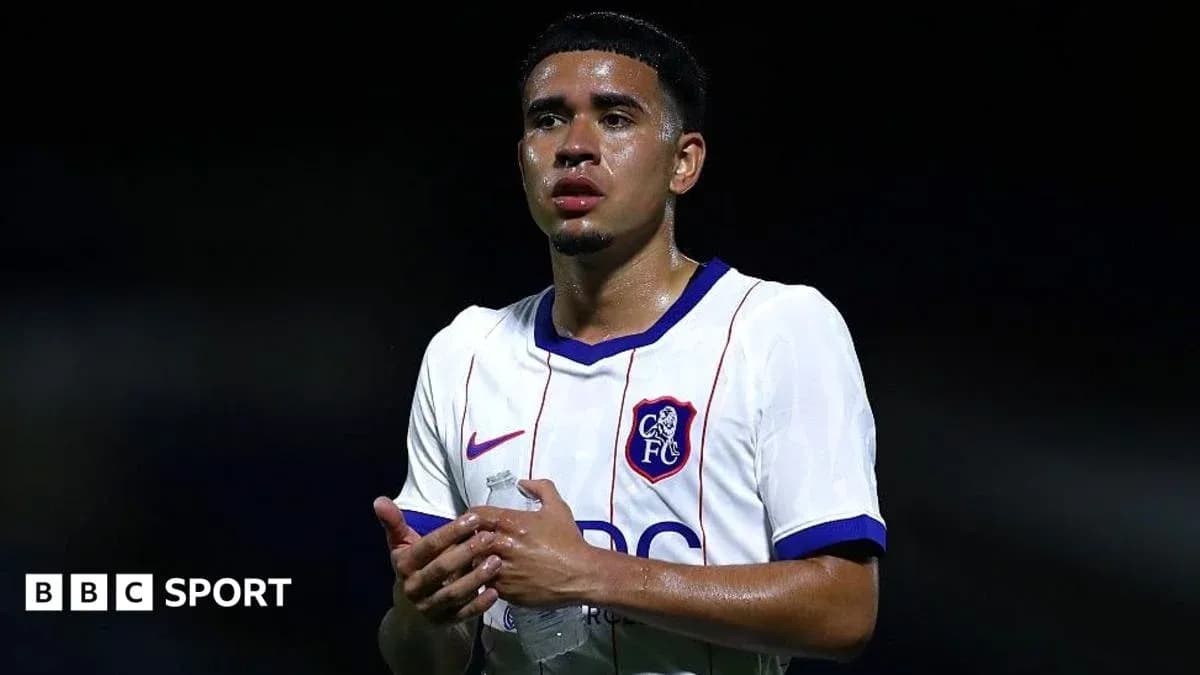
Kendry Paez finally wore Chelsea blue on Saturday. Not under the lights at Stamford Bridge, not to the roar of a Premier League crowd, but as a 12th‑minute substitute for Cobham Next Gen in front of a smattering of spectators at Arsenal’s training ground.
Three years after Chelsea agreed a £17.27m deal with Independiente del Valle for one of South America’s brightest teenage talents, the reality of his London debut was far more modest than the hype that once followed him.
The question now is no longer how high Kendry Paez can fly. It’s whether he can get back off the runway.
From prodigy to puzzle
Paez’s story was supposed to be straightforward. He smashed records in Ecuador, became a continental talking point before he could legally buy a drink, and had Europe’s elite watching his every touch.
At 15, he became the youngest debutant and goalscorer in Ecuador’s top flight. The same season, he stepped into the Copa Libertadores, South America’s fiercest club stage, as if it were just another youth game.
By 16 years and 131 days, he was making his second appearance for Ecuador, becoming the second-youngest South American to feature in World Cup qualifying after Diego Maradona. A month later, he went one better: the youngest South American ever to score in a World Cup qualifier, in a 2-1 win away to Bolivia.
Chelsea saw all this and moved early. When they agreed the deal in 2023, Paez already had 18 caps and two international goals. The club believed they were buying not just potential, but a player already used to pressure, travel, expectation.
They gave him access to first-team training before he was even eligible to join officially at 18. They also stepped in off the pitch, providing security for Paez, his family and the family of Moises Caicedo when violence escalated in Ecuador in early 2024.
The path looked laid out. Then it began to twist.
Loans, lessons and a reputation under strain
The first big test came in Europe. Chelsea sent Paez to Strasbourg, part of the same ownership structure and theoretically a soft landing in a top-five league.
Initially, it worked. He won Ligue 1’s Young Player of the Month award in September and seemed to justify the early excitement. The adaptation, the physicality, the tactical shift – he handled it.
Then the tone changed.
“We expect more, clearly,” then-manager Liam Rosenior said later that season. “I’m tired of using the excuse of the player’s youth.”
The numbers told their own story: one goal in 21 appearances. The loan was cut short despite the organisational links between the clubs. For a player once framed as a phenomenon, it was a jarring comedown.
Chelsea tried again. This time, Argentina, and River Plate – a giant, a pressure cooker, a place where talent either hardens or wilts.
There, too, doubts surfaced. Sources in Argentina questioned his attitude, pointing to a flat performance in the Superclasico defeat to Boca Juniors at the Monumental in April. Shortly afterwards, club president Stefano Di Carlo named Paez among 15 players training away from the first team.
Some within River felt he deserved more chances. Others felt he had not done enough to demand them.
The numbers again were underwhelming: one goal in 14 appearances, 461 minutes in total. The loan ended by mutual consent.
Around the same time, another off-field moment cut through the narrative. Paez was filmed in a New York strip club while on international duty. It didn’t define his career, but it fed a growing perception: a brilliant youngster struggling to manage the weight and freedom that come with early fame.
Back in Ecuador, concern hardened into something closer to anxiety. The country had built him up as their next great attacking talent. Now they were watching him stall.
Michel Deller, the owner of Independiente, spoke with the tone of a disappointed guardian rather than a distant executive.
“He’s like a son to us. We care about him deeply,” he told Hincha Amarillo. “He’s a good kid who’s had a tough time and has made decisions that have complicated his life. We are always hopeful he’ll show his exceptional talent once again but right now, it’s up to him to decide what to do with his life.”
Alonso’s verdict and a reset at Cobham
If Paez needed clarity on where he stood at Chelsea, Xabi Alonso provided it.
The new head coach stated plainly that the midfielder was “not in my plans”. On the club website, Paez is listed as an academy player. For a teenager once pencilled in as a future first-team star, it was a brutal reality check.
Chelsea did try to find him a platform. They explored a loan in English football, only to run into Fifa regulations. The club had already used all six of their international loan slots, leaving them unable to send him abroad again.
So the solution became internal. Bring him back. Strip away the noise. Put him in Cobham’s controlled, elite environment and start again.
Cobham Next Gen – the rebranded Under-21s – is not where Paez expected to be at 19, with 27 caps for Ecuador and more than 100 senior appearances behind him. Yet it might be exactly where he needs to be.
On Saturday, he stepped off the bench in the 4-1 win at Arsenal. On Tuesday, he came on in the EFL Trophy at Wycombe. The crowd was 778. The setting was a far cry from World Cup qualifiers and Superclasicos.
Still, there were flashes.
A small reminder of a big talent
For most of the night at Wycombe, Paez drifted on the edge of things. He played as a right-sided No 10 in a shape mirroring Alonso’s back three, a role similar to Cole Palmer’s. The game largely passed him by.
He had stood slightly apart from his team-mates before kick-off, joining the warm-up but often keeping to himself. A Spanish speaker dropped into an academy group, trying to find his place again.
Then, late on, the old quality flickered.
From a short corner, he whipped in an outswinging cross that Harrison Bettoni tapped home in added time. Moments later, another delivery from Paez caused chaos in the box as Chelsea chased an equaliser.
They still lost. On the teamsheet and in the match report, his impact looked minimal. Yet inside the club, those final minutes mattered. They were a reminder of why Chelsea fought so hard to sign him in the first place.
This is not a teenager overawed by senior football. By 19, Paez has already played 70 times for Independiente and passed 100 senior matches overall. That experience is a foundation, not a footnote.
Between concern and belief
The concerns around Paez are not brushed aside at Cobham. Chelsea know the stories, the criticism from Strasbourg and Argentina, the questions from Ecuador about his focus.
But inside his camp and within the club, there is also a strong conviction that the narrative has run ahead of reality. They argue he needs space and time – not to prove he is a prodigy, but to grow into being a professional.
Back at Cobham, the environment is calmer. Family members were in the stands at Wycombe. The club can monitor his training daily, shape his schedule, control his surroundings in a way that River Plate or Strasbourg never fully could.
Crucially, academy games are watched closely by scouts from across the English Football League and beyond. Every sharp touch, every cross like the one Bettoni finished, feeds into decisions that will be made in January and next summer.
Chelsea are optimistic that a first loan in English football could be secured in the winter window. If one of the six international loan slots opens up, an overseas move remains an option as well.
The situation is not beyond repair. Far from it. Paez has time, minutes and a club still invested in his future.
He once looked like a sure thing. Now he looks like what he actually is: a 19-year-old trying to navigate fame, expectation and the brutal honesty of elite football.
The talent that made him one of South America’s most coveted youngsters has not vanished. It’s waiting. The next few months will tell whether Kendry Paez can finally catch up with the version of himself the football world thought it already knew.