Kerr's New Demand for Draymond Green: Shoot the Three
Steve Kerr has seen enough of the Warriors throwing the ball away.
On a roster that suddenly looks thin on star power and margin for error, the Golden State head coach is turning to something that once made opposing defenses breathe easier: the open Draymond Green three.
This year, he wants those shots going up.
Kerr’s New Demand: Shoot It, Don’t Overthink It
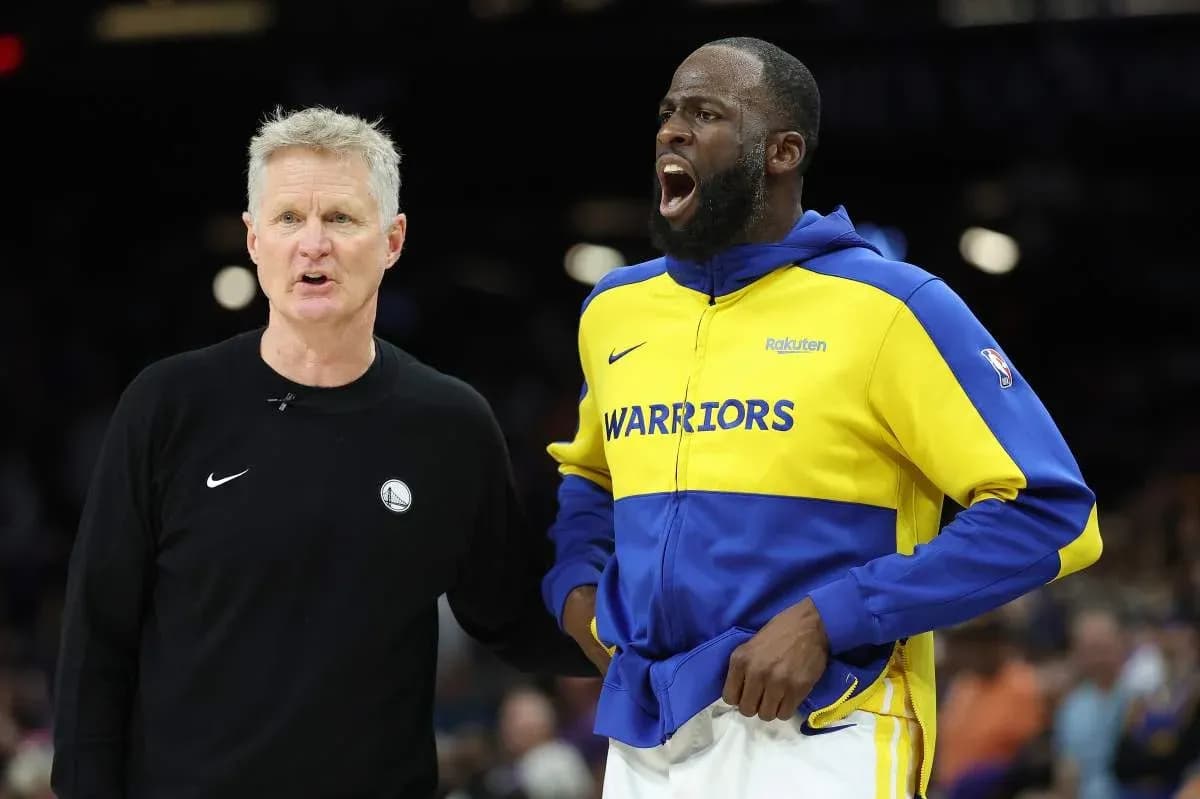
Speaking on the Tom Tolbert Show, Kerr laid out the marching orders for his veteran forward. The Warriors, he said, have to slash their turnovers, and part of that solution runs straight through Green’s hesitation behind the arc.
“I want Draymond shooting the three when he’s open,” Kerr said. “When he shoots a three, he may not be a super high-percentage shooter, but possessions are good for us when he shoots.
“Because, number 1, it’s worth three. Number 2, we get offensive rebounds. Number 3, there’s a flow to the game that has to happen: if someone is open and they shoot it, the game keeps moving.”
That last point is the heartbeat of Kerr’s offense. The Warriors’ motion system collapses when open players pass up clean looks and dribble into traffic. Golden State has long lived on read-and-react basketball; lately, it has died on overthinking and forced passes.
Defenses know it. They sell out on Stephen Curry, crowding him with doubles and extra bodies the moment he crosses half court. The trade-off is familiar: Green, alone beyond the line, with time to set his feet and decide.
Too often, that decision has been to fake, probe, and search for a cutter. Turnovers follow. The rhythm dies.
Kerr wants that script flipped. If Green is open, the ball goes up. Even if the percentages don’t scream “sharpshooter,” Kerr is betting on the math, the offensive rebounding, and the continuity of their offensive flow.
In a season where Golden State can’t afford to waste possessions, an imperfect three is better than a perfect turnover.
A Franchise Icon, A Murky Future
All of this unfolds against a backdrop that would have been unthinkable a few years ago: Draymond Green might be playing his final season in a Warriors jersey.
Green signed a one-year extension this offseason worth just under $30 million. It bought the franchise time, not clarity. With Curry and Jimmy Butler projected as the headliners and the front office under pressure to inject new talent into an aging core, Golden State’s cap sheet is tightening.
The expectation around the league is blunt: the Warriors are unlikely to pay Green anything close to this season’s number to keep him beyond this deal. If he wants to retire where he became a four-time champion and a defensive pillar, a significant discount almost certainly awaits. The alternative is a new NBA home next summer.
That possibility isn’t theoretical. Green himself has already admitted on a recent podcast that he nearly bolted for the Memphis Grizzlies a few years back. The idea of him in another uniform has existed in the background before. This time, the financial and competitive realities make it feel far more concrete.
So the stakes sharpen. For Green, this isn’t just about tweaking his shot profile. It’s about a contract year with real consequences.
He needs a season that reminds the league why he once bent playoff series by force of will: more reliable three-point shooting when left alone, the same snarling, high-IQ defense that has defined his career, and enough durability to anchor a team that no longer has the depth to survive long stretches without him.
The Warriors, meanwhile, have already started planning for life after him, whether it arrives in a year or later. They used the draft to bring in Yaxel Lendeborg, a promising rookie forward who, on paper, offers some of the versatility that has made Green so central to their identity. It’s not a like-for-like replacement yet. It is, however, a clear signal that Golden State is thinking about the next iteration of its frontcourt.
A Thin Margin for Error
This season, the Warriors are not strolling into the Western Conference with the swagger of old. They’re clinging to a path back to relevance, and the conditions are strict.
Curry and Kristaps Porzingis have to stay on the floor. Both missed significant time last season, and without them, Golden State’s offense sagged and its spacing shrank. The version of Porzingis the Warriors need is the one who stretches defenses vertically and horizontally, not the one in street clothes.
Butler, recovering from a torn ACL, carries his own burden. The plan is for him to return by midseason and immediately lift the two-way ceiling of this group. That’s a big ask for any player off such an injury, let alone one expected to be a top option.
Even if all three hit their marks—Curry healthy and electric, Porzingis available and impactful, Butler back and effective—nothing is guaranteed. The West is too deep, the Warriors’ roster too fragile.
So the pressure trickles down the depth chart.
Green must stretch his game, not just direct it. Brandin Podziemski, coming off a promising year, has to expand his responsibilities and production if he wants to lock down a starting role. Role players can’t just fill minutes; they have to tilt games.
That’s why Kerr’s directive on Draymond’s threes is more than a small tactical tweak. It’s a symbol of where this team stands.
The Warriors no longer have the luxury of ignoring open shots, of drifting through possessions, of assuming their old formula will bail them out in April. They need decisiveness. They need volume. They need to squeeze every edge from a roster that, on paper, sits well behind the league’s elite.
So when Green stands alone beyond the arc this season, the moment will carry a different weight. It won’t just be about whether the ball goes in.
It will be about whether Golden State, and one of its defining players, can reinvent themselves in time to matter again.