Knicks Consider Trade for Yves Missi to Address Roster Needs
The New York Knicks have been here before: a good player, a looming payday, and the cold math of the second apron staring them down.
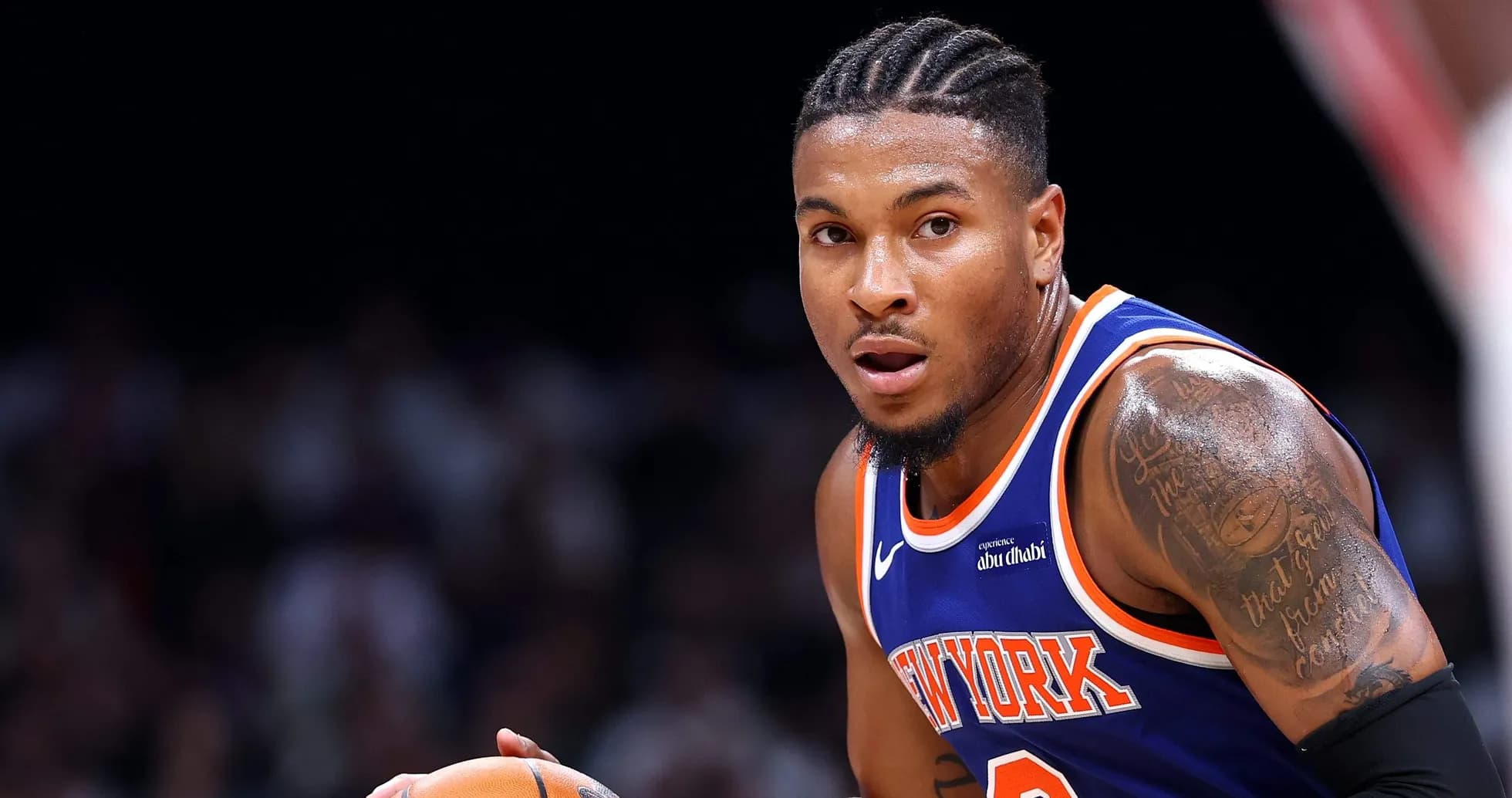
This time, it’s Miles McBride.
The 25-year-old guard is heading toward a major raise next summer, and league insiders expect the number to be big enough to push New York into uncomfortable financial territory. After already letting Mitchell Robinson walk to avoid the NBA’s punitive second apron, the Knicks are not positioned to win a bidding war for a backup guard, no matter how valuable he’s been.
So the league is circling. And one idea in particular has started to gather momentum.
A Clean Swap on Paper
The framework is simple:
- Knicks receive: Yves Missi
- Pelicans receive: Miles McBride (via TPE)
From a cap standpoint, it’s almost too neat. New Orleans would absorb McBride’s expiring $3.9 million salary into the $4.5 million trade exception created in the Jose Alvarado deal. New York, in turn, would bring in Missi on his rookie-scale contract and stay under the second apron.
No picks. No filler. Just a straight talent-for-talent exchange that speaks to where both franchises are in their timelines.
For the Knicks, it would be a delayed pursuit finally coming back around.
The Knicks’ Second Shot at Yves Missi
New York pushed hard for Yves Missi before last season’s February trade deadline. Inside the league, some even described him as a “dream” target for the Leon Rose front office. The Pelicans held firm then, keeping the 22-year-old Cameroonian big and betting on his development.
A year later, the Knicks have even more reason to knock on that door again.
Robinson is gone. The frontcourt rotation has lost its most reliable rim protector and one of its best rebounders. Missi, in limited minutes with New Orleans, has already shown he can live in that space. Across his first two seasons, he averaged 10.9 rebounds and 2.2 blocks per 36 minutes, numbers that hint at a center who can anchor the paint and tilt possessions in the margins.
That’s exactly the kind of profile Tom Thibodeau teams typically thrive with.
The cost, though, would sting. McBride has been, arguably, New York’s best bench player over the last three seasons. His on-ball defense, shot-making in big moments, and willingness to play whatever role is asked of him have made him a favorite in the rotation and in the locker room.
But the guard room in New York is no longer thin.
Landry Shamet’s postseason surge changed the picture. Jordan Clarkson re-signing with the Knicks added another proven scorer to the backcourt. Tyler Kolek, heading into his third season, is expected to see the floor more. All of that nudges McBride from “essential” toward “expendable,” at least in the cold calculus of roster building.
If the Knicks want an affordable, high-upside big who can defend the rim and clean the glass without dragging them into tax hell, this is the type of move that gets them there.
Why New Orleans Listens
For the Pelicans, this isn’t really about McBride vs. Missi. It’s about Derik Queen.
New Orleans has quietly been reshaping its frontcourt around Queen as the long-term answer at center. To clear that path, Missi — who started 67 games as a rookie — spent most of his second season watching from the bench.
The decision wasn’t about performance. It was about priority.
That choice has consequences. According to reporting from ClutchPoints’ Brett Siegel back in January, Missi and his camp were far from happy with the demotion. Siegel noted that the 21-year-old big man felt “disrespected” by the sharp drop in minutes and that “tension has formed between the two sides.”
At some point, a franchise has to pick a lane. For New Orleans, the answer is obvious: Queen carries the higher ceiling and the clearer star trajectory. That leaves Missi as a valuable asset in a crowded frontcourt, but also as a potential problem if the frustration lingers.
Turning him into McBride would be a tidy solution.
McBride is only 25, young enough to fit alongside Queen and the rest of the Pelicans’ core. He can back up Dejounte Murray and Jeremiah Fears, or slide next to either as a combo guard who defends at a high level and hits big shots. He doesn’t need the ball to impact the game, and he can scale up or down depending on the lineup.
For a team trying to solidify its guard rotation around a new centerpiece in Murray, that flexibility matters.
A Trade That Answers Different Questions
For New York, the question is simple: how do you replace Robinson’s rim presence without detonating the cap sheet?
For New Orleans, it’s a different one: how long can you keep a talented young big on the bench while you hand the keys to Queen?
This one-for-one idea answers both.
Missi gives the Knicks a cost-controlled, defensive-minded big with real upside. McBride gives the Pelicans a tough, two-way guard who fits their age curve and rotation needs. The money works. The roles make sense. The motivations align.
The only thing left is the decision: do the Knicks cash in one of their best development success stories to shore up the middle, and do the Pelicans finally admit that there’s only room for one future at center?
The deadline, or next offseason at the latest, will tell.