Lakers' Summer Strategy: Trading for Nicolas Claxton
The Los Angeles Lakers have spent the summer stockpiling guards and wings. Now comes the inevitable question: who’s going to anchor all of that on the back line?
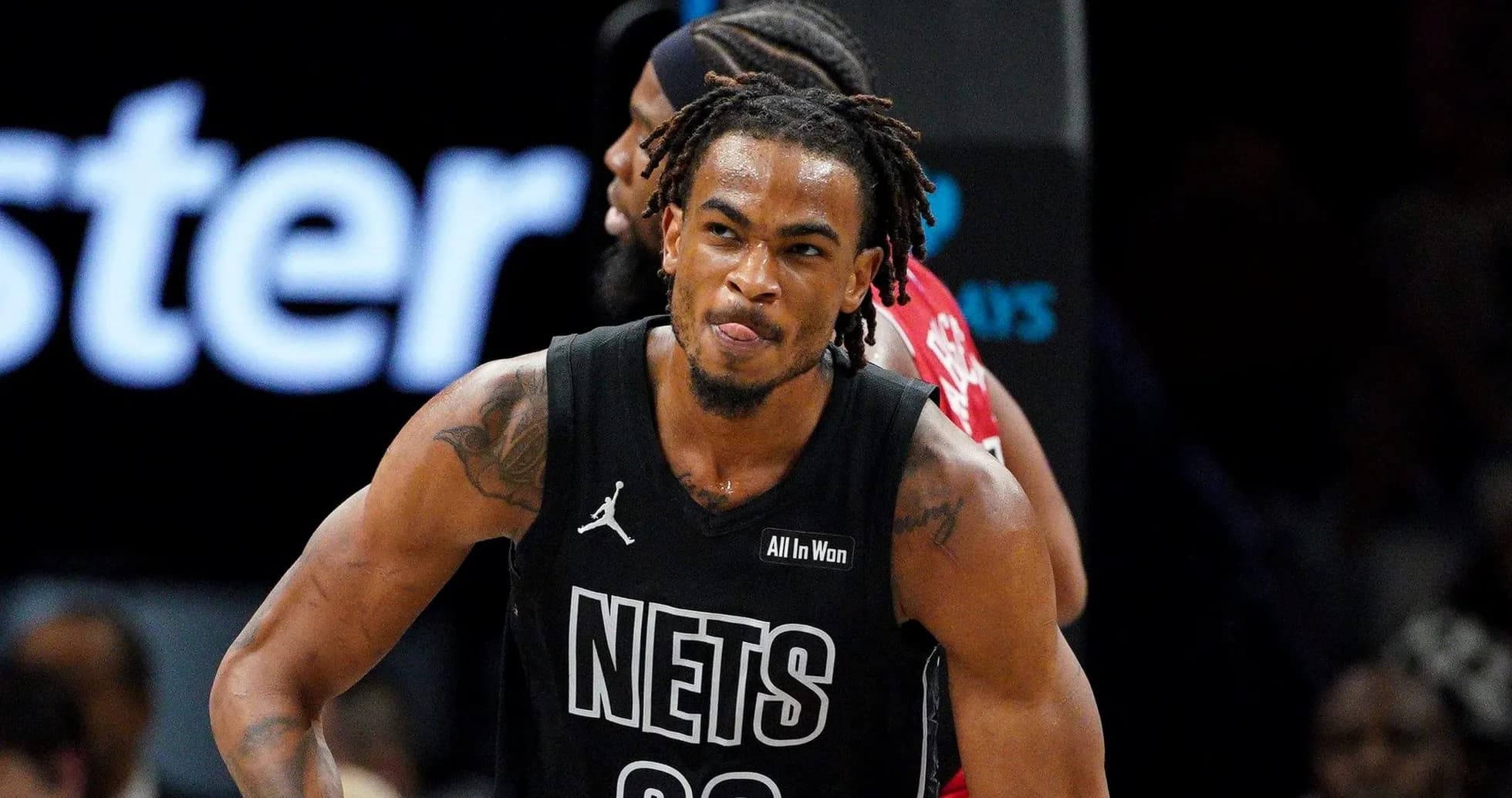
One proposed answer: Nicolas Claxton.
In a three-team concept that ropes in the Chicago Bulls and Milwaukee Bucks, the Lakers would streamline their bloated roster and grab one of the league’s most athletic rim-runners, handing JJ Redick the kind of vertical, defensive big that fits cleanly next to Luka Doncic, Austin Reaves and the rest of his perimeter-heavy core.
The Framework: Claxton to LA, Turner on the Move
The idea breaks down like this:
- Lakers receive: Nicolas Claxton
- Bulls receive: Myles Turner, Jericho Sims, Jaden Hardy
- Bucks receive: Isaac Okoro, Jarred Vanderbilt, Dalton Knecht
For Los Angeles, there’s a practical benefit before Claxton even checks in at the scorer’s table. The deal trims the roster from 16 players to 14, easing the crunch and opening a slot for a potential buyout veteran later in the season. No waivers gymnastics. No awkward camp cuts. Just a cleaner depth chart and a clearer path to flexibility.
The basketball logic runs even deeper.
Why the Lakers Push the Button
The Lakers’ current big-man room is a bet on health that feels optimistic at best. Walker Kessler and Kevon Looney combined to appear in only 26 games last season. That’s not depth; that’s a warning siren.
Behind them, there’s no real size to throw at the Western Conference’s giants: Nikola Jokic, Victor Wembanyama, Chet Holmgren. Those are playoff problems, and right now, Los Angeles doesn’t have playoff answers.
Claxton changes that equation.
He’s a classic rim-running center with the mobility to sprint into screens, dive hard to the basket and live off the gravity of Doncic and Reaves in pick-and-roll. On the other end, he brings the length and timing to protect the rim as Kessler’s primary backup, allowing Redick to keep a true shot-blocker on the floor for 48 minutes.
There’s also a tactical wrinkle Redick would welcome. With Kessler stretching his range out to the three-point line, two-big lineups suddenly become viable. Against oversized frontcourts in the West, Redick could roll out Kessler as a floor-spacer and Claxton as the lob threat, blending size, shooting and vertical spacing in one look.
Financially, Claxton is a clean fit too. He’s on an expiring $21 million deal next season. That number is big enough to matter in trades, but not so heavy that it locks the Lakers into a long-term commitment. If the experiment doesn’t work, they can pivot. If it does, they hold his Bird rights and options open.
Chicago’s Angle: Turner Beside Wilson
For Chicago, Claxton arrived in the Julius Randle deal, but his stay in the Windy City may never have been about permanence. The Bulls already have a young center group forming with Jalen Smith, Australian prospect Lachlan Olbrich and Tobe Awaka. With Tiago Splitter steering what’s expected to be a full rebuild, the frontcourt of the future looks crowded.
The franchise’s new focal point is Caleb Wilson. The question isn’t just who can protect the rim next to him, but who can give him room to operate.
That’s where Myles Turner fits more naturally than Claxton.
Turner’s stretch ability is proven: 2.1 made threes per game on 38% shooting last season. That kind of spacing from the five spot opens lanes for Wilson to attack, gives Matas Buzelis cleaner driving angles, and eases the playmaking burden on Josh Giddey by widening the floor.
Turner can still block shots and patrol the paint, but he does it while dragging opposing bigs away from the rim on the other end. For a young, skill-based core, that’s gold.
Jericho Sims slides in as a straightforward depth piece, a bouncy backup center who can compete with Smith, Olbrich and Awaka for minutes and give Chicago another live body in a rotation that will lean heavily on development.
Claxton, meanwhile, looks more like a luxury than a necessity in that setting. On a rebuilding roster centered on Wilson, his value may be higher on the trade market than on the United Center floor.
Milwaukee’s Reset: Shedding Turner, Clearing the Books
The Bucks’ role in this construction is blunt but sensible: move Myles Turner now, before his contract tightens the financial screws.
Turner is on a four-year, $109 million deal that will pay him $29 million at age 34. For a team leaning hard into a youth movement under Taylor Jenkins, that’s the kind of number that can turn into an anchor.
Milwaukee’s frontcourt of the future already has a face: Kel’el Ware as the starting center, with developmental projects John Butler Jr. and 6-foot-10 Nate Arment in the pipeline. In that context, Turner isn’t just expensive — he’s redundant.
The return package is about flexibility and fit.
Isaac Okoro and Dalton Knecht arrive on expiring contracts, giving the Bucks immediate wing depth without long-term financial weight. Okoro brings defensive toughness on the perimeter, the sort of on-ball presence that can protect young bigs behind him. Knecht offers shooting and scoring punch, a rookie-scale swing with upside and no future cap strain baked in.
Jarred Vanderbilt, under contract with a player option for 2027-28, adds a versatile defender who can guard up and down the lineup. His deal isn’t cheap, but it’s manageable and shorter than Turner’s. For a front office trying to clean its books and keep windows open around its young core, that matters.
The net effect: Milwaukee trims long-term salary, aligns its roster with Jenkins’ timeline, and gives itself more room to maneuver as Ware and the next wave of Bucks grow into larger roles.
A Big Bet on Bigs
On paper, the deal hands each team something it needs.
The Lakers get a live-wire center who fits their stars and their style. The Bulls secure a floor-spacing anchor for Caleb Wilson’s rise. The Bucks escape a looming contract problem and double down on youth.
In a league where the center position keeps evolving — from bruisers to unicorns to switchable rim-runners — this proposal is a reminder of one thing that hasn’t changed: the right big man, in the right context, can still tilt an entire season.
The only question is who’s ready to gamble on that truth first.