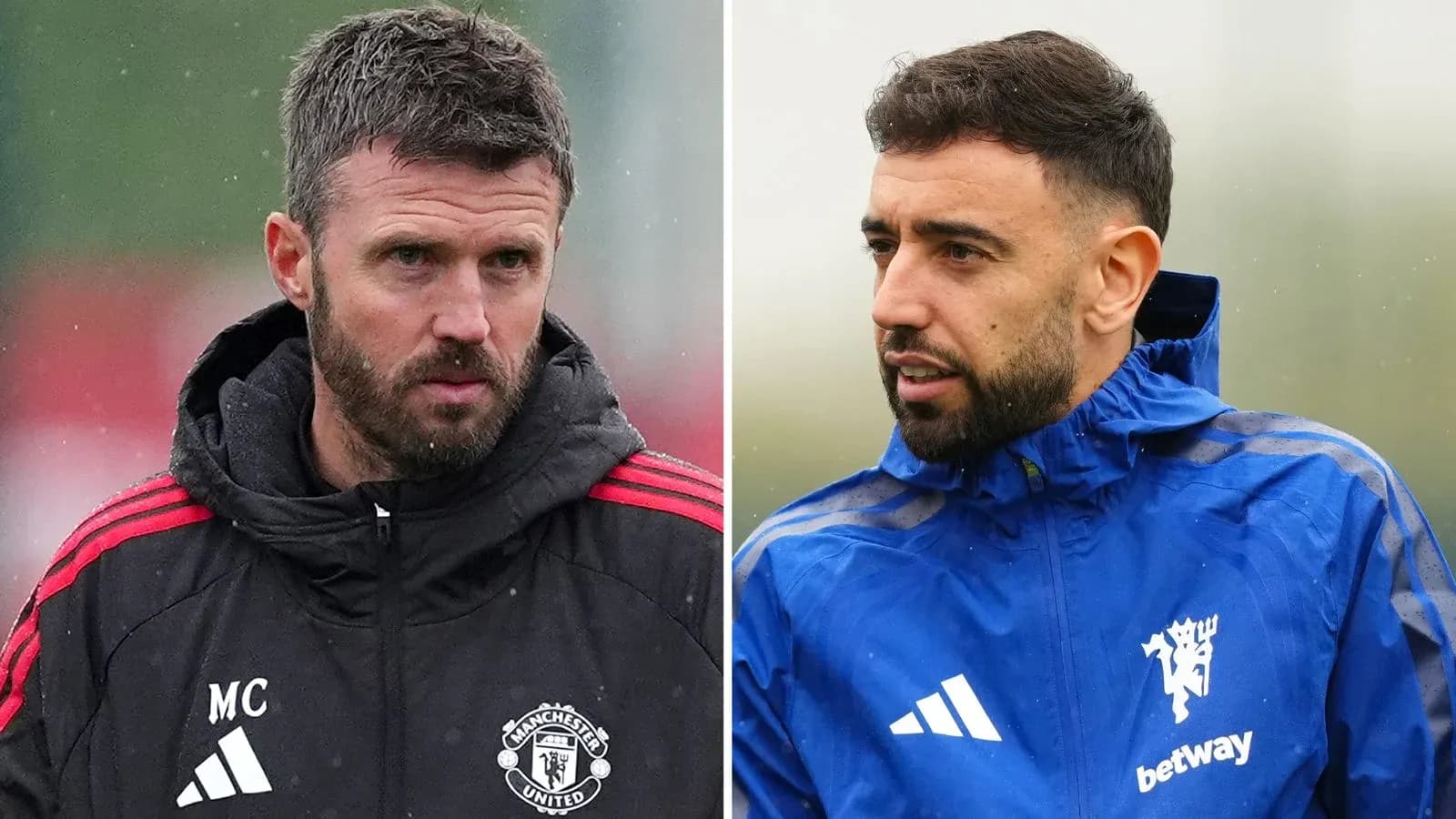
Michael Carrick Addresses Manchester United Crisis Head-On
Michael Carrick walked into the room already under fire and chose to lean into the flames.
Before a question had been asked, the Manchester United head coach delivered a five‑minute, emotionally charged address that laid bare the scale of the club’s current crisis and his determination to own it. No deflection. No excuses. Just a stark admission.
“We've lost our way,” he said. “Respect this football club.”
United are winless in seven games, their worst run since 2015, and the storm has long since moved beyond the pitch. Captain Bruno Fernandes and defender Lisandro Martinez have aired their frustrations in public over the past fortnight, feeding the narrative of a fractured dressing room and a manager on borrowed time.
Carrick pushed back. Hard.
“It’s not divided,” he insisted when asked directly if the dressing room had split. “We just need to get back to doing what we do best. And we will.”
A manager under siege
The pressure is unmistakable. A 4-1 Champions League collapse at Como did more than dent United’s European hopes; it shredded belief in the project’s direction. Fernandes questioned the tactical approach in the aftermath, a move widely criticised by former United players who saw it as a public challenge to the staff.
So would Carrick respond by stripping the armband or dropping his captain?
“The most important thing for me is the team and the dynamics in the squad. It is about the football club,” he said. “Whatever the situation is I will always do what is best for the football club.”
No punishment declared. No public rebuke. On whether he had spoken directly to Fernandes, Carrick refused to open that door, insisting those conversations remain private. He did, however, confirm talks with the club’s hierarchy, who are understood to be increasingly concerned by both results and performances.
“It is pretty obvious how we are all feeling,” he said. “The responsibility for me to be in this position is to lead. It is my responsibility what goes on on the pitch.
“I will hold that umbrella for me to get wet and everyone else to stay dry. That is the privileged position I am in.”
‘We’ve gone away from what we are’
Carrick’s opening monologue was less a defence of his record and more a manifesto for what he believes Manchester United should be. He spoke of five months of “relative success” earlier in his tenure, a period when he felt the team carried a clear identity, intensity and connection with supporters.
That has gone. He knows it.
“Wednesday was a bad night, it was a bad night for a lot of reasons and it was a bad night that hurt a lot,” he admitted. “It hurt me to see us play that way, to see how the game panned out.
“My responsibility is to get a team on a pitch that represents this football club, represents the supporters and they can be proud of it with the identity that we show. We have gone away from that just recently in certain games, which I'm totally fully aware of and definitely doing something about.”
The word “responsibility” kept returning. So did “respect”.
Carrick’s appeal was as much to his players as to the fanbase. He spoke of the “effort and the time and the money” supporters had spent travelling to Como only to be rewarded with a performance he labelled “really unacceptable”.
He knows the standard. He has lived it.
Leaning on United’s history
When Carrick talks about values, he does so from inside the club’s lineage. He played with Ryan Giggs and Wayne Rooney. He worked under Sir Alex Ferguson. He understands the weight of the names that built Old Trafford’s mythology – Sir Matt Busby, Sir Bobby Charlton – and he invoked them deliberately.
“The foundation of this football club and the values of this football club have been put down and etched for many years and I totally understand and I get every single one of them,” he said.
“It comes down to humility, it comes down to being humble, it comes down to being hard-working and being really proud to work hard and being proud to live up to their values. There's a resilience about this football club that's been shown for a long time.
“Manchester United is always bigger and always has been, always will be bigger than any single individual. Bigger than me, bigger than any of the players and it always has been.”
He pointed to Giggs, “arguably one of the greatest to play for this football club”, and Rooney, the club’s record goalscorer, as examples of players who sacrificed themselves for the team. Ferguson, “the best manager of all time” in Carrick’s eyes, was cited for placing United above everything and everyone.
The message to the current squad was unmistakable: no entitlement, no passengers.
“Entitlement cannot be at this football club, we're not entitled to win,” Carrick said. “We've won in the past, we've got an incredible history but that doesn't mean that you're entitled to just win.
“I'm fully aware of that, it takes hard work, it takes a lot of sacrifice. You've got to invest yourself in the football club and you've got to do a lot of things that maybe aren't so nice but you've got to do it for each other and you've got to win.”
A crossroads and a gauntlet
For all the talk of history and humility, the reality is blunt: seven games without a win, performances dipping, senior players questioning tactics, and a fanbase running out of patience. Carrick’s response is to double down on the values he believes once defined United – and to challenge his players to meet them.
“We've kind of lost our way a little bit if I'm totally honest and we'll get it back. I'm totally confident we'll get it back,” he said. “Respect this football club, respect what it takes because it's very, very important to me.”
The fixture list offers no soft landing. Bournemouth at Old Trafford on Sunday. Then Chelsea away. Roma at home in the Champions League. Aston Villa and Liverpool to follow. Six games that could either steady the season or rip away what remains of Carrick’s authority.
He has chosen his stance: umbrella up, pressure on his shoulders, demands raised on those around him.
The question now is whether this squad still has the resilience he talks about – and whether his belief that “we will get it back” survives the next few weeks.