Novak Djokovic's Vulnerability at the US Open: A Turning Point
By the end, Novak Djokovic could barely stand.
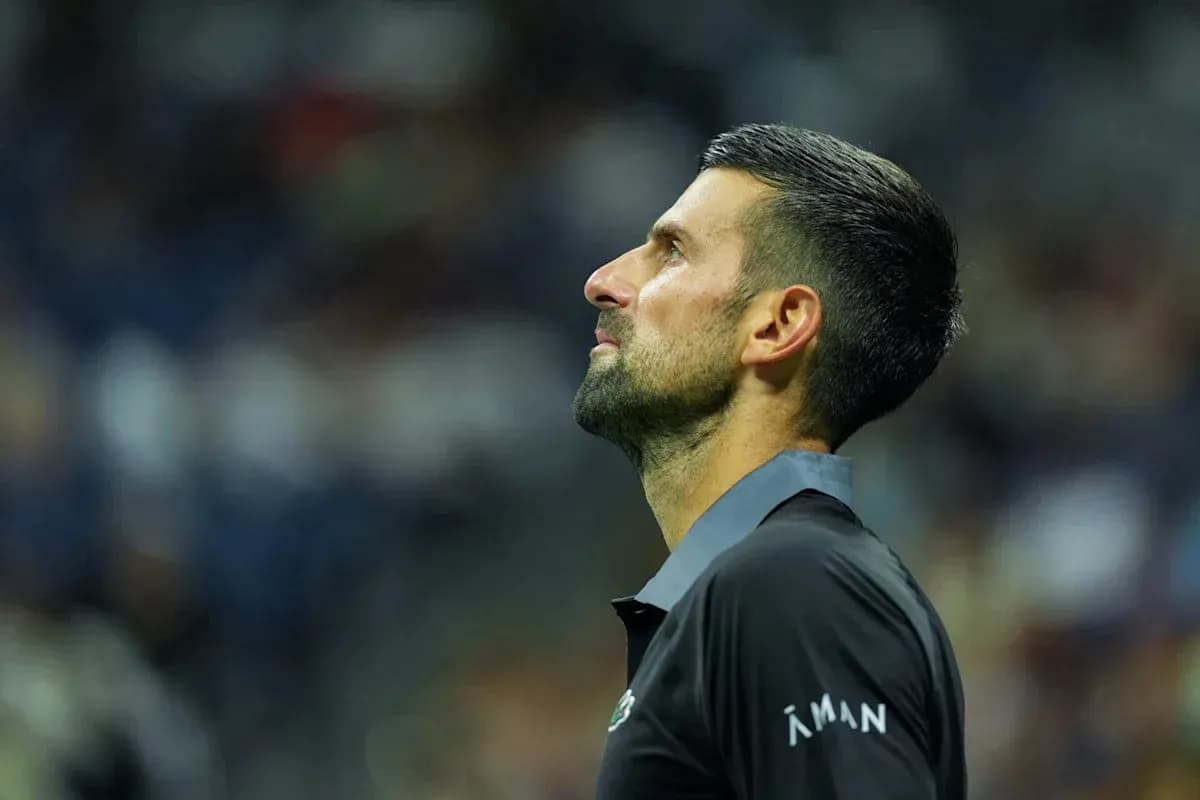
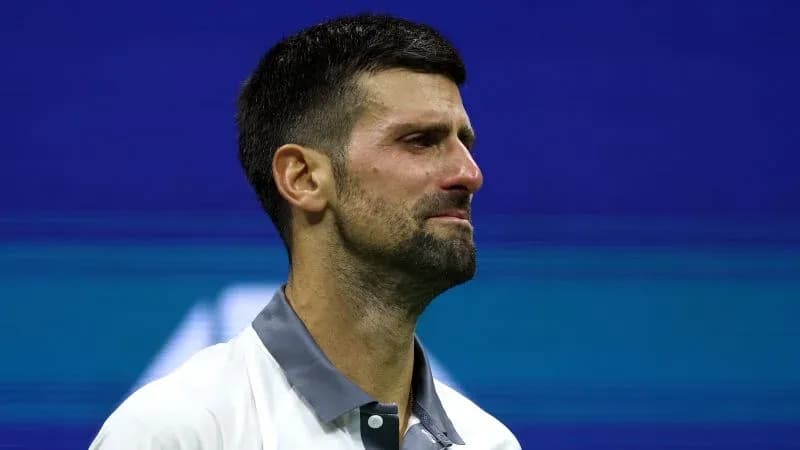
His legs buckled between points, his chest heaved, his face creased with something between pain and disbelief. Tears gathered in his eyes. This was not just another bad day at the office; it felt like a crack in the armour of a man who has spent two decades convincing the sport that he is indestructible.
A first‑round exit to Mariano Navone at the US Open – his worst grand slam result in 20 years – would have been shocking enough on paper. On court, it was jarring. Djokovic did not simply lose. He looked vulnerable. His footwork, usually so precise and predatory, turned heavy. His body, once a model of elastic resilience, appeared rigid. The famous defiance that has dragged him through countless five-set epics finally met an opponent it could not bully: his own limits.
This defeat felt different. It felt, if not final, then alarmingly close to it.
Only seven months ago, Djokovic stood in the Australian Open final, again defying age and logic. At 39, he was still the man most likely to trouble Carlos Alcaraz and Jannik Sinner, the standard-bearers of a new generation. A Wimbledon semifinal in July kept alive the idea that the 25th major, the record-breaking summit he has chased with such ferocity, remained within reach.
Now that mountain looks steeper than ever.
Djokovic is no longer a week-in, week-out presence on tour. He has been rationing himself, circling the four grand slams on the calendar and treating most other events as tune-ups or necessary mileage. It has been a pragmatic, veteran’s schedule, designed to preserve a body that has already given him almost everything.
On Sunday in New York, even that carefully managed plan looked brutally exposed.
Earlier this month, Djokovic admitted he has been managing an underlying health issue for some time, one that flares in hot and humid conditions. Under the heavy skies at Flushing Meadows, it roared back. He vomited between points. His movement slowed to a crawl. By the closing stages he was almost rooted to the baseline, his frame seizing up, his back and shoulder rebelling.
The tears in that final set did not look like frustration at a misfired forehand or a squandered break point. They looked like a man confronting a question he has spent years outrunning: what happens when the body finally says no?
“I didn’t enjoy myself,” he said afterward. “I think it was obvious that it was an awful feeling on the court for me.”
He did not hide from the scale of the problem.
“It’s something that I’ve been carrying, unfortunately, pretty much every match this year: vomiting, throwing up, a serious issue there.
“Then my whole body starts to collapse, basically cramping and pain. Yeah, the back just gave up in the end and shoulder.”
Those are not the words of an athlete dealing with a niggle. They are the words of a 39-year-old who has pushed himself to the edge so often that the edge is now pushing back.
Djokovic left New York saying he needed time to think about his future, to decide whether he could keep asking this much of his body. After what the world saw on Sunday, how could retirement not be part of that conversation?
Yet this is Novak Djokovic. Doubt has been the soundtrack to his career, and he has spent years dancing over it.
In 2017, an elbow injury left him a shadow of himself. Whispers grew: maybe the great run was over, maybe he would never again be the player who tormented Roger Federer and Rafael Nadal. By the end of 2018, he had two more grand slam titles in his luggage and the rankings at his feet.
The “end is nigh” narrative has stalked him ever since. Every new season is framed as his last true shot. Every defeat, especially at the majors, is dissected as a possible closing chapter. Yet he has repeatedly rewritten the script, tweaking his game, shortening points, leaning on his return and his mind to compensate for the slight erosion of speed.
The five-set win over Sinner at this year’s Australian Open was another reminder of that stubbornness. Down and seemingly cornered, he summoned the old fury and problem-solving genius to turn a match, and a stadium, his way. For a night, the clock on the wall stopped ticking.
But the larger truth is impossible to ignore. Djokovic has not won a grand slam since 2023. That is not a failure; it is the sport catching up. Federer and Nadal, his eternal yardsticks, both claimed their final majors at 36. The physical load of the modern game is brutal. To ask a 39-year-old to trade blows over best-of-five sets with Alcaraz, Sinner and the wave behind them is to ask for perfection from a body that has already delivered more than anyone had the right to expect.
So perhaps Sunday in New York will be filed away as another false alarm, another moment when we rushed to close a chapter he was not ready to end. But the odds are shifting. The expression on his face, as he tried and failed to conjure one last surge, suggested a man feeling that shift in real time.
Djokovic has always controlled his surroundings on court – the tempo, the crowd, the opponent, even the chaos. For once, he looked like the one being controlled. Maybe that realization hurt most of all.
Whatever he decides in the coming months, his legacy is set. Twenty-four grand slam singles titles. Years spent as the standard by which greatness is measured. Arguments about the “greatest of all time” will rage on, but his name will always sit at the heart of them.
He will also not be the first great champion to stay in the arena a touch longer than his body would advise. Pride, habit, and the lure of one more night under the lights are powerful forces.
Perhaps the path forward lies in changing what success means: fewer tournaments, different goals, a quieter chase. Another year or two built not on records, but on moments. Yet that raises the question that only Djokovic can answer.
Is a man who has spent his life redefining the limits of the sport willing to redefine his own?