Pedri Faces Criticism After Barcelona's Recent Defeats
Barcelona turn the page quickly when things go wrong. They have to. A Champions League exit against Paris Saint-Germain and a bruising defeat to Real Madrid at the Spotify Camp Nou have left scars, and the only way out is forward: an away trip to Deportivo Alavés and Quique Sánchez Flores.
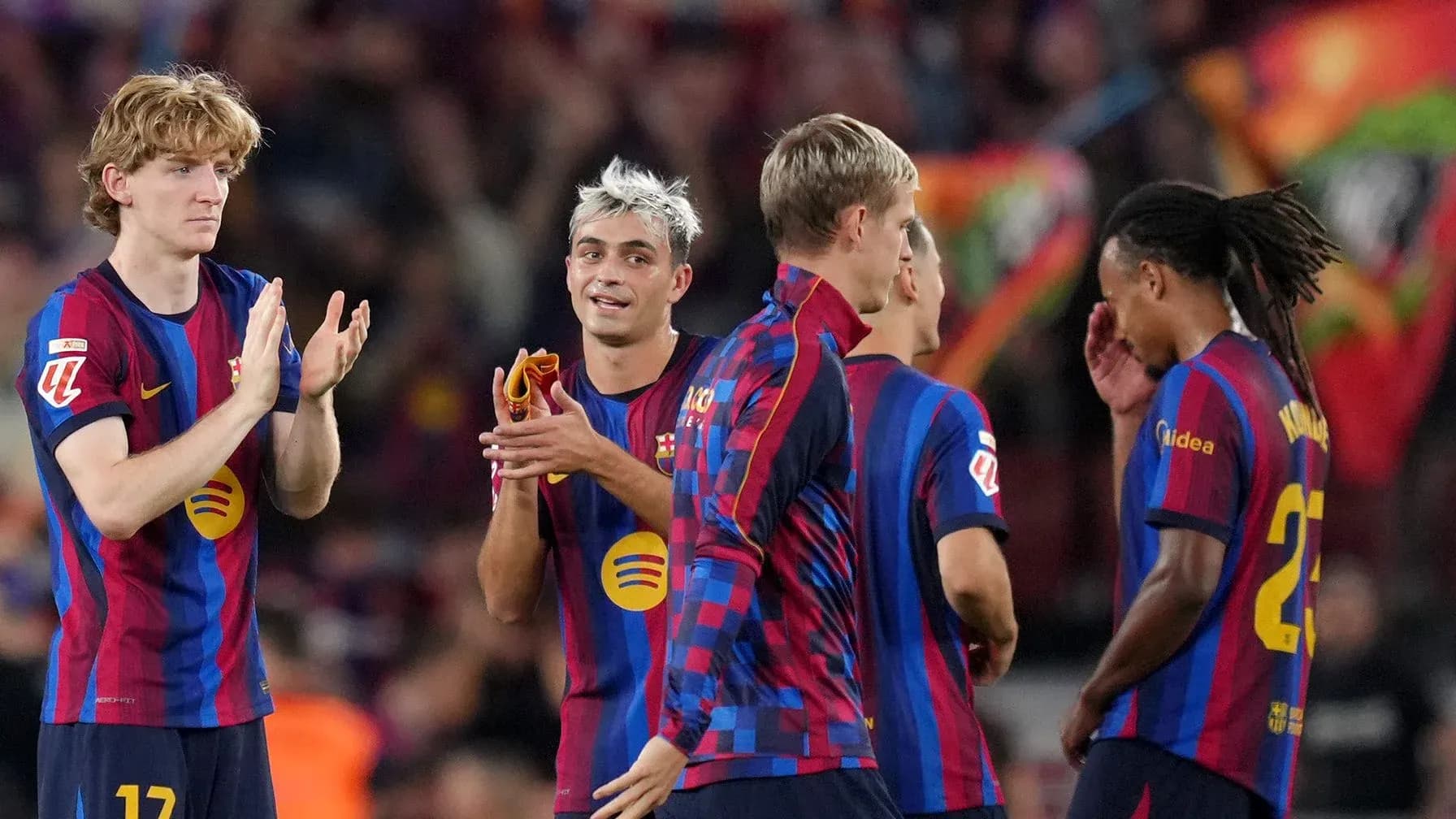
But as the team looks ahead, one name sits at the centre of the post-mortem: Pedri.
Pedri under the microscope
According to Sport, the midfielder has absorbed some of the harshest criticism in the aftermath of those two defeats. On Cadena COPE, Manolo Lama did not hold back.
Lama’s complaint cuts straight to the core of Pedri’s game: his body. “To be a top-class player, you have to be at the peak of your physical level,” he said, framing the debate not around talent or attitude, but conditioning.
From there, everything unravels. The journalist argued that the technical drop-off is a direct consequence of that physical dip. “I have seen that he has a physical problem,” Lama insisted. “When he suffers from a physical problem, his passing is not as accurate as it was before.”
That is a brutal assessment of a player once hailed as Barcelona’s metronome. The picture Lama painted was of a footballer drained almost from the opening whistle. Pedri “looks tired after the first ten minutes of the match”, he added, a line that goes beyond mild concern and into alarm, especially for a midfielder expected to set the tempo deep into games.
A mind slower than the legs
Lama then widened the lens. He brought Pablo Barrios into the conversation, using one of La Liga’s most gifted youngsters as a reference point to explain what fatigue does to a footballer.
“When feelings of fatigue build up in a player, he loses his energy, and your mind no longer works at the same speed as your legs move, something that shows clearly on you,” he said. The implication is stark: this is not just about sprints and duels, but about decision-making, vision, the split-second timing that separates the good from the elite.
For a player like Pedri, whose game is built on reading spaces and threading passes, that kind of mental slowdown is fatal.
World Cup warning, Barça exception
At that stage, Juanma Castaño, presenter of El Partidazo on Cadena COPE, stepped in with a reminder. This is not the first time Pedri’s status has been questioned. Castaño recalled that the midfielder had already lost his starting place during the World Cup, a moment that hinted at vulnerability beneath the hype.
Castaño, though, drew a line between national team and club. He does not see the same scenario unfolding at Barcelona. In his view, Pedri’s performances for Barça usually justify the faith placed in him, even when the wider debate rages about his physical state.
The message was clear: while Spain could afford to rotate, Barcelona treat him as a pillar.
Bernardo Silva, the benchmark
Miguel Rico then brought the discussion back to the Clásico and, more precisely, to the man on the other side of the duel. For him, Pedri’s problem against Real Madrid had a very specific reference point.
“Pedri's problem has a name and a surname, and it is Bernardo Silva, that player who has great experience and is strong when the situation demands it, as well as being a top-class footballer,” Rico said.
It was less a criticism of Pedri’s talent and more a reminder of the level he is being judged against. Bernardo Silva embodies what Pedri is expected to become: experienced, resilient, decisive when the pressure tightens.
Barcelona now travel to Alavés needing a reaction, with their young playmaker caught between expectation and exhaustion. The question is no longer whether Pedri can play, but whether he can once again dominate games at the speed and intensity this Barça project demands.