Rybakina vs Sabalenka: A Power Shift in Women's Tennis Final
Aryna Sabalenka has known the score for weeks. To keep Elena Rybakina behind her in the rankings, she needed to win the US Open. Even that might not have been enough.
By the time they walk out for Saturday’s final in New York, the equation is brutally simple: Sabalenka’s 99-week reign as world number one is over. Rybakina has already done enough. The Kazakh secured top spot the moment she reached the semi-finals, and now comes for the trophy as well.
This is not just a final. It is a power shift, played out under the lights.
Rybakina’s rise, Sabalenka’s response
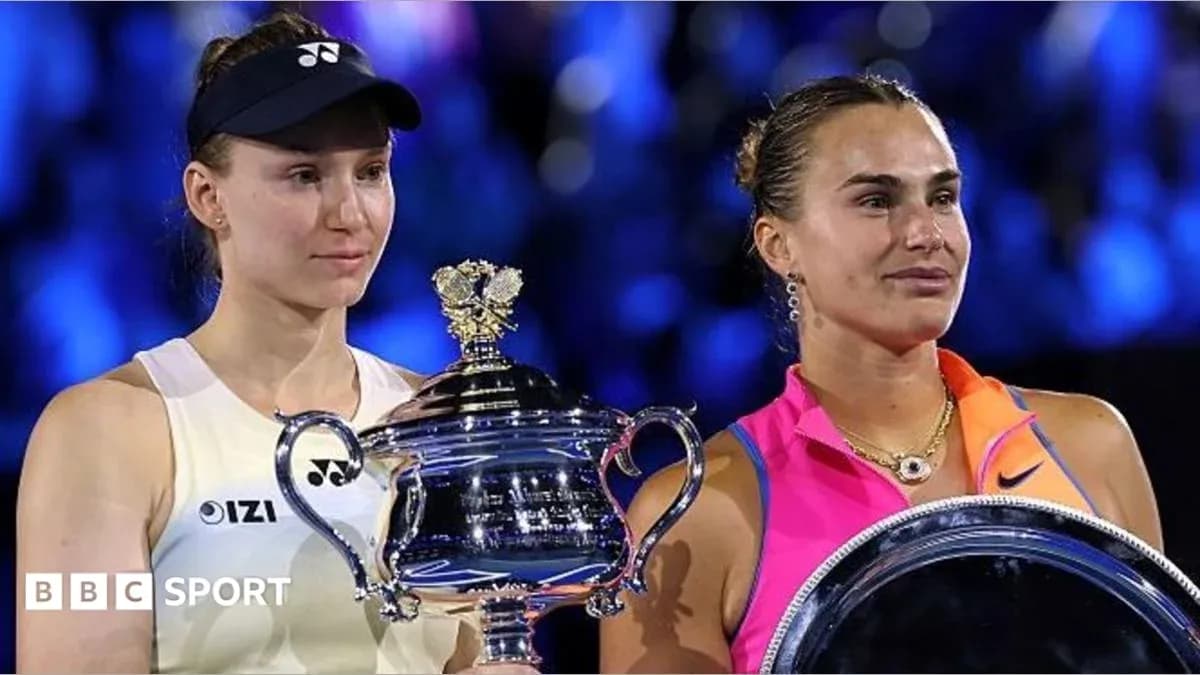
Rybakina has been circling this moment all season. She beat Sabalenka in the Australian Open final in January, a win that set the tone for the year and reopened a rivalry that cuts to the heart of the women’s game: raw power on both sides of the net, but very different temperaments.
Now she has the chance to twist the knife. Take the ranking. Take the New York crown. Close the season as the player everyone else has to chase.
For Sabalenka, that prospect stings. And it fuels her.
“It is going to be red rag to a bull for her – she is not going to be happy,” former British number one Annabel Croft said on BBC Radio 5 Live. “Now she has the opportunity to end this year on a high.”
Sabalenka has already hit back twice since Melbourne, beating Rybakina at Indian Wells and Miami. Those wins matter. They remind her that this is not a one-way story of Rybakina’s rise, but a tug-of-war between two of the game’s heaviest hitters.
In New York, Sabalenka is chasing something even bigger: a slice of history. Only two women in the Open era have won the US Open singles title three years in a row. She is one match away from joining them.
A champion under strain
The performance that got her there suggested the old Sabalenka – the ruthless closer, the player who crushes doubts as easily as second serves – is back.
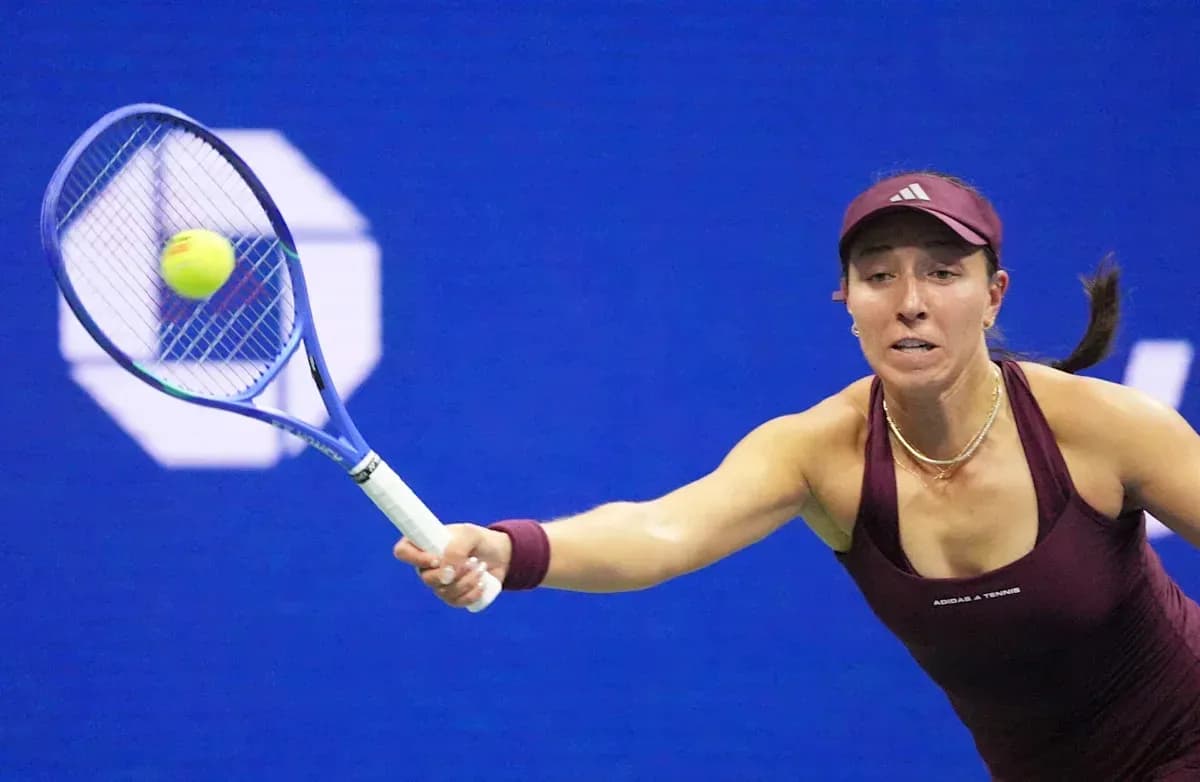
Her semi-final win over American third seed Jessica Pegula was her sharpest display in months. The serve hit its marks, the forehand ripped through the court, and the body language screamed certainty. She played with a looseness and fire that had been missing for much of the season.
Afterwards, she brushed off the significance of losing the number one ranking, joking that she did not care. The smile said one thing. The people around her said another.
She does care. Deeply.
Her coach Anton Dubrov has watched the ranking chase hang over her for months.
“I actually like this [losing the ranking] happened. It’s ended and it’s extra fuel,” Dubrov said. “There is no more extra draining [of mental energy] or thinking about it. There’s a next chapter right now. You have to chase again. It’s extra motivation for you. Just go and get it.”
The message is clear: the burden has flipped. The hunted becomes the hunter again.
Cracks, collapses, and a fragile summer
Sabalenka did not arrive in New York with the aura of an untouchable champion. She arrived with question marks.
Across the past five months, she developed a worrying habit: losing matches from positions she once would have locked down without fuss.
The most brutal example came in Paris. In the French Open quarter-finals, she led 25th seed Diana Shnaider by a set and a double break. The match was in her hands. Then it wasn’t. Shnaider roared back to win 3-6 7-5 6-0, a collapse that exposed a mental fragility rarely seen from Sabalenka on the WTA Tour in recent years.
The clay swing had already thrown up warning signs. In Madrid, she held six match points against Hailey Baptiste and failed to close. In Rome, she took the first set from Sorana Cirstea and still found a way to lose. The pattern was unmistakable: strong starts, frayed finishes.
Hard courts did not immediately fix the problem. In Cincinnati, she faced 20-year-old Czech Sara Bejlek and again built clear advantages, only to watch the match slip away in straight sets. The scoreline did not tell the story of the chances missed, but Sabalenka and her team felt every one.
This was not about technique. It was about the mind.
Space, freedom, and one more shot
Inside the Sabalenka camp, there was no rush to tear everything up. No panic, no drastic overhauls. Just a recognition that this was a storm to be ridden out, not a career crisis.
“We all understand that this is just part of the thing,” said her high performance coach Jason Stacy. “We just give her space to be herself, help her figure out what might work for her right now. Giving her that freedom, but also knowing that she has the guidance of all of us, I think that just gives her a power that few are lucky enough to have.”
Space to breathe. Freedom to fail, and to find it again. Guidance when she asks for it.
The early-season tension around the ranking chase has gone. The number one spot is Rybakina’s now, guaranteed, banked, untouchable this fortnight. What remains is a final that feels like a statement match for both.
For Rybakina, a chance to confirm what the rankings already say: that she has become the standard-bearer.
For Sabalenka, a chance to turn lost status into fuel, to defend her New York fortress, and to prove that the past five months were a wobble, not a warning.
One will leave Arthur Ashe Stadium with the trophy. One will leave with a question: is this the start of a new era, or just the latest twist in a rivalry that refuses to settle?