Southeast Division: Giannis Joins Miami, Atlanta's Bold Moves
The Southeast used to drift along on the margins of the league’s power map. Not this year. A generational force has walked through the door, the balance has shifted toward South Beach, and the rest of the division is scrambling to decide: chase, reload, or quietly rebuild?
Miami has gone all‑in on Giannis Antetokounmpo. Atlanta believes it has quietly built a 50-win machine. Orlando is betting on health and continuity. Charlotte has ripped up the script just as it started to work. Washington, as ever, is searching for a star to drag it out of the wilderness.
This isn’t a gentle reset. It’s a collision course.
Atlanta Hawks: Depth Over Stardom, Ambition Over Fear
The Hawks traded Trae Young and didn’t collapse. They grew.
Jalen Johnson stepped into the spotlight, Atlanta went 46-36, and pushed through to the first round of the postseason. That’s not a fluke season for a team supposed to be in retreat. It’s a foundation.
Now comes the interesting part. Atlanta didn’t chase another marquee name. It built a rotation that looks like it belongs in late April.
Luguentz Dort and Aaron Wiggins arrive from Oklahoma City with championship scars and the kind of defensive edge this roster has long lacked. Dort, in particular, alongside Dyson Daniels, gives the Hawks a snarling perimeter tandem that can choke off opposing guards and swing entire fourth quarters.
CJ McCollum is back, the steady veteran scorer who can still win a game with a hot quarter. Nickeil Alexander-Walker adds more shooting, more creation, more options. No headline superstar in that group, but plenty of players who understand winning basketball.
The concern is obvious and unavoidable: big men. Atlanta is light on high-end size, and over an 82-game grind, that usually gets exposed. On some nights, they’ll be outmuscled on the glass and punished at the rim.
But this is a team that can throw a heavy rotation at opponents, wave after wave of competent, playoff-caliber players. On paper, it’s better than last year’s version. In practice, this group could flirt with 50 wins.
Or it could find itself fighting through the SoFi Play-In Tournament, wondering if the lack of interior heft capped its ceiling.
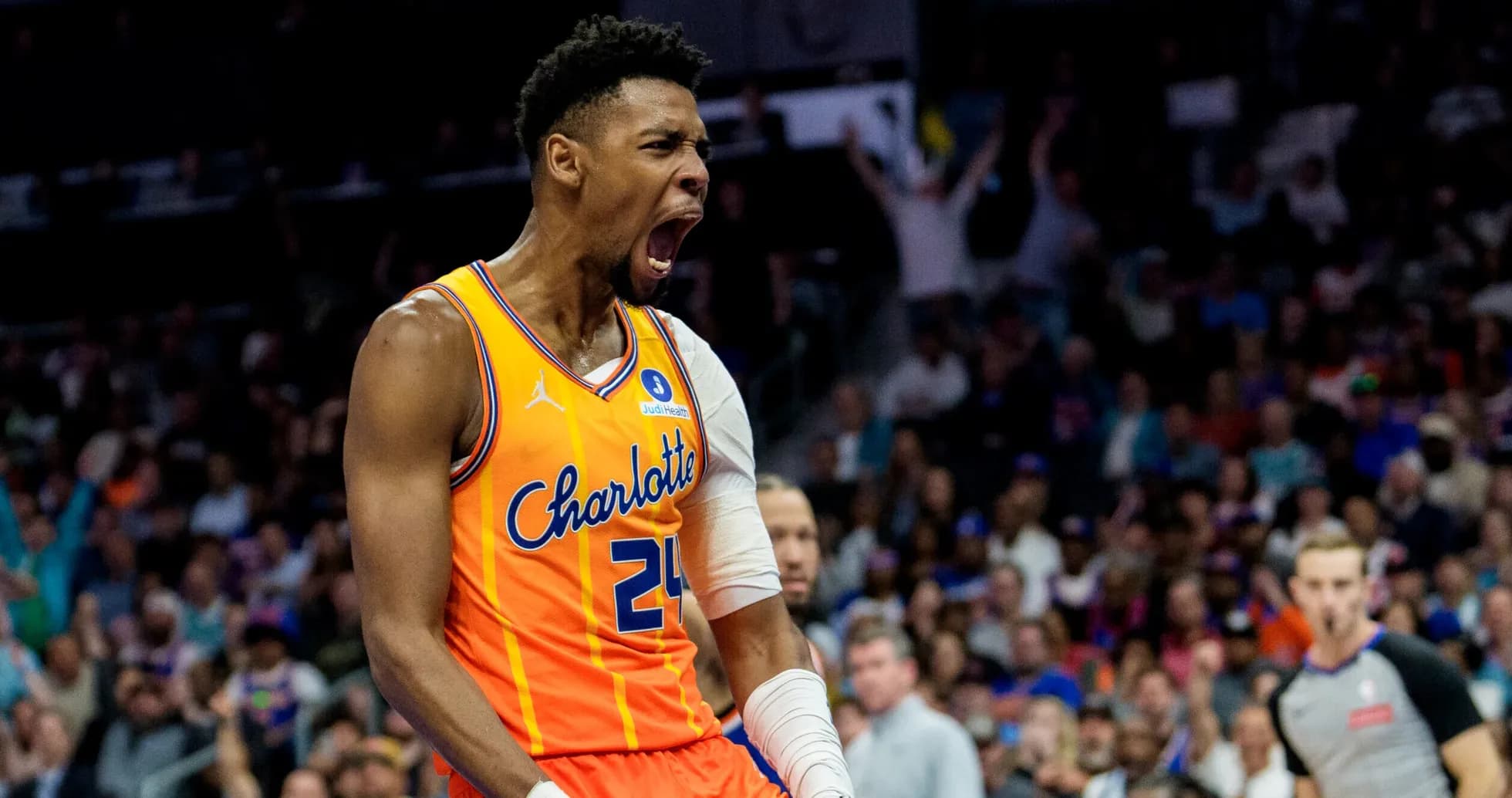
Charlotte Hornets: A Bold Gamble After a Breakthrough
The Hornets finally found a little daylight last season. A 44-38 record, a Play-In spot, a mostly young core that looked like it was just learning how to win.
Then they tore out the heart of it.
LaMelo Ball and Miles Bridges are gone, both moved just as they touched their prime. It’s the kind of decision that can define a front office for a decade. Charlotte clearly believed the returns on those deals were too strong to ignore and that their production could be replaced by committee.
The ball now belongs to Coby White. Since arriving from Chicago, he’s shown he can run an offense, score, and control tempo without needing to dominate every possession. He doesn’t bring Ball’s flair, but he brings stability.
Brandon Miller is the new offensive engine. He looks poised to climb into the league’s top tier of scorers, a smooth wing threat who can manufacture points from all three levels. If he hits that top-15 scorer threshold, the sting of Bridges’ departure dulls quickly.
Around them, Charlotte has stocked the rotation with proven role players. Grayson Allen can space the floor and annoy opponents. Dorian Finney-Smith and Royce O’Neale bring switchable defense and playoff habits. Naz Reid, fresh off an important role in Minnesota, adds scoring punch and toughness at center. Dennis Schröder offers veteran guard minutes and on-ball pressure.
This isn’t a teardown. It’s a hard pivot.
If the chemistry clicks and the new hierarchy settles early, the Hornets can stay in the playoff mix. If it doesn’t, the decision to move on from Ball and Bridges after a winning season will hang over the franchise like a storm cloud.
Miami Heat: Giannis, Bam, and the Weight of Expectation
Some franchises wait decades for a generational player. Miami just went out and got another one.
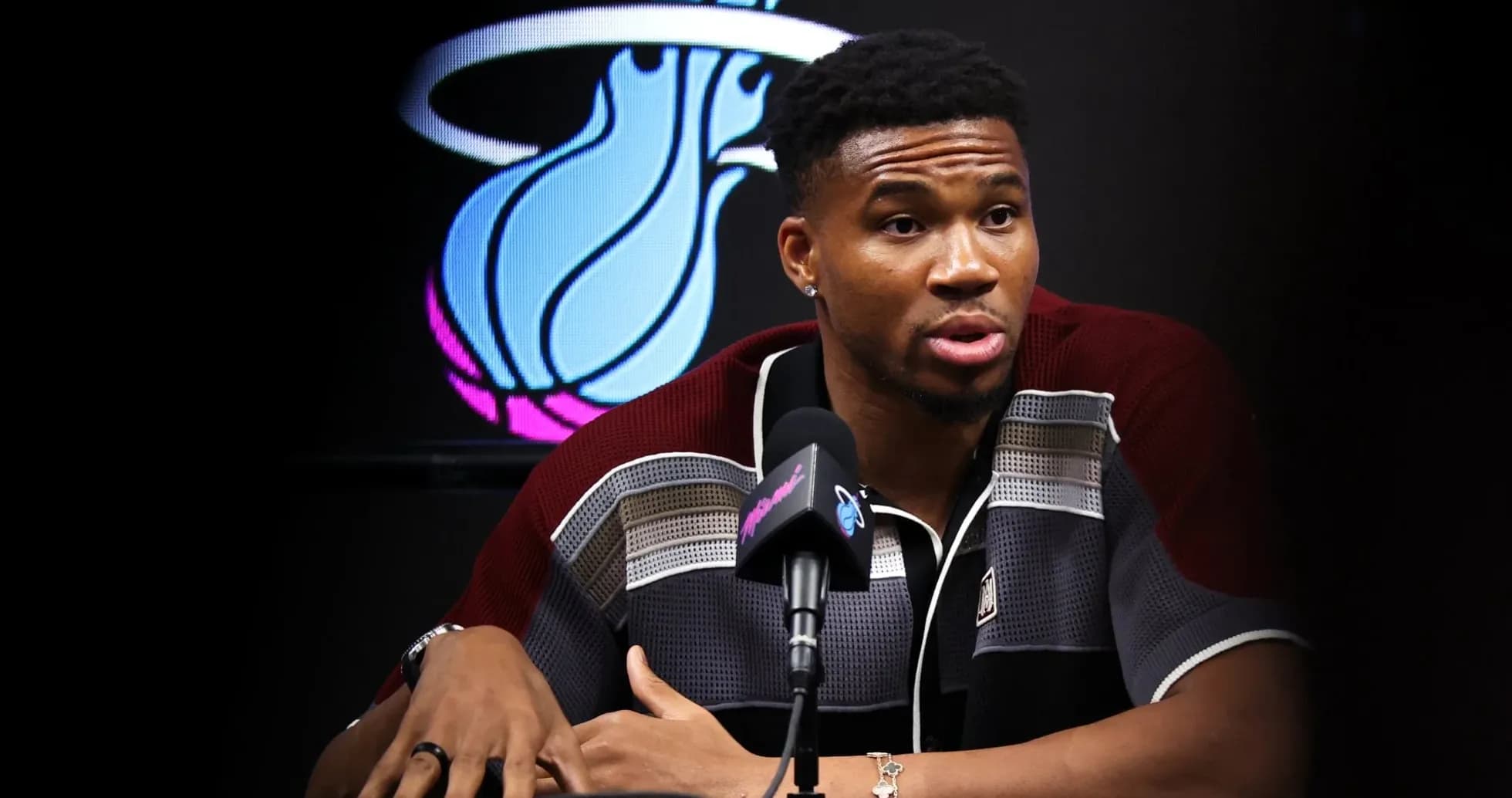
After grinding to 43-39 with Tyler Herro limited to 33 games, the Heat have reloaded in a way that fits their history of audacious moves. Giannis Antetokounmpo is now the centerpiece in South Beach, a two-time Kia MVP who still terrifies defenses and erases mistakes on the other end.
This is the beginning of a new era, but it comes with a clock attached. Giannis is 31. His game leans heavily on his extraordinary athleticism, and the injury history is real. For Miami’s front office, every season with him is a window that must be attacked, not admired.
The good news? He’s not alone.
Bam Adebayo remains one of the league’s premier bigs, and alongside Giannis, he forms what might be the best defensive frontcourt pairing in basketball. Two elite, versatile stoppers, both capable of switching, both capable of anchoring a scheme. Opponents will feel that from the opening tip.
To get Giannis, Miami paid the usual tax. Tyler Herro, Jaime Jaquez Jr., Norman Powell, and other rotation pieces are gone. The margin for error shrinks when you consolidate that much talent into one star.
So the supporting cast matters more than ever. Bobby Portis brings toughness and scoring off the bench. Tim Hardaway Jr. can heat up from deep. Klay Thompson, if he can find a rhythm, still bends defenses with his shooting gravity. Nick Richards adds size at center.
This roster doesn’t yet look like the polished version of a contender. It looks like a contender under construction, with the top of the structure already in place.
Giannis and Bam give Miami a defensive identity and a postseason floor. The question is simple, and ruthless: will the shooting and depth around them be good enough, soon enough, to turn that into a real title run?
Orlando Magic: No More Excuses, Just Answers
Orlando has seen enough glimpses. Now it wants a full picture.
Last season, the Magic scrambled to 45-37 despite getting only 34 games from Franz Wagner and just 57 from Jalen Suggs. For a young team trying to figure out its own ceiling, that kind of injury disruption can stall progress.
So the front office chose a controlled offseason. No wild swings, no dramatic trades. Just a coaching change and a commitment to the core.
Sean Sweeney takes over on the sideline, tasked with squeezing more consistency and sharper execution out of a group that clearly has postseason talent. His job is not to reinvent the roster, but to refine it.
The headline addition is actually a familiar face. Nikola Vučević returns to Orlando, offering size, scoring, and a pick-and-pop threat that fits nicely next to Paolo Banchero and Wagner. Izaiyah Nelson joins the frontcourt mix, but this is not a team defined by newcomers.
The key moves came in the form of re-signings: Vučević, Jonathan Isaac, and Jevon Carter all return on deals that keep the payroll under control while preserving depth and defensive versatility.
Orlando’s hopes rest on something far less glamorous than a blockbuster trade: health. A full season of Wagner and Banchero together, with Suggs available consistently, will finally reveal whether this core is ready to climb or destined to be reshaped.
If Sweeney’s system unlocks another level for Wagner and Banchero, the Magic can move from plucky playoff team to genuine threat. If not, the trade deadline or next summer could bring a very different look.
Either way, the time for “wait and see” is coming to an end.
Washington Wizards: Dybantsa’s Promise and Davis’s Question Mark
The Wizards have spent years wandering through the lower reaches of the Eastern Conference, making the playoffs just once in the last eight seasons and not winning a first-round series since 2017. The fan base is tired. The patience is thin.
Now comes AJ Dybantsa, the latest great hope.
He arrives as more than just a high draft pick. He’s a jolt of energy for a franchise starved for a game-changer, a player whose skill set and mentality seem to match exactly what Washington has been missing: star potential with room to grow.
The front office has tried to give him a proper environment. Trae Young has been extended, anchoring the backcourt with his playmaking and shot creation. He can orchestrate the offense, feed Alex Sarr, and help simplify the game for the collection of young talent scattered across the roster.
Deandre Ayton joins the front line, offering size and scoring. Khris Middleton brings experience and a calm, methodical game on the wing. Tre Mann and Felix Okpara add more depth, more options, more ways to experiment.
But one name still looms over everything: Anthony Davis.
His health, availability, and long-term commitment will define this season as much as Dybantsa’s emergence. A healthy Davis remains a high-level two-way force, the kind of player who can anchor a defense and tilt a playoff series. The question is whether Washington is his next chapter or just a brief stopover.
If Davis stays on the floor and buys into the project, the Wizards suddenly have a blend of youth and proven talent that could accelerate their climb. If he doesn’t, the franchise faces yet another reset around its latest potential star.
For a team that has spent so long searching for direction, the stakes could hardly be clearer: will Dybantsa and this retooled core finally drag Washington out of the shadows, or is this just another false dawn in a decade of them?