US Open Highlights: Hijikata's Upset and Wawrinka's Farewell
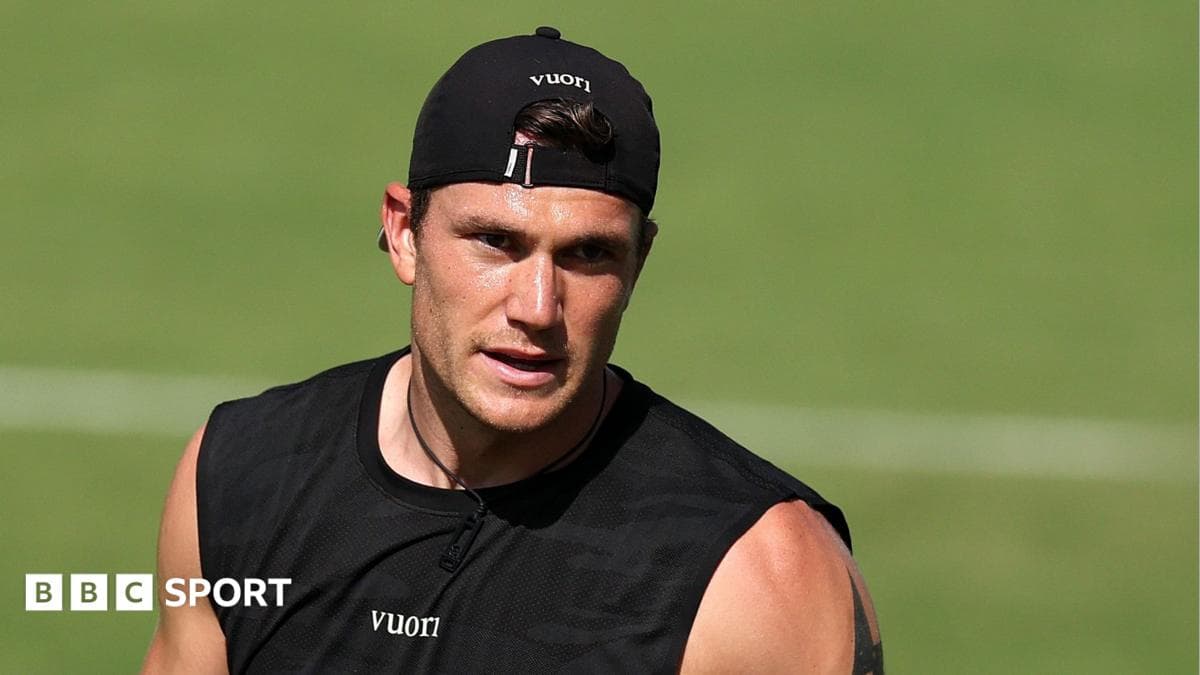
Rinky Hijikata walked onto the grandstand court as the underdog and started playing like he hadn’t read the script.
Up against world No.4 Felix Auger-Aliassime in the opening round, the Australian was supposed to feel the weight of the occasion. Instead, he settled faster than the favourite. Auger-Aliassime burst out to a 2-0 lead within minutes, the Canadian cracking through the first couple of games as if he planned to be off court early.
Hijikata refused to play along.
Calm on serve, light on his feet and striking cleanly, he wrestled back control of the set. Point by point, the deficit vanished. By the time he stepped up to the line at 5-3, it was Auger-Aliassime who looked under pressure, not the man facing the No.4 in the world on one of the sport’s biggest stages.
The grandstand had its storyline. So did almost every other court at Flushing Meadows.
Joint’s breakout fightback
On court 9, Maya Joint delivered the kind of performance that can change a young career.
She dropped the first set 6-3 to Liudmila Samsonova after a run of long, bruising rallies where both women moved superbly and traded from the baseline. Samsonova held firm, took her chances, and banked the opener.
Joint didn’t wilt. She surged.
Feeding off a lively crowd that backed both players but seemed to lift just a fraction louder for the Australian, Joint found another gear. She raced to a 3-1 lead in the second set, carving up the court with renewed aggression and energy. Samsonova’s rhythm faltered; Joint’s belief didn’t.
The pressure told. Joint ran away with the second set 6-2, then repeated the dose in the decider, again 6-2. From a set down to a 3-6, 6-2, 6-2 victory, she not only forced her way into the second round but did it by dominating the final set, barely hiding her joy after sealing match point.
It was the kind of win that announces a player to a grand slam crowd. And she knew it.
Wawrinka’s farewell and Berrettini’s frustration
Inside the main arena, another story was closing.
Stan Wawrinka, three-time major champion and 2016 US Open winner, played the final grand slam match of his career. The 41-year-old Swiss, who had already confirmed this season would be his last on the ATP Tour, bowed out in straight sets to Matteo Berrettini: 7-6, 7-6, 6-0.
The scoreline said one thing. The atmosphere said something else entirely.
Tournament organisers honoured Wawrinka with a career highlights video on court. The Flushing Meadows crowd soaked it in, applauding a man who once rose to world No.3 and famously beat Novak Djokovic here in a four-set thriller to lift the trophy.
“It’s been more than 20 years since I first came here,” Wawrinka told the fans, his voice catching as he spoke about playing qualifying in his early days and the special connection he felt with New York. He admitted one of the reasons he kept playing until 41 was to experience nights like this. Ten years after his US Open triumph, he finished his grand slam journey where he once stood on top.
“I am going to miss it. I love the game so much,” he said, thanking the crowd for their support over the years.
Across the net, Berrettini understood the moment. He applauded Wawrinka’s career and called it “a dream come true” to share the court with a player he grew up watching win slams. They had never faced each other for most of their careers, then suddenly met twice in a row at majors.
The match itself still had drama. Early in the third set, Berrettini was left fuming after a controversial call on a Wawrinka shot that appeared to involve two separate racquet motions as the Swiss flicked the ball over the net. The Italian argued that, under the rules, the stroke should be one continuous motion and claimed Wawrinka had effectively hit it twice.
“You could see his two motions,” Berrettini told the chair umpire, convinced the shot was illegal.
Wawrinka, 41 and wry, met the tension with humour. At the net, as the video review team checked the point, he joked, “I’m 41, that’s why I am slower than you,” drawing a smile out of his opponent.
The replay, shown at full speed, was ruled legal, leaving Berrettini unimpressed. Later, Australian great Jelena Dokic noted that when Nine’s cameras slowed the footage down, it clearly showed Berrettini had a case and that Wawrinka had indeed hit the ball twice. The US Open’s review system, however, does not use slow motion for that decision.
Wawrinka kept the point and the advantage, but Berrettini took the game and then the match, surging to a 3-0 lead in the third and never looking back.
The result sent Wawrinka out in the first round, but it didn’t dull the ovation. His grand slam career ended not with a miracle comeback, but with the respect of a sport he helped define for more than a decade.
Kyrgios ban sparks Khachanov’s blunt verdict
Away from the courts, another Australian star dominated conversation for very different reasons.
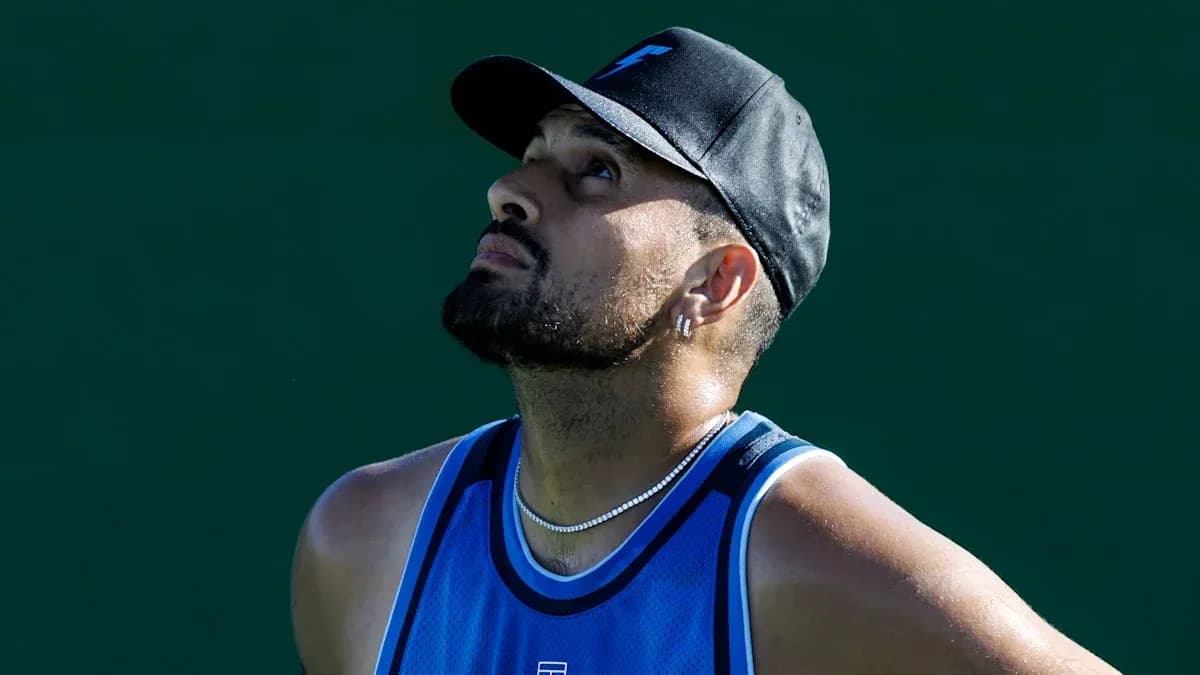
Nick Kyrgios, who revealed last month he had been suspended after testing positive for cocaine in June, remains absent from the tour as he serves his ban and works through what he called a “huge mistake.” The 31-year-old said he would step away from the spotlight and take accountability for his actions.
Karen Khachanov did not rush to offer sympathy.
The Russian, who has faced Kyrgios before and watched his outspoken commentary on doping and bans over the years, delivered a pointed response when asked about the suspension at the US Open.
“Even when he wasn’t playing, he always liked to pick on someone, writing things on Twitter and so on,” Khachanov told reporters. “And now, when all that has turned against him… what do you want me to say? In the end, you reap what you sow.
“Honestly, it’s not just that I’m not surprised, but to some extent, I can’t feel too much pity either. What he got caught for was ultimately his choice. And in the end, look what happened. It backfired on him.”
It was a sharp reminder that Kyrgios’ absence is being felt not only by fans and broadcasters, but by peers who remember his loudest opinions.
Popyrin tested, Aussies rising
Back outside, Alexei Popyrin faced Grigor Dimitrov on the outdoor courts. Dimitrov, in strong touch early, jumped to a 4-2 lead, asserting himself with the kind of clean ball-striking that has marked his recent resurgence.
Australian interest stretched across the grounds. Joint’s comeback lit up court 9. Hijikata’s fearless start rattled a top-five star on the grandstand. Popyrin tried to solve the Dimitrov puzzle.
And somewhere in the middle of it all, Stan Wawrinka walked away from grand slam tennis to a standing ovation, while the sport continued to spin around him.
The US Open rarely eases into a fortnight. It throws everything at you from day one and asks a simple question: who can handle the chaos best?