US Women Win Fifth Straight World Cup Amidst Growing Competition
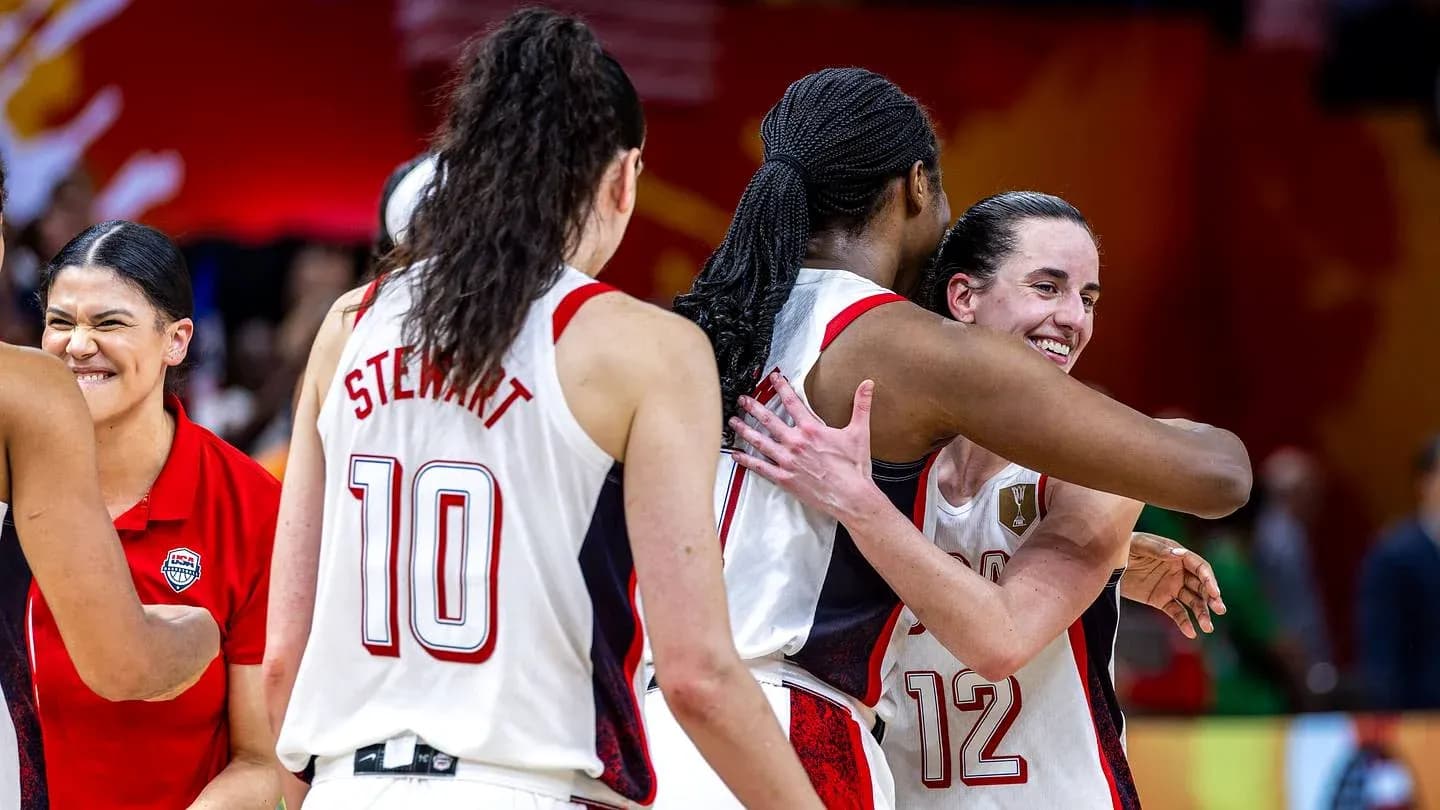
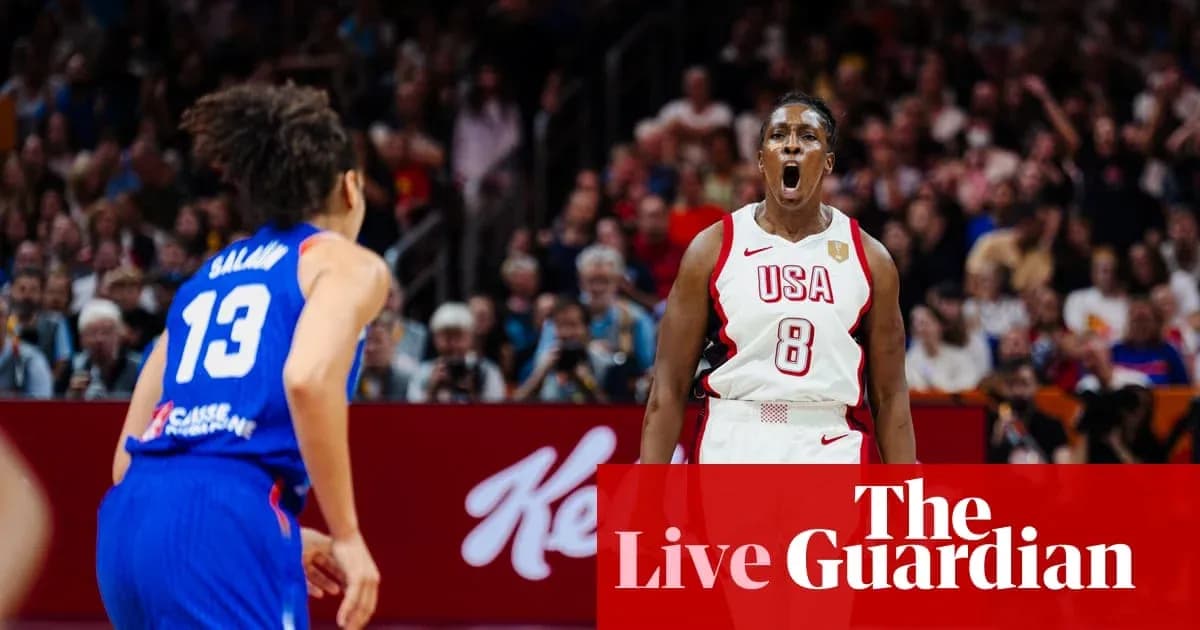
The USA have their fifth consecutive World Cup, a 71-game championship streak intact and a 97-79 win over France on the board. The dominance continues. The invincibility does not.
For a quarter and a half in Berlin, the sport’s long-running superpower looked rattled. France, fearless and fluid, led by as many as 14 and had the final exactly where they wanted it: fast, loose and on their terms. At 31-17 France, the USA weren’t just trailing. They were being outplayed.
Then the veterans went to work.
France land the first punch
France walked into this rematch still haunted by the 2024 Olympic final, when Gabby Williams’ last-second shot was ruled a two instead of a three. They played like a team determined to fix a detail history had stolen from them.
All their early damage came at the rim. Layup after layup. Badiane inside. Lacan slicing through untouched. Williams driving with that smooth, downhill stride that has become her signature. When Ayayi and Salaun joined in from beyond the arc, the USA’s defense looked a step slow and a beat late.
By the end of the first quarter, France led 20-17. It felt like more. The US offense was jittery, the bench unsettled. Caitlin Clark’s first contributions were two turnovers, both from over-dribbling into traffic and stepping on the baseline. Angel Reese checked in and immediately drew a foul on Malonga, only to miss both free throws badly.
France smelled vulnerability and went for the throat early in the second. Ayayi and Leite hit from outside, Williams buried a three, and when Leite calmly sank three free throws after being fouled on a long-range attempt, the lead ballooned to double digits. At 31-17, Kara Lawson had seen enough and burned a timeout.
The question hung over the arena: was this the day the streak finally snapped?
Stewart, Young and Gray drag the USA back
What followed was not a spectacular run, not a flurry of circus shots or a single player catching fire. It was something more ominous for the rest of the world: the USA tightening every screw, possession by possession.
First, the veterans reclaimed the floor. Clark and Howard sat. Gray and Young re-entered. The tempo changed.
Young stopped the bleeding with a three that turned into a five-point possession when Toure fouled Stewart off the ball. Stewart hit both free throws. The 14-point hole shrank in seconds.
From there, the US leaned into their experience. Gray controlled the game with a veteran’s calm, threading no-look passes through traffic, hitting impossible fadeaways as the shot clock expired, and constantly finding Stewart and Young in their sweet spots. Stewart, who had already passed Cheryl Miller earlier in the game to become the fifth-leading scorer in US history, started to own the glass and the mid-range.
France kept landing blows – Williams knifing to the rim, Badiane stepping out to hit a corner three, Johannes creating just enough space to free shooters. But each time they looked ready to break the game open again, the US answered.
Aliyah Boston became the first of the American newcomers to make a mark, deflecting a Johannes three and scoring in transition. Young drilled a line-drive three, only for a review to reveal her foot on the line. Two points, not three – a reversal that surely brought back memories for Williams after that Olympic heartbreak.
Still, the US kept coming. Gray lived on the edge of the impossible, hitting shots that had no business going in, missing a couple of the simpler ones just to prove she was human. Stewart’s free throws chipped away. The rebounding battle began to tilt.
France went into halftime ahead 45-43, but the mood had shifted. Clark, quiet and error-prone to that point, buried a corner three on the buzzer. The US bench exploded. A game that had threatened to become a rout was suddenly a contest of nerve.
Third-quarter avalanche
Whatever Lawson said at halftime worked.
On the first possession of the third quarter, Stewart tied it. Collier muscled through a scramble to give the USA their first lead “in eons,” as the live commentary put it. France missed open looks they had buried in the first half. The US, for the first time, started to look like themselves.
The turning point came in a brutal stretch for France late in the third. Copper, relentless and direct, drove, lost the ball, recovered it and scored. Collier hit a pull-up. Howard jumped a passing lane, raced the length of the court and finished through Malonga. A tight game snapped open.
Then came the moment that symbolized the French unraveling. Marine Johannes, chasing Copper in transition, delivered a hard whack with her hand. Officials reviewed it for an “act of violence” and upgraded it, handing the USA four free throws and the ball. Copper hit three of four. Off the restart, Clark – back in for Gray – slipped a pass inside to her Indiana Fever teammate Boston for a layup.
From a one-possession game, the lead swelled to 17 in a blink. The third quarter ended 73-57 USA. France had been outscored 30-12 in the period. A World Cup final had turned into a lesson in how quickly this American team can squeeze the life out of you.
Clark’s cameo, Malonga’s fightback, and a late French surge
France weren’t finished. Not quite.
Dominique Malonga, the 20-year-old center who had been one of the few bright spots as the game tilted away, refused to go quietly. She hit a three from the corner, then scored again inside. She banged into Collier, finished through contact and completed the three-point play. She kept attacking, piling up points and forcing the US bigs to work every second she was on the floor.
By the time she checked out late in the fourth, to a warm ovation, she had 21 points and had saved France from humiliation. Williams, who had torched defenses all tournament, finished with 20 and seven assists but endured a miserable second half, riddled with missed chances and a wild turnover on a late drive.
The US lead, once 27, shrank to 13 on a 13-2 French run, almost entirely powered by Malonga. The starting five stayed on, their plus/minus numbers sliding, as Lawson delayed clearing the bench.
Clark, meanwhile, compressed her entire tournament into a ten-minute cameo. She picked up a foul, barked at the officials and drew a technical – “officially like a WNBA game now,” came the dry aside from the commentary. She then responded the way she often does: a quick-release three, a driving layup, another trip to the line. She finished with 12 points in just over 10 minutes, hitting four of five shots and two of three from deep, plus a late assist to Boston. The four turnovers and the technical underlined the learning curve at this level, but the flashes were unmistakable.
Reese chipped in with energy plays – a block here, a tough finish there – and ended with a late basket off a Stewart feed as the lead pushed back to 20. Copper, who had been steady all tournament, added a crucial putback and a dagger three in the fourth.
At 95-78, France’s resistance was broken. Williams finally found the net again from long range, but by then Lawson was emptying the bench. Clark, Stewart, Gray and Young all took their curtain calls. Citron and Iriafen, unused until the final minutes, finally stepped onto the floor of a World Cup final.
The USA never quite got to 100. Howard’s late three as the shot clock wound down rimmed out. They had to settle for 97-79 and another gold medal.
The numbers behind another title
The stat sheet told the story of a team that doesn’t need perfection to win, just poise.
Breanna Stewart led the USA with 22 points and nine rebounds, just shy of a double-double, and passed Cheryl Miller on the all-time US scoring list. Jackie Young added 18, again blending scoring with playmaking, and Chelsea Gray scored 12 while orchestrating the comeback with five assists. Kahleah Copper poured in 15, many of them at moments when France were clinging to hope.
Clark’s 12 came on hyper-efficient shooting, offset by those four turnovers and the technical. Gray and Young shared the playmaking load with five assists each as the US finished with a balanced, veteran-driven attack.
France’s trio carried the load: Malonga with 21, Williams with 20, Ayayi with 8. Williams’ seven assists underlined her central role in everything France tried to do. But the USA dominated the glass 36-27, and that was decisive. Second chances dried up for France just as their shooting cooled.
A dynasty under real pressure
Strip away the margin and this World Cup will be remembered less for the final score than for the path the USA had to take to get there.
They scraped past Italy in the group stage, 55-52, after blowing a 15-point lead and needing a defensive chokehold in the last five minutes. They were tied with Spain at 58-58 entering the fourth quarter of the semi-final. They trailed France by 14 in the final. For a program that has gone 121-1 in World Cups and Olympics since 1994, this was not a procession. It was a grind.
That’s the real story here. The US still have the deepest roster, the longest winning streak and, in Stewart, perhaps the most reliable big-game closer in the sport. Young, Gray, Copper and Collier form a spine any coach in the world would take tomorrow. Behind them, a generation headlined by Clark, Angel Reese, Aliyah Boston and Paige Bueckers is learning what it means to carry the jersey, not just wear it.
But the gap has narrowed. France, with eight WNBA players and a 20-year-old force in Malonga, are no longer grateful challengers. They are peers. Spain pushed the US to the brink. Italy almost sprung the upset of the decade.
The USA left Berlin with another World Cup and another streak extended. They also left with a warning: the days of walking into a tournament as prohibitive favorites are gone.
The next Olympics, the next World Cup, will ask a sharper question of this emerging core: can Clark, Reese, Bueckers and their peers turn a golden era into a new one, or will nights like this – double-digit deficits, furious rallies, no margin for error – become the new normal for a team that once made winning look inevitable?