USA Women's Basketball Faces Toughest World Cup Yet in Berlin
The United States arrives in Berlin as the standard-bearer of women’s basketball, but not as an untouchable giant.
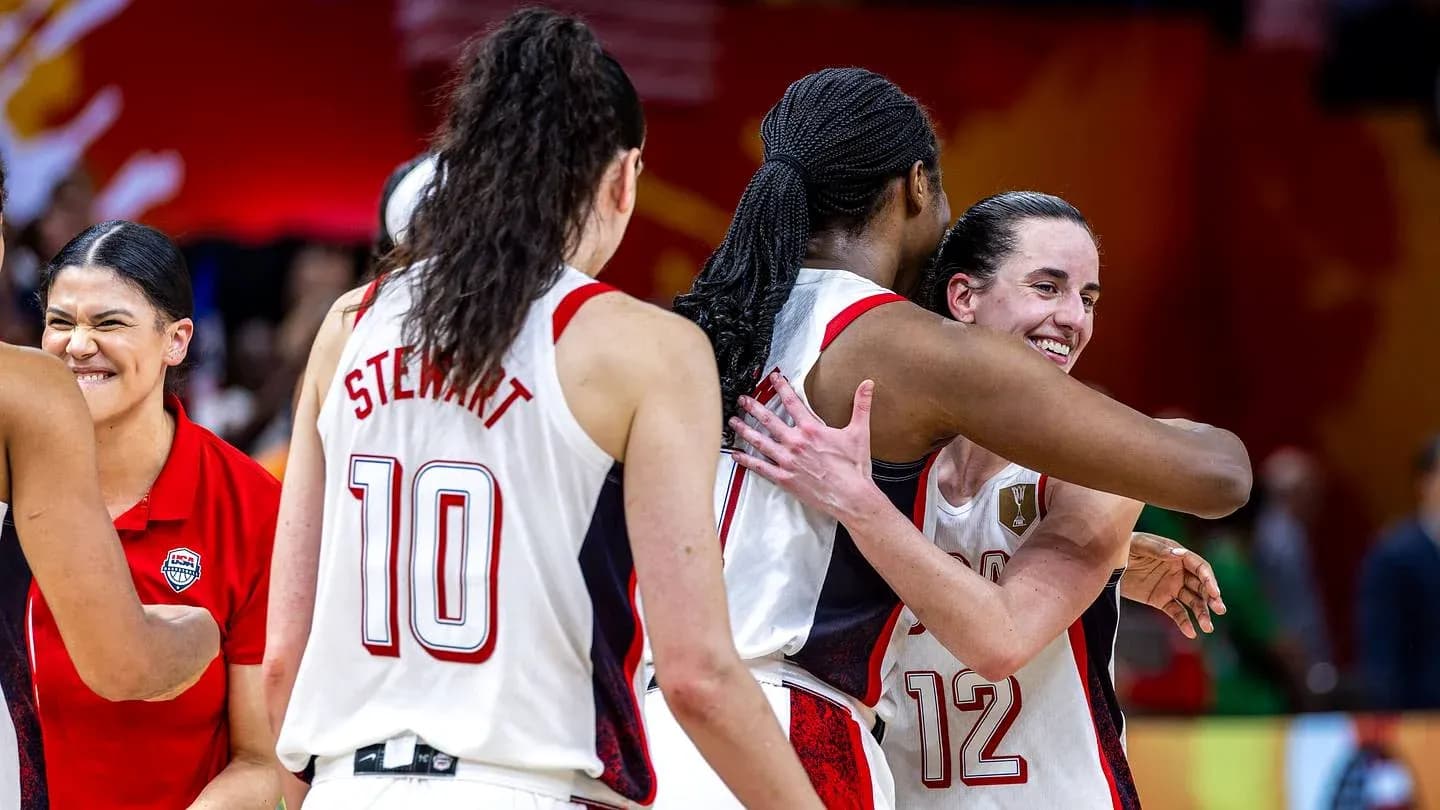
The 2026 FIBA World Cup tips off on Friday, Sept. 4, in the German capital with a familiar storyline and a very unfamiliar level of jeopardy. Team USA has owned this tournament for a generation — nine titles in the last 12 editions, four in a row, and not a single World Cup defeat since 2006. Those are dynasty numbers.
They no longer guarantee anything.
“The most difficult World Cup to win,” is how head coach Kara Lawson framed it on Tuesday, Sept. 1. No caveats, no soft landing. The world has caught up, and she knows it.
A dynasty under siege
Lawson’s 2026 roster is drawn entirely from the WNBA, a flex that once would have suggested an inevitable march to gold. This time, it feels more like a necessary starting point just to keep pace.
“There's no question that the world is improving at a rapid rate,” Lawson said. She talked about depth, about rosters around the globe stacked with “high quality players.” That’s not coach-speak. It’s the reality of a field where France and Australia arrive with eight WNBA players apiece, Spain brings five, and Germany and Belgium four each.
The aura around the USA jersey still matters. The gap that used to sit beneath it does not.
Sixteen countries will chase the trophy in Germany, split into four groups. Every group has at least one team with genuine upset potential, and in several cases, more than one.
Group A: Tradition and ambition
Group A opens with a fascinating blend: Japan, Spain, Germany, and Mali.
Japan, led by head coach Corey Gaines and assistant Tomoki Miyata, has built a reputation on pace, spacing, and relentless movement. They will test any defense that dares to relax for a possession.
Spain, under Miguel Méndez with assistants Cristina Cantero, Raquel Romo, and Anna Montañana, brings pedigree and polish. With five WNBA players in the squad, Spain owns the kind of perimeter skill and tactical discipline that can turn a tight game into a clinic over the final five minutes.
Host nation Germany, coached by Olaf Lange and backed by assistants Stefan Möller, Parker Lovett, and Constanze Wegner, carries the energy of a home crowd and a core strengthened by four WNBA players. Germany is no longer just a feel-good story; it’s a legitimate threat.
Mali, guided by head coach Mali Oumarou Sidiya, enters as the group’s wild card. Their full roster is still to be announced, but African teams have grown increasingly fearless on this stage. Nobody will take that matchup lightly.
Group B: Danger in the details
Group B doesn’t have the historical heavyweight, but it might be the most volatile: Hungary, Korea, Nigeria, and France.
Hungary, with Péter Völgyi on the sideline, has quietly built a tough, cohesive program. Korea, led by Park Soo-ho, traditionally leans on quickness and execution to punch above its size.
Nigeria, under Rena Wakama, has become a symbol of African basketball’s rise. With more structure, more continuity, and more players seasoned in top leagues, Nigeria is exactly the kind of opponent that can knock out a contender in one bad quarter.
Then comes France.
Head coach Jean-Aimé Toupane, supported by assistants David Gautier, Christophe Léonard, and Grégory Halin, brings a group stacked with eight WNBA players. France has the length to bother USA, the physicality to grind games into the halfcourt, and the experience to stay composed in the final minute. If there is a team built to stare down the Americans without blinking, it might be this one.
Group C: Australia’s statement path
Group C reads like a gauntlet: Australia, Belgium, Puerto Rico, Türkiye.
Australia, under Sandy Brondello with assistants Renae Garlepp, Paul Goriss, and Kennedy Kereama, is loaded. Eight WNBA players give the Opals balance at every position and options in every lineup. Australia has long been one of the few programs able to look the USA in the eye and talk about gold, not just medals. That hasn’t changed.
Belgium, coached by Mike Thibault with assistants Pascal Angillis, Fred Dussart, and Dena Evans, counters with four WNBA players of its own and a generation of players who grew up expecting to win, not just compete. Belgium’s blend of shooting and high-IQ offense can punish any defensive lapse.
Puerto Rico, led by Gerardo Batista, brings edge and emotion, the kind of team that rides momentum and home-crowd energy even in a neutral gym.
Türkiye, guided by Andrea Mazzon with assistants Murat Alkaş and Fatih Emre Gezer, has parts of its roster still to be announced, but the tactical discipline and physical interior play that have defined Turkish basketball are not going anywhere.
No one strolls through this group. Not even Australia.
Group D: The champions’ corridor
Group D carries a different kind of weight: China, Czechia, Italy, and the United States.
China arrives with a growing sense of expectation. Head coach Gong Luming, with assistant Pierre Vincent, leads a program that has been building toward this level for years. Some roster spots remain to be announced, but the core is already established: size, structure, and a belief that the podium is no longer a dream, but a target.
Czechia, under Romana Ptáčková, will lean on organization and shooting to stay in the fight in a brutal group.
Italy, coached by Andrea Capobianco with assistants Vincenzo Di Meglio, Alessandro Fontana, and Angela Gianolla, brings its own mix of craft and toughness, the sort of team that can drag a favorite into a one-possession scrap.
And then there is USA.
Lawson is flanked by assistants Natalie Nakase, Nate Tibbetts, and Stephanie White. The staff is steeped in WNBA and international experience, built to navigate short tournaments where one off night can erase years of planning. The Americans still have the deepest pool of talent. They still own the longest winning streak. They still wear the target.
What they no longer have is the comfort of clear separation.
A World Cup with no hiding places
Walk through the rosters and a pattern jumps out: WNBA names scattered across Europe, Asia, Africa, and Oceania. Training camps that used to be about surviving USA are now about beating USA.
Lawson called it “so exciting to see.” She’s right. The product has never been better. The jeopardy has never been higher.
Berlin will not just host another coronation. It will test a dynasty, showcase a generation, and answer a question that has been building for a decade:
Is the rest of the world finally ready to push the United States off the summit, or can this American group write one more chapter in a run that already feels historic?