The Wizards’ Gamble: Balancing Youth and Anthony Davis
The Washington Wizards are no longer drifting on the NBA’s fringes. They’ve thrown themselves into the center of the league’s intrigue, stitching together a roster that somehow balances a 19-year-old franchise hope with two headliners in their late 20s and early 30s.
It started with Trae Young. When Washington pried the former All-Star point guard away from the Atlanta Hawks earlier this year, the move didn’t exactly fit the classic rebuilding script. Young is 27, already deep into his prime, and comes with expectations that don’t usually align with slow, patient development.
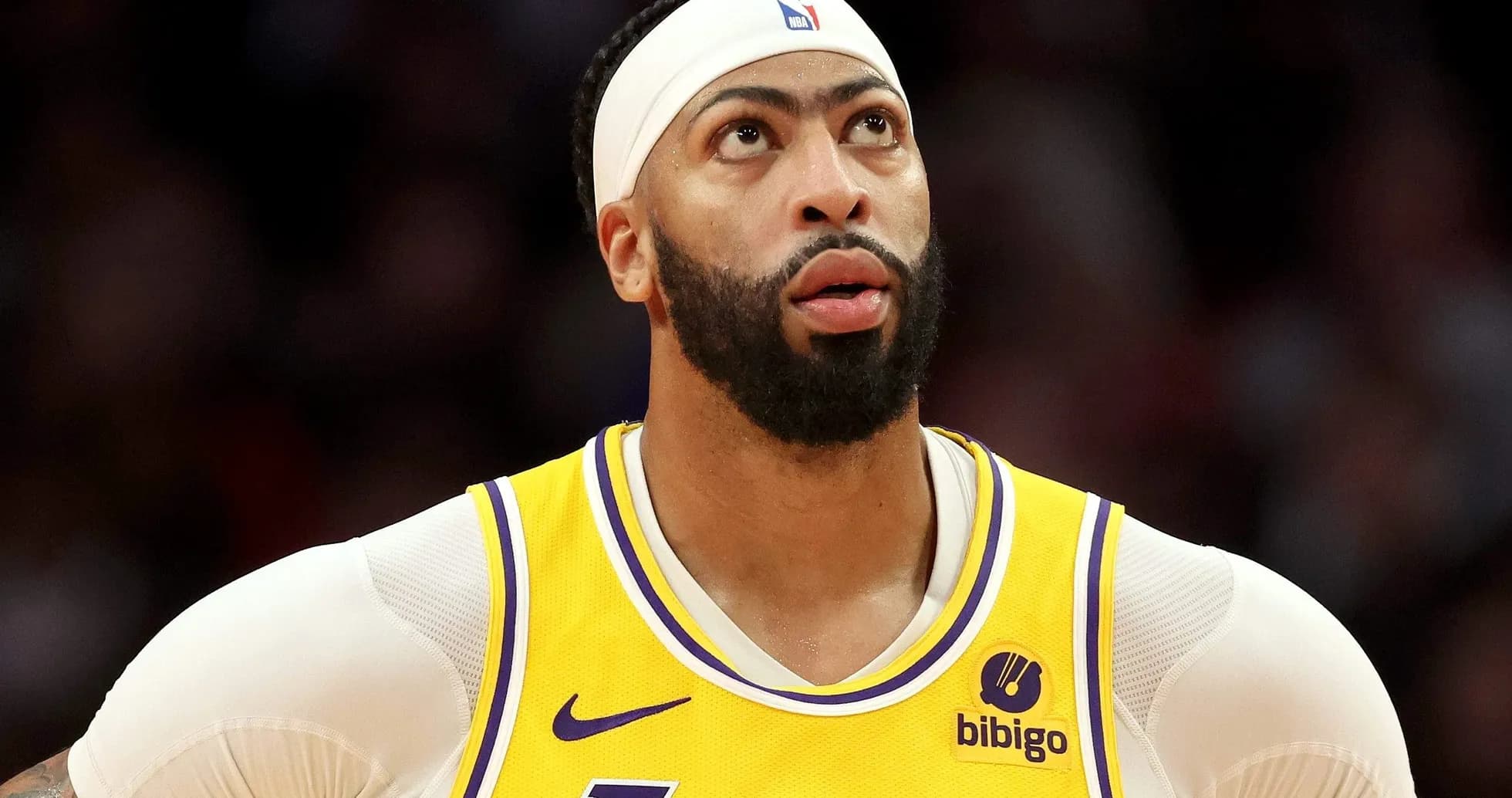
Then came the real jolt. Anthony Davis, 10-time All-Star, perennial All-NBA candidate, and one of the league’s most polarizing stars, arrived from the Dallas Mavericks. A franchise that looked destined to grow quietly around teenagers suddenly had two marquee names and a very different timeline.
On paper, it’s a clash of eras. In reality, it might be the leverage point that defines the next decade of Wizards basketball.
The Davis Dilemma
Davis is 33, still on a three-year deal worth roughly $175 million, and eligible for an extension that Washington has yet to offer. That silence has been loud.
He remains one of the league’s true two-way forces when healthy, the kind of player who shifts game plans and playoff series. If the Wizards were to put him on the market, multiple contenders would line up. One possible suitor sits in Boston.
The Celtics, having already moved on from Jaylen Brown, are in search of their next big swing. The proposed framework floating around the league’s rumor mill is simple and brutal:
- Wizards receive: Paul George, Baylor Scheierman, Jordan Walsh, and a 2031 first-round pick
- Celtics receive: Anthony Davis
From Washington’s side, it’s a classic hedge. They’d add two young pieces in Scheierman and Walsh to deepen an already intriguing collection of prospects, plus a future first to keep the asset pipeline flowing. Paul George, 36, would arrive as a short-term star and a medium-term trade chip.
George showed in last season’s playoffs that he can still tilt a series. For a front office thinking strategically, he’s a movable piece, not a long-term pillar. Build up his value, then flip him before the February trade deadline to a win-now team desperate for one more scorer and wing defender.
For Boston, the calculation is more immediate. Davis gives Jayson Tatum something he’s never truly had: a big man of Davis’ pedigree, a frontcourt partner who can dominate both ends of the floor and carry stretches of offense on his own. If Davis stays on the court, he’s an MVP-caliber force, the kind of presence that can close the gap in a brutal Eastern Conference.
That’s the theory. The question is whether Washington is ready to walk away from its own experiment before it really starts.
Building Around AJ Dybantsa – With Davis, Or Without Him?
The Wizards are supposed to be AJ Dybantsa’s team someday. The 19-year-old, taken first overall in this year’s draft, is the centerpiece of the long view. Teams that land a No. 1 pick of that magnitude usually clear the decks and hand over the keys.
Instead, Washington is trying something more complicated. Dybantsa is arriving in a locker room that already features Young and Davis, two stars with something to prove and reputations to repair. Davis has bounced from the Los Angeles Lakers to the Mavericks to the Wizards in a dizzying span, his future constantly debated. Young, once the face of the Hawks, barely got started in Washington last season, appearing in just five games before being shut down.
From the outside, it’s fair to ask: why keep a 33-year-old on a massive contract when your foundational piece is barely out of his teens? Why not cash out now, lean fully into the youth movement, and let Dybantsa grow without the gravitational pull of veterans who expect to win immediately?
Inside the building, the tone is different.
General manager Will Dawkins has been clear about the type of competitive edge he wants shaping this group. He spoke openly about Davis and Young arriving with something to prove, about a roster and staff wired by what he called a “storm of motivation” from coaches to developmental players. In his view, Davis and Young aren’t blocking the future; they’re sharpening it.
He also pointed to the personal stakes. Davis, coming off stints with the Lakers and Mavericks in back-to-back years, and Young, exiting Atlanta under a cloud, both land in D.C. with chips on their shoulders. The Wizards, Dawkins suggested, want those kinds of players—stars who actively choose to be in Washington and are hungry to compete together.
A Franchise at a Crossroads
This is where the Wizards’ story gets interesting. They are not tanking. They are not all-in contenders. They’re something in between—a team trying to climb the Eastern Conference ladder with one eye on the present and the other locked on what Dybantsa might become.
Keeping Davis means betting that his partnership with Young can accelerate that climb, that their talent and urgency will drag the rest of the roster forward. Trading him, especially in a deal like the one with Boston, would be an admission that the long game outweighs any near-term push.
The Celtics can wait for Washington to blink. Other contenders can too. The Wizards, for now, are holding their ground.
Davis and Young, both reshaping their own narratives, are set to open the 2026-27 season as the faces of a franchise that insists it can develop and compete at the same time.
Soon enough, the standings—and the offers—will test just how long Washington can keep walking that tightrope.