Alexander Zverev's Remarkable Rise: From Heartbreak to Grand Slam Champion
Alexander Zverev has finally kicked the door down.
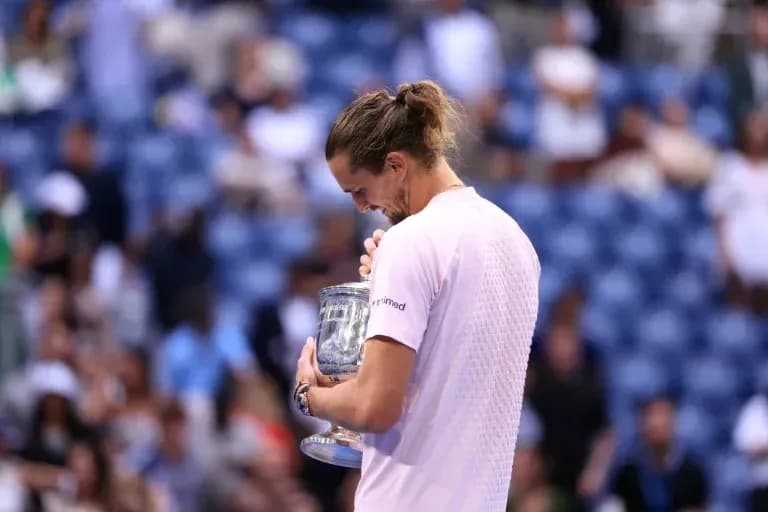
After years of near-misses, physical breakdowns and off-court turmoil, the 29-year-old German now stands as a multiple Grand Slam champion, adding the US Open title to the French Open crown he lifted in June. Two majors in less than four months. Three straight Slam finals. The player long filed under “unfulfilled talent” now has the résumé to match the hype that followed him since childhood.
His win in New York over rising American Ben Shelton completed a remarkable stretch: runner-up at Wimbledon, champion at Flushing Meadows, and a sense that the Grand Slam floodgates have truly opened.
A prodigy forged in a tennis family
Zverev’s story never lacked promise. Born into a tennis family, with both parents competing at a high level in the former Soviet Union, he grew up with a racket in his hand and expectations on his shoulders. The 6-foot-6 right-hander was talked about as a future No. 1 before he’d even finished growing.
“For me, my family is everything and I owe them a lot for helping me to become the tennis player that I am today,” he has said, and the line doesn’t sound like a platitude when you look at the arc of his career.
He idolized Roger Federer, tried to model the elegance, the composure, the sense of inevitability. But Zverev’s path turned out far messier.
He lives with diabetes. He has played through that reality his entire career, managing his condition while navigating the relentless grind of the tour. Then came the brutal ankle injury at Roland Garros in 2022, when he tore ligaments in a semi-final against Rafael Nadal and left the court in a wheelchair. For a player whose movement underpins his entire game, it looked like the kind of moment that can alter a career permanently.
Surgery followed. Months out. Doubts about whether he would ever again be the same force.
Allegations and a shadow off the court
His climb back to the top unfolded under a darker cloud.
Two former partners, Olga Sharypova and Brenda Patea, accused Zverev of domestic violence. He has strenuously denied the allegations. The ATP investigated one claim and said it found insufficient evidence to sanction him.
The case involving Patea, the mother of his daughter, led to a penalty order and fine from a German court in 2023. Zverev appealed. The two reached a settlement in June 2024, just hours before he walked back onto Court Philippe-Chatrier for his French Open semi-final.
Those legal battles have run parallel to his resurgence on court, ensuring that even as he lifts trophies, debate about his legacy and how to view his success does not disappear.
From heartbreak to hard edge
Zverev’s relationship with the US Open has always been emotional. His first Grand Slam final came in New York in 2020, when he led Dominic Thiem by two sets and still contrived to lose in five. The match exposed the fragility in his game and, crucially, in his serve.
“That was exactly the time when I had real struggles with my serve and my second serve,” he recalled. “I knew that my serve could break down at any moment. That's one difference that I do feel now, luckily for me.”
That collapse stuck to him. Big occasions, big leads, big doubts.
The injury in Paris two years later seemed to confirm a narrative of a career destined to be undermined by cruel timing. Yet his return in January 2023 began to shift the story. He won a 20th career title in Hamburg, found rhythm, and then built a superb 2024 season that pushed him to world No. 2.
He reached the French Open final, then Wimbledon, showing a harder edge, a more reliable serve, a player less interested in the aesthetics of tennis and more in the brutal efficiency required to win majors. The old questions about his mental strength didn’t vanish overnight, but they started to sound dated.
“In the life of a professional athlete, you will have the highest highs and the lowest lows,” Zverev said. “Getting caught up in the lows is the biggest mistake that you can make. You shouldn't try to evaluate everything when times are tough, you should try to find ways to get better when you're on a high.”
Sinner, Alcaraz and the missing Slam
Even as he rebuilt, the sport moved on without him at the very top. Jannik Sinner and Carlos Alcaraz seized control of the men’s game, splitting nine straight majors between them and reshaping the conversation about the future of tennis.
Zverev watched as their rivalry took centre stage, his own Slam record still defined by heartbreak. He reached another major final at the 2025 Australian Open, only to be swept aside in straight sets by Sinner. Again, the question returned: would he ever win one, let alone two?
He could point to his Olympic gold medal from Tokyo in 2021, when he stunned Novak Djokovic and then beat Karen Khachanov in the final. That run proved he could take down the biggest names on the biggest stages. But the absence of a Grand Slam title left a gap that no amount of tour-level trophies or even Olympic glory could fill.
Belief, at last, rewarded
The breakthrough finally came in Paris in June. Zverev won Roland Garros and spoke of a “happy end” to years of toil. It felt like a cathartic moment, the release of pressure that had built since he first emerged as a teenager with a top-10 game.
Now, with the US Open added to his collection, that “happy end” looks more like the start of a new chapter than a closing scene.
“I believed in it. I believed that it's possible,” he told reporters in New York, before adding with a laugh: “I think not many of you guys did.”
He wasn’t wrong. The skepticism was real, and earned, given the scars of 2020 and the dominance of Sinner and Alcaraz. But belief, for once, has been matched by execution.
The numbers now tell one story: two majors in four months, world No. 2, three consecutive Slam finals. The questions turn to something else entirely: with the floodgates open, how far can Alexander Zverev push this late-blooming reign?