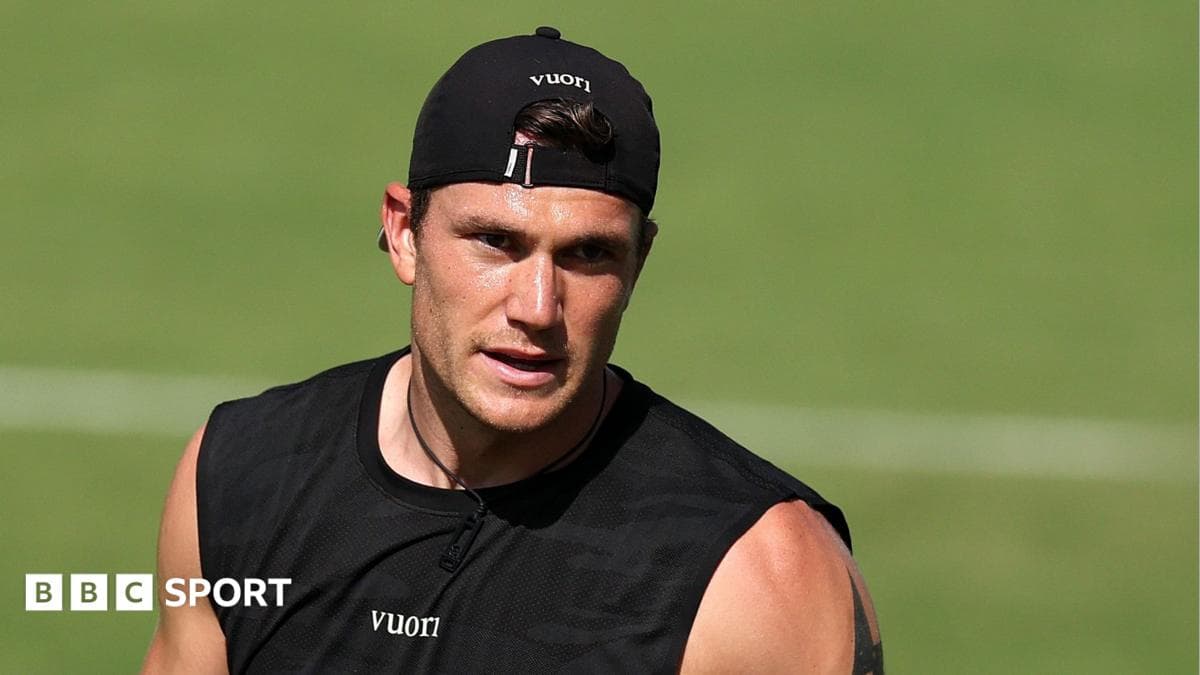
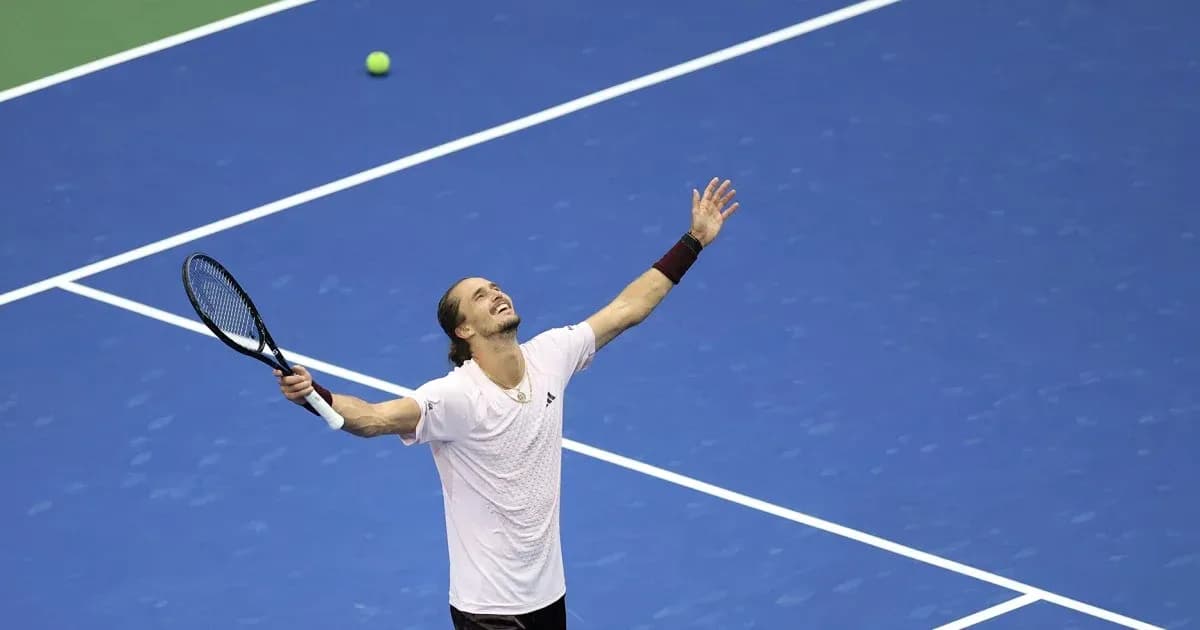
Alexander Zverev Claims Second US Open Title Against Ben Shelton
Alexander Zverev walked into Arthur Ashe Stadium carrying the weight of expectation. He walked out with something heavier: a second Grand Slam title and the sound of American hope abruptly cut short.
On a humid New York night that felt built for a coronation of the home favorite, the German cut through the noise, the narrative and Ben Shelton’s late surge to win the US Open final 6-3, 7-6 (2), 5-7, 6-2 on Sunday.
For more than 20 years, American men have chased this trophy. Again, they watched someone else lift it.
Zverev’s steel, Shelton’s surge
From the start, Zverev looked like a man who had been here before. Because he has. This was his sixth Grand Slam final, a stage he now knows intimately, and his methodical, almost clinical opening set reflected that history. He locked in on serve, picked his spots, and let Shelton feel every inch of the moment.
Shelton, in his first major final at 23, lagged early. The serve still cracked, the energy still popped, but his return game struggled to dent Zverev’s rhythm. The German took the first set 6-3 and looked in control.
Then the match began to breathe.
Shelton’s shoulders loosened. He started reading Zverev’s patterns, stepping into returns, whipping forehands that forced the older man into uncomfortable corners. The second set turned into a proper fight, the crowd roaring with every American surge. Shelton dragged Zverev into a tiebreaker, but when it mattered most, Zverev’s experience snapped back into focus. He dominated the breaker 7-2 and walked to his chair two sets up, the stadium suddenly quieter.
Shelton refused to accept the script.
The third set became his rebellion. He dug in, stretched rallies, and finally rattled Zverev. The German’s composure flickered as Shelton, feeding off the crowd and his own belief, clawed back into the contest. The American took the set 7-5, and for the first time all night, the possibility of a full comeback felt real. Arthur Ashe Stadium shook with that possibility.
A champion closes
The fourth set opened with tension. Zverev picked up a time violation and argued it, a flash of frustration in a match he had largely controlled. Moments like that can tilt a final. This one didn’t.
Instead, it seemed to sharpen him.
Zverev broke early, surged ahead 3-1, and never let Shelton back in. The serve that had carried him through the fortnight in Queens reappeared in full, and the rallies turned his way again. At 4-2, he tightened the grip. At 5-2, he broke Shelton once more and then calmly served out the championship.
No drama. No fifth set. Just a seasoned champion closing the door.
Zverev, who arrived in New York riding the high of his French Open title in June, had navigated a rugged first two rounds before locking into a groove and not dropping a set on his way to the final. On Sunday, that form held when it mattered.
Shelton’s road had been far more brutal. He spent 4 hours and 28 minutes in a punishing quarterfinal with two-time US Open champion Carlos Alcaraz, a late-night epic that ended at 3:33 a.m. on Wednesday. He then backed it up by overpowering fellow American Frances Tiafoe in four sets on Friday night. By the time he stepped onto Ashe for the final, his run had already become one of the stories of the tournament.
History in the stands, resolve on the court
This match was never just about one trophy. It was about history, identity, and a drought that has stretched since Andy Roddick beat Juan Carlos Ferrero here in 2003. Shelton had the chance to become the first American man to win the US Open in 21 years and only the second Black man ever to do it, after Arthur Ashe himself in 1968.
The symbolism of a Black American man playing for the title on Arthur Ashe Stadium was not lost on anyone inside the building.
Fans arrived from across the country, many of them not just supporting a player but witnessing a moment. Tracie Saundera spoke for a generation when she said she was excited to see a Black man in the final, something that hadn’t happened since 1972 — before she was born. Shelton, she said, brought something different.
“He just plays with so much passion and energy,” she said. “He’s so fun to watch play, and he’s young and enthusiastic. ... I’m old. Most of my players are retiring, so it’s good to see some of the young kids coming in and just being powerhouses.”
Junior Pulayya, a University of Florida fan, drove from Florida to New York to watch the Gators alumnus. For him, Shelton’s run meant more than one fortnight.
There has been, he said, a drought of “really solid” American men’s players. Shelton’s rise, he believed, could drag a new generation into the sport, kids who see themselves in this kind of fearless shotmaker and want to follow.
Longtime fan Shameka Littles, from Maryland, tried to imagine what it must have felt like for Shelton to walk onto that court as the first Black man in more than half a century to contest this final. She couldn’t. But she could feel the wider shift.
“To have so many of the top seeds, you know, make it to the semifinals, the quarterfinals — that was exciting in and of itself,” she said. “Hopefully, it just kind of gives, you know, a big boost of energy and excitement for each other.”
The support inside Ashe reflected that hope. The crowd roared for Shelton, willed him through the third set, and stayed with him even as Zverev pulled away in the fourth.
A night of trophies and perspective
When it ended, Zverev climbed to the podium to collect the Tiffany & Co. trophy from American great Jimmy Connors and the $5.5 million winner’s check. The night, though, turned briefly from tennis to something more personal.
He thanked his mother, the person he credited with guiding him through a diabetes diagnosis at age 4 and giving him permission to dream.
“If he wants to be a tennis player, he’ll be a tennis player,” Zverev said, quoting her. “My mother is the most important and strongest person I know.”
Shelton, beaten but unbroken, framed the night in his own way. He thanked God and treated the entire journey — the wins, the loss, the stage — as something bigger than a result.
“My successes are a gift, the failures are a gift, and being here playing in front of you guys is a gift,” he said.
In the stands, his girlfriend Trinity Rodman had made the trip despite her own demanding schedule. The Washington Spirit forward started in her team’s 3-0 home defeat to the Boston Legacy earlier in the day, then still found a way to be courtside in New York wearing a Shelton shirt. It was a small snapshot of the crossover appeal this new wave of American athletes carries.
Shelton did not end the drought. He did not join Ashe in the record books. Not yet.
But on a night when Alexander Zverev confirmed his status as a multiple major champion, the sense lingered that American men’s tennis, and especially Ben Shelton, had taken a step closer to the future they’ve been chasing.