Alexander Zverev Claims US Open Title Against Ben Shelton
Alexander Zverev walked to the net thinking about his next service game. The scoreboard said something very different.
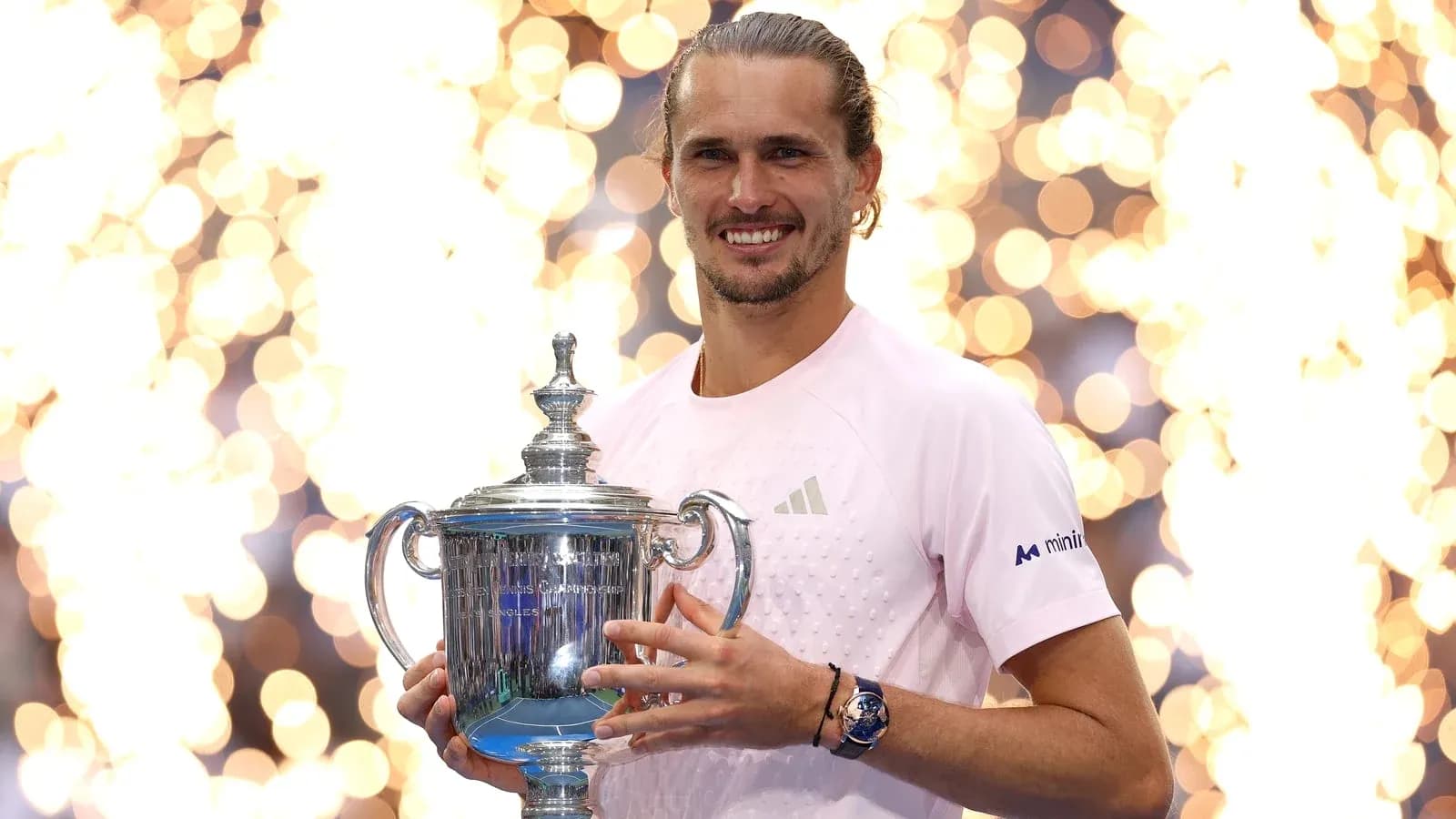
A Shelton return had just sailed long on championship point, but Zverev, locked in his own private battle with nerves and numbers, simply scooped the balls up and fired them back down the court, ready to serve again. Only when he glanced at the big screen did the reality land: he was the US Open champion.
“I thought it was 5-1,” he admitted on court. “I knew I’d broke him twice but I thought he’d only won one so I thought ‘I’m going to have a nice service game and then get tight.’ Teachers used to tell you to forget about the score, so I did.”
It was a strangely absent-minded ending to a ruthlessly focused performance.
Zverev slams the door on American hope
On a hot, partisan night in New York, the big-serving German shattered the home narrative, overpowering 23-year-old Ben Shelton 6-3 7-6 (2) 5-7 6-2 to claim his second grand slam title of the year and his first at Flushing Meadows.
Shelton, the fresh American face with the booming lefty serve and the swagger to match, had carried the hopes of a nation starved of a male major champion since Andy Roddick in 2003. The stadium named after Arthur Ashe roared him into the arena, 23,000 fans desperate for a home coronation.
They got a harsh lesson instead.
Zverev, playing in his sixth major final, walked out like a man who had been here before. Because he has. The top seed stamped his authority from the very first game, as Shelton double-faulted to hand over an early break, nerves clearly rattling the debutant finalist.
The American’s introduction to grand slam final tennis was brutal. Another double fault on set point gifted Zverev the opener. The title favourite was in front and in control, and he looked entirely comfortable with the weight of expectation that once crushed him.
A different Zverev
For years, Zverev wore the tag of “best player never to win a major” like a heavy coat. That label disappeared in Paris this year when he finally lifted the French Open trophy, and the freedom showed in New York.
His serve, always a barometer of his state of mind, thundered through the first two sets. Shelton, seeded eighth and playing the tournament of his life, could not carve out a single break point in that stretch. Zverev hit his spots, hit them hard, and hit them again. The American crowd tried to lift their man; the German kept slamming the door.
Shelton arrived on Sunday believing he could tear up another script. He had never beaten Zverev in five previous attempts, but then again, he had never beaten Stefanos Tsitsipas or, more dramatically, Carlos Alcaraz either until this fortnight. Flushing Meadows had become his playground, his proving ground, his stage.
But in the second-set tie-break, Zverev ripped it away. He dominated from the first point, playing with the clarity and conviction of a man who now trusts his game on the biggest days. Shelton, so bold all tournament, suddenly looked rushed, rushed again, and then overwhelmed.
Two sets down, American dreams were hanging by a thread.
Shelton’s surge, and the turning point
Shelton refused to fold. The third set turned scrappy, then tense. The German’s serve, so rock-solid for two hours, began to wobble. The Ashe crowd sensed it instantly.
Shelton dug in and finally prised open the door. He brought up three break points – and with them, three set points – as Zverev’s delivery faltered. Noise crashed down from the stands. When Shelton converted the second of those chances, the stadium erupted. The kid from Florida had a foothold. The match had a pulse again.
For a moment, it felt like the night might flip. Shelton bouncing on the baseline, the crowd back in full voice, Zverev glancing at his box.
Then the fourth set started, and the window slammed shut.
Zverev broke early, reclaiming control with a clinical return game that sucked the air out of the arena. The contest, as a fight, ended there. Shelton kept swinging, but the German had the match by the throat again and never loosened his grip.
Three hours of tension, a lifetime of preparation
Zverev’s rituals are famous, none more so than his relentless ball-bouncing before each serve. The numbers this fortnight were almost absurd: around three of his more than 23 hours on court spent just bouncing the ball.
On this night, it finally earned him a time violation. Even that didn’t knock him off stride.
Across three hours and 33 minutes, he controlled the tempo, leaned on his serve, and used his experience to exploit every flicker of Shelton’s inexperience. He has also, this season, quietly taken advantage of the physical struggles and absences of Carlos Alcaraz and Jannik Sinner at key moments, stepping into a vacuum at the top of the men’s game with a hardened edge.
At 29, this is not a breakout. It is a confirmation.
It is also a story layered with something far more personal. Diagnosed with Type 1 Diabetes as a child, Zverev needed an insulin pen in his leg during the fourth set, managing his condition in the middle of the biggest match of his year.
Afterward, he spoke about the journey with a different kind of emotion.
“When your four-year-old son gets diagnosed with diabetes and doctors tell you that life and sports will be very limited, it takes a very strong mother to say ‘my son will be whatever wants to be’,” he said, framing the night not just as a sporting triumph, but as a rebuttal to every limit that had ever been placed on him.
Shelton’s promise, New York’s embrace
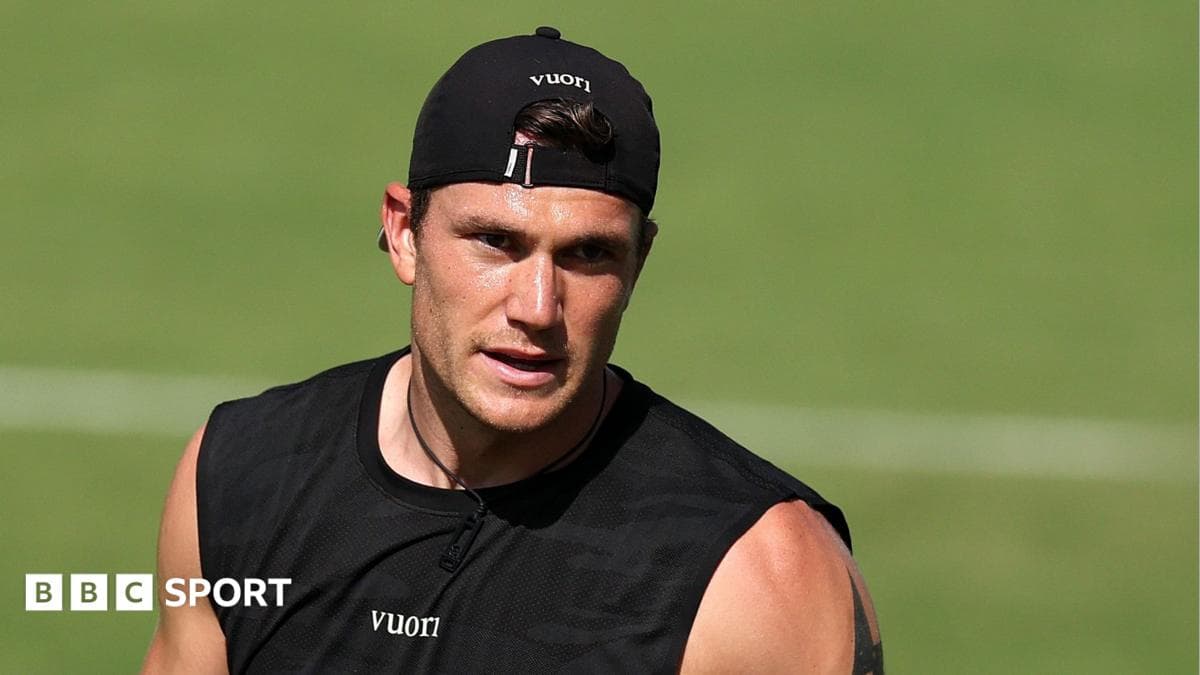
Shelton, for his part, left the court disappointed but defiant. This fortnight has changed his career, and he knew it.
“This is my happy place and I wish this tournament never ended,” he told the crowd. “To the city of New York, to the fans who showed up today, to the fans at home, to the people who stayed until 4 in the morning, you guys brought me to the position I’m in. I’m just getting started and I’ll be back again.”
Earlier in the night, a mischievous TV director had cut to Pierce Brosnan in the stands with the match clock at 0:07, a wink to the Irishman’s James Bond past. By the end, the drama belonged entirely to Zverev and Shelton.
The American left with a runner-up trophy and the conviction that his time will come. The German walked away with something more immediate: a second major of the season, a first US Open crown, and the feeling that he now sits firmly among the sport’s standard-bearers.
He thought he had one more game to play. The scoreboard told him he had arrived somewhere far bigger.