Alexander Zverev Triumphs at US Open: From Scars to Steel
Alexander Zverev walked to the baseline and, for a split second, history must have flickered in his peripheral vision.
Six years earlier on this same stage, he had served for the US Open title and watched it slip through his fingers, a two-set lead dissolving into a brutal five-set defeat to Dominic Thiem. That night left scars. Players don’t forget moments like that. They learn to live with them.
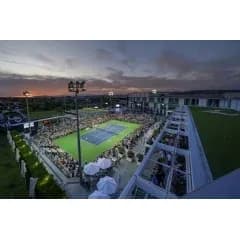
On this night, though, the weight pressing against him came from somewhere else: Ben Shelton across the net, and 24,000 New Yorkers roaring for the home hope.
Zverev shut it all out.
He closed out a 6-3 7-6 (7-2) 5-7 6-2 win, yet was so deep in his competitive trance that he didn’t even realise he’d won the championship point. He cracked another unreturnable serve, walked back to the baseline, bounced the ball and prepared for the next point – until his team signalled that there would be no next point.
The match, and the title, were his.
“In that moment I was in the zone a lot. I didn't hear noise at all,” he said later. Tennis coaches tell juniors to play one point at a time, to forget the score. Zverev, 29 years old and now a multiple major champion, finally did exactly that when it mattered most.
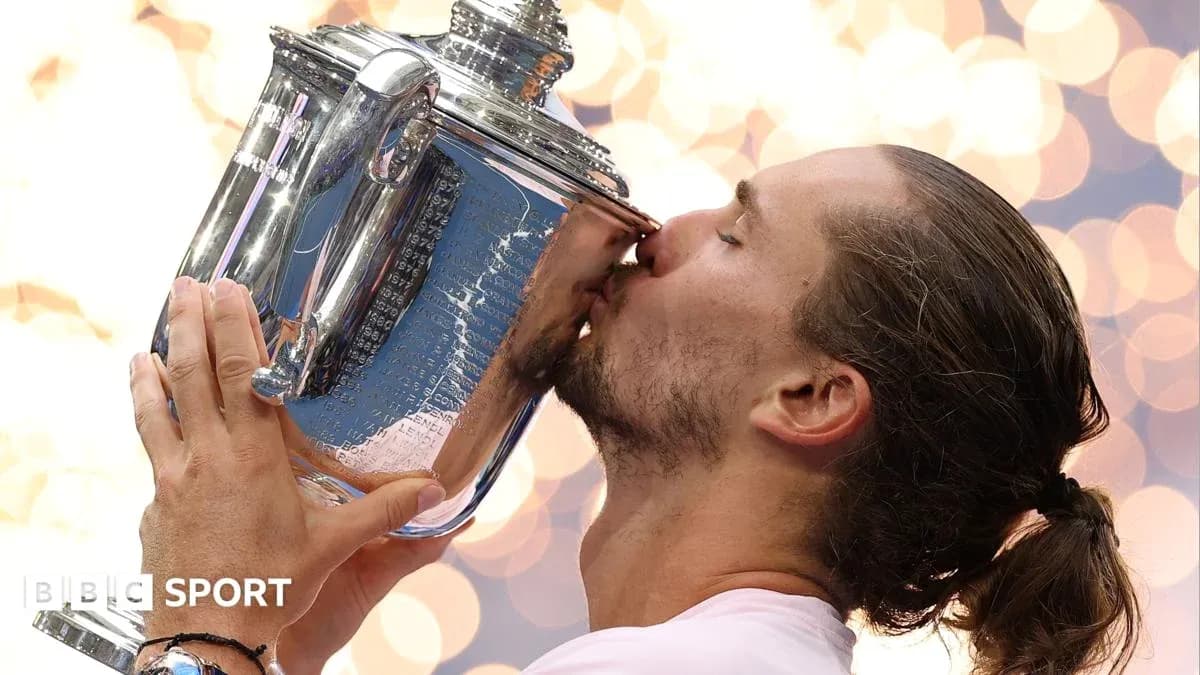
The reaction said everything. No collapse to the court, no wild sprint into the stands. Just a broad, almost disbelieving smile, arms raised above his head as the realisation finally caught up with him. Six years after he stood on this court in tears, telling the crowd, “I wish one day I can bring the trophy home,” the wish had become something far more solid. He had done it.
For German tennis, this is no isolated moment. “We went 30 years without winning a Grand Slam title and now we've won two in three months,” Zverev said, referencing his French Open breakthrough in June. “2026 is the outcome of all the years that happened before.” A line that sounded less like celebration and more like a mission statement.
From scars to steel
The contrast with 2020 could not be starker. Back then, his parents watched his heartbreak from afar. This time his father and coach, Alexander Zverev Sr, stood courtside, living each point with him. The family story runs deep in his career, but it is his mother who sits at the emotional core.
Diagnosed with type 1 diabetes as a child, Zverev grew up with doctors warning that life and sport would be limited. His mother refused to accept that ceiling. “When doctors tell you that life and sports will be very limited for that child, it takes a very strong mother to say: 'my son will be whatever he wants to be',” Zverev said. “My mother is the most important and strongest person I know.”
Those words didn’t sound like a throwaway tribute. They sounded like the foundation of his stubbornness, the same stubbornness that dragged him back from two points from defeat in the first round and carried him through back-to-back five-set marathons in the opening days of the tournament.
He staggered through those early hours in New York, matches finishing deep into the night, legs heavy, nerves frayed. Then something clicked. From the third round until the final, he did not drop a set. The drama of survival gave way to the authority of a champion playing on his terms.
The fittest man in the room
This season has been the best of his career by any measure. Semi-finals at the Australian Open. Final at Wimbledon. Titles at Roland Garros and now Flushing Meadows. The landscape has helped: injuries to Jannik Sinner and Carlos Alcaraz have opened a door that had been firmly bolted for two years as the new generation hoarded the majors.
But this isn’t simply a story of opportunity. It’s a story of a body and mind finally aligned.
“There is no-one as fit as Zverev, he is right up there,” said former Wimbledon champion Marion Bartoli on BBC Radio 5 Live. “You can argue about Alcaraz and Sinner, and Novak [Djokovic] and Rafa [Nadal] when they were in their prime physically, but Zverev is right up there as one of the best athletes to play the sport.”
That fitness underpinned everything on Sunday. Against Shelton, he faced not just a fearless opponent with a huge lefty serve and a thunderous forehand, but a stadium desperate for a home winner. Every Shelton winner drew a roar. Every Zverev error, a surge of belief from the stands.
He refused to engage with it. No gesturing to the crowd. No visible frustration. Just a tight emotional lid and a clear tactical plan. Take care of his own service games. Lean on the American’s second serve. Stretch the rallies. Trust that his legs, his lungs and his discipline would hold longer.
Shelton punched back in the third set, snatching it 7-5 to keep the night alive, but Zverev’s grip never truly loosened. The fourth set became a test of nerve, and only one man looked like he’d spent the last few years hardening himself for precisely this kind of fight.
In a trance, at the top
Former British number one Annabel Croft watched the performance with a mix of admiration and disbelief. “I'm so admiring of his strength of character and the zen-like state he's been in since the very beginning of the match,” she said. “The most extraordinary thing was - and I don't think I've ever witnessed it - was that he didn't realise he had won. It was so bizarre, but it was like he was in a trance-like state while he was playing.”
That “trance” has become his competitive trademark this season. The wild fluctuations, the lapses, the self-sabotage that once defined his biggest matches have given way to something far more ruthless. Point by point. Step by step. Match by match.
On this court in 2020, Zverev looked like a man crushed by the enormity of what had slipped away. In 2026, he looked like a man who had finally learned how to carry that weight without letting it drag him under.
The US Open trophy is now his. The French Open trophy already sits beside it. The scars of the past haven’t vanished, but they’ve been repurposed into armour.
With Sinner and Alcaraz due to return to full fitness and the sport’s next wave already forming, the men’s game is bracing for another shift. The question now is simple: having finally stepped through the door and stayed there, how long can Alexander Zverev hold the room?