Alexander Zverev Wins Second Grand Slam Title at US Open
Alexander Zverev stood on the baseline of Arthur Ashe Stadium, bouncing the ball as he had done for two weeks, ready for what he thought was just another point. Ben Shelton’s return flew long. The crowd roared. Zverev calmly hit the balls back across the net and walked towards the towel.
He hadn’t realised he was US Open champion.
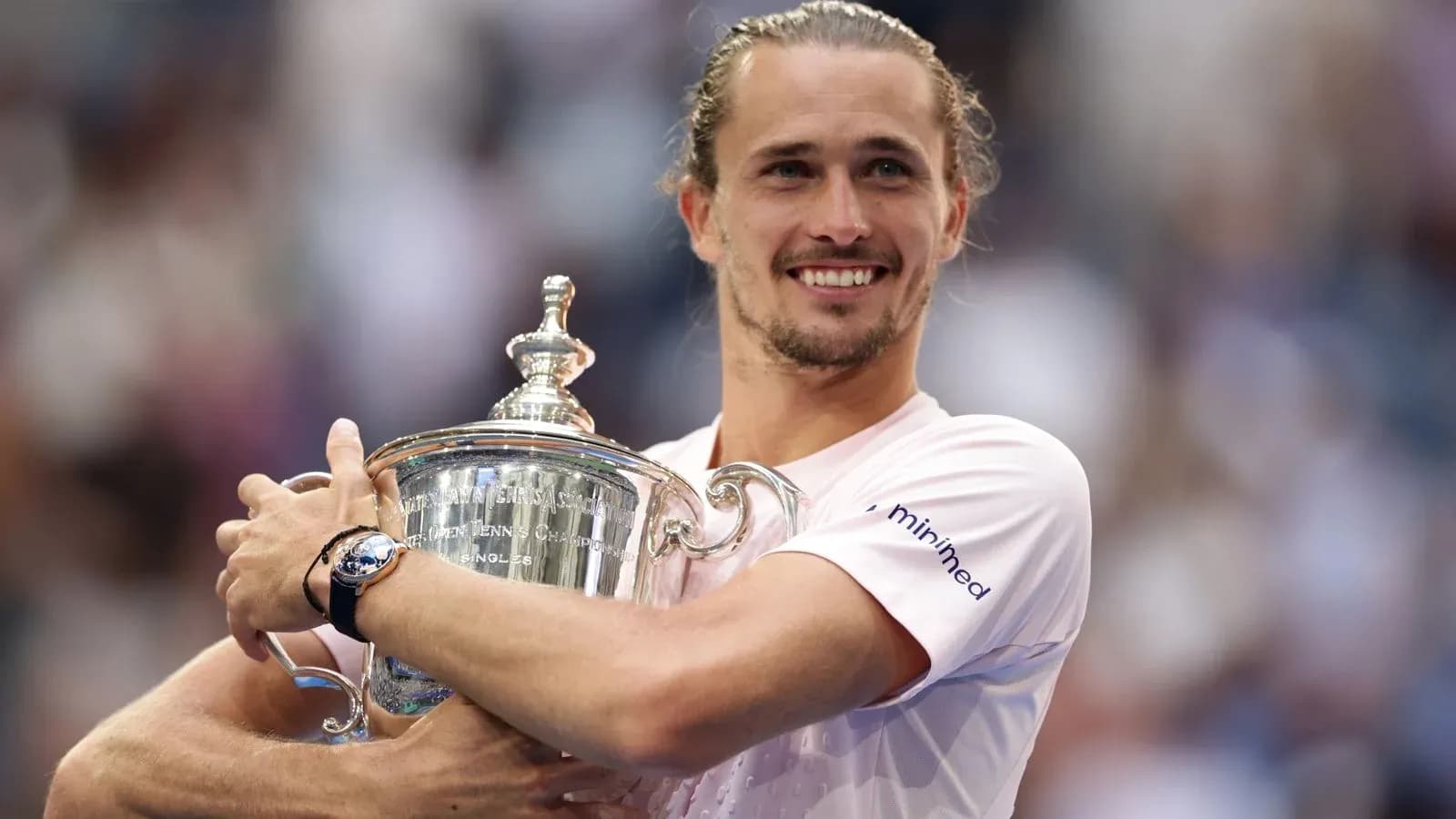
Only when he glanced up at the big screen did the truth hit him. The top seed had beaten America’s new hope 6-3 7-6 (7-2) 5-7 6-2 to win his first title in New York, his second Grand Slam of the year, and finally step into the space his talent has been threatening to occupy for a decade.
From “best player never to win a major” to double Slam champion in a single season. The suffering, as he put it, has turned into something else entirely.
Zverev silences a hopeful nation
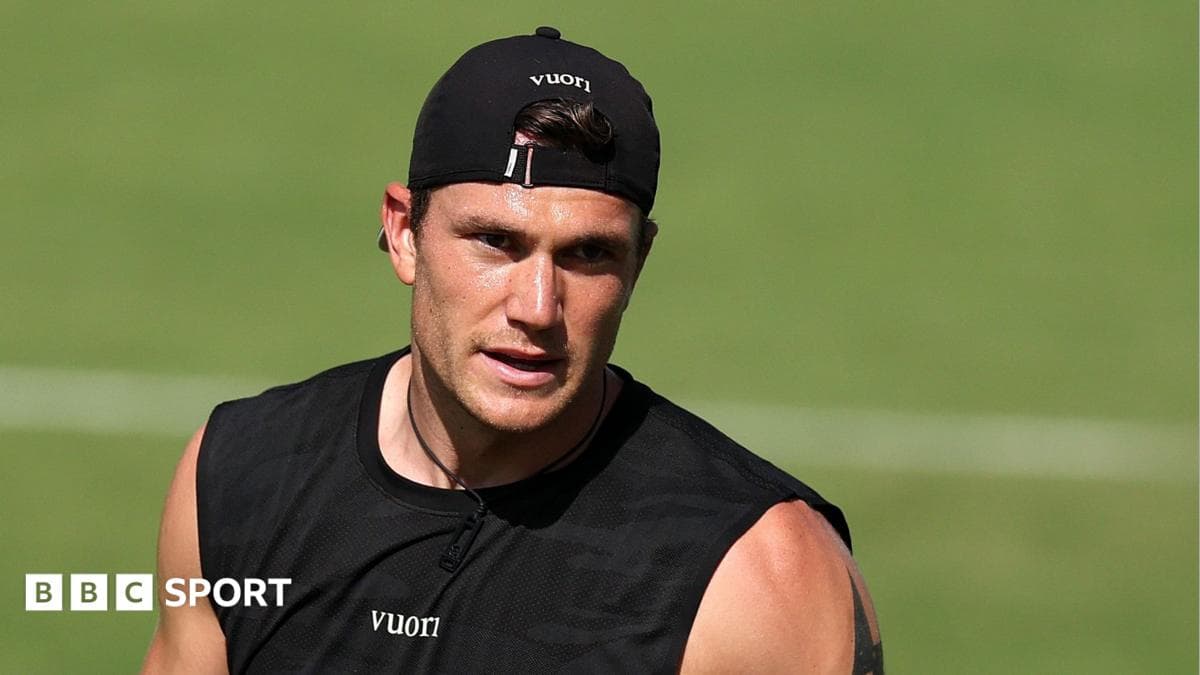
This was supposed to be the night the drought ended. Ben Shelton, 21 years old and born after Andy Roddick’s 2003 US Open triumph, walked into Arthur Ashe Stadium as the man who might finally drag American men’s tennis back to the summit.
The stage could not have been more loaded. A packed house of 23,000 in the arena named after Arthur Ashe. A partisan crowd, desperate for a homegrown champion. A young, electric left-hander bidding to become only the second black man to win a Grand Slam singles title after Ashe himself.
Hollywood turned up to watch the script unfold. Brad Pitt, Rami Malek, Pierce Brosnan. The cameras cut to Brosnan early, the match clock cheekily frozen on 0:07. The Bond jokes wrote themselves. The tennis did not.
Shelton won the toss, chose to serve, and within minutes felt the full weight of the occasion. At 30-30 in the opening game, he missed a routine shot, then double-faulted. Break Zverev. Statement made.
The German, who had already spent 19 hours and 38 minutes on court en route to the final – the fourth-longest run to a Slam final since 1991 – looked fresher, sharper, more certain. He broke again on set point. One set in 35 minutes. The crowd fell quiet.
Shelton, so fearless in mowing down Stefanos Tsitsipas and Carlos Alcaraz earlier in the fortnight, could not lay a glove on the Zverev serve for two sets. No break points. No real rhythm. Just the relentless thud of first serves and the sense that the more experienced man had brought his very best version to the biggest stage.
Zverev, the No 1 seed at a Grand Slam for the first time, played like it.
Tie-break control, a flicker of hope, then the door slams shut
If the first set belonged to Zverev’s authority, the second belonged to his composure.
Shelton tried to stir the crowd, gesturing, talking to himself, searching for the spark that had carried him through the draw. Zverev refused to bite. The set marched to a tie-break, and there the German tightened the screws.
He dominated it 7-2, reading serves, pinning Shelton back, picking his moments to step in. Two sets up, with the American still without a single break point, the match looked like a coronation.
Shelton refused to let it be that simple.
In the third, Zverev’s serve finally wobbled. The German, who had been rock solid, suddenly offered a glimpse of vulnerability. Shelton pounced, carving out three break points that doubled as set points. The noise inside Ashe rose to the levels he had imagined as a kid. On the second chance, he converted. The American had his set. The crowd had its belief back.
Just as the story seemed ready to twist, Zverev ripped it away.
He broke early in the fourth set, stamping out the momentum before it could build. From there, the contest lost its balance. Shelton kept swinging, but Zverev had his teeth in the match again. He coasted, in his own grinding, ball-bouncing way, towards the finish line.
At one point, the endless pre-serve routine finally drew a time violation. The numbers behind it were staggering: around three of his 23-plus hours on court this fortnight spent bouncing the ball. But the ritual worked. Under pressure, he trusted the routine, and it carried him home in three hours and 33 minutes.
The final point came. Shelton’s return drifted long. Zverev forgot the score. Then he looked up, saw the confirmation, and allowed himself to feel it.
Grand Slam title No 2. The French Open and US Open in the same year. The narrative around him is no longer about what he has not done.
This illness will not define us
When the trophy was in his hands and the adrenaline began to ebb, Zverev’s focus turned to the person who first refused to accept limits on his future.
Shortly after his win, he spoke about his mother Irina, herself a former professional player, and the moment his life could have been written very differently.
“When your four-year-old son is diagnosed with diabetes and doctors in the office tell you that life and sports will be very limited for that child, it takes a very strong mother to say ‘my son will be whatever he wants to be’,” Zverev said.
“If he wants to be a tennis player, he’ll be a tennis player. If he wants to do something else, he’ll do something else but this illness will not define us.
“I’m happy that we worked through it and we’re doing things that we’re doing right now. My mother is the most important and strongest person I know because it takes an unbelievably strong woman to do what she did.”
The words carried more weight than any celebration. For all the talk of technique and tactics, this was a story of perseverance that began long before a packed Arthur Ashe Stadium chanted his name.
He allowed himself a smile when asked about the bizarre ending, too.
“I thought the score was 5-1!” he admitted. “I knew that I had broken him twice, but I thought he only held once.
“I was thinking: ‘Okay, I’m going to have a relaxed service game here and then I’ll get tight on the next one.’ It was lucky for me!
“It’s actually funny, teachers in tennis say play each point and forget about the score. Well I forgot about the score and it helped me!”
There was another line that hinted at just how long this journey has felt.
“I feel like there was so much suffering for the Zverev family at Grand Slam level, that maybe 2026 is the year we should just enjoy,” he told Sky Sports Tennis. “Everything is going perfectly. I am unbelievably happy.
“Three months ago if I was told you are going to win one Grand Slam in your career and nothing else, I would have signed the paper straight away and never questioned it.
“Now standing here with two Grand Slam trophies in the space of the months is incredible.”
Shelton’s promise amid the pain
Defeat in your first Grand Slam final, in your home Slam, in front of a crowd ready to anoint you, cuts deep. Shelton handled it with the kind of poise that suggests this will not be his last Sunday at a major.
“Sascha, congrats on these two weeks, your second Grand Slam title and two in one year,” he said on court. “What you’re doing is incredible, the way you are serving and moving in play. You work harder than anyone I know, and do more hours on court than anyone else.
“You and your team do things the right way and I’m sincerely happy for you guys to hold this title.
“To New York, you guys drove me here today. I’m just getting started and I’ll be back here again.”
Zverev’s own tribute to him was just as pointed.
“Ben, you’re an incredible player and an incredible person,” he said. “This was your first Grand Slam final but I already told you you’re going to be back here many more times and if I would have to bet all my money on it, I would bet that you would lift this trophy one day.”
The numbers back up the sense that this was a step, not a ceiling. Shelton had never beaten Zverev before this tournament, losing all five previous meetings. He had also never defeated Tsitsipas or Alcaraz until this fortnight in New York. He changed those stories here. He will try to change this one next time.
Experience, aggression, and a player reborn
From the commentary box, those who have walked this road recognised what had changed.
Tim Henman, analysing for Sky Sports Tennis, pointed to the transformation in Zverev’s game and mentality over the last year.
“The perseverance and the way Zverev’s game has improved over the last 12 months,” said the former British No 1. “I was looking back at his Grand Slam results, and his game was going backwards.
“But he has transformed himself to be more aggressive, and when you reflect on this matchup, Zverev had beaten Shelton five times in a row.
“Shelton had to change the narrative, but Zverev looked so comfortable.
“Shelton did a great job getting that third set, but losing his serve first game of the fourth settled Zverev down and gave him more energy. He coasted to the line from there.”
Marion Bartoli, the former Wimbledon champion, honed in on the sheer gulf in experience under the lights.
“The difference in their experience was absolutely massive,” she said. “When you look at the first game of the final, Ben Shelton won the toss, elected to serve, fell to 30-30, missed an easy shot and then double faulted to give away the first break straight away.
“Look, it’s not easy to come out in front of your home crowd and play your first ever Grand Slam final in those circumstances.
“Of course you have all the crowd for you, but you want to please them at the same time, put on a show and play your best tennis.
“Zverev made only one unforced error in the first set, and it just made Shelton’s life so difficult.
“There’s no shame losing to Zverev when Zverev is playing like this.”
That last line might linger longest. Zverev, 29 years old and now a two-time major champion, has capitalised this year on the fitness struggles and absences of Carlos Alcaraz and Jannik Sinner at key moments. He has also, finally, capitalised on himself.
The suffering may not be over in this sport’s brutal carousel, but the conversation around him has changed. He leaves New York with the trophy, the hard court Slam that once slipped through his fingers in that famous 2020 final, now finally his.
Shelton leaves with nothing tangible, yet everything he needs: scars, belief, and a taste of the biggest stage.
The question as the lights dim on this US Open is no longer whether Alexander Zverev belongs among the game’s elite. It’s who, exactly, is going to stop him from making this kind of Sunday a habit.