Alexander Zverev Wins Second Grand Slam Title at U.S. Open
NEW YORK — The wait goes on for American men’s tennis. Alexander Zverev’s surge, however, shows no sign of slowing.
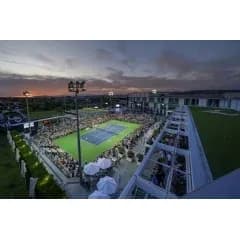
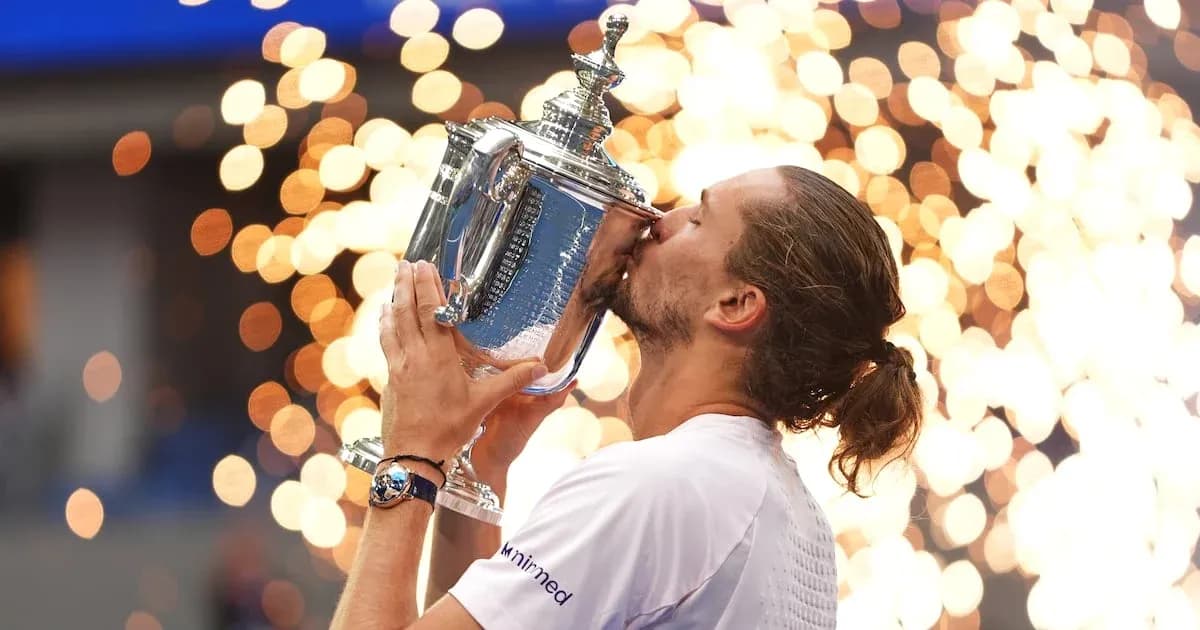
On a sticky Sunday night in Arthur Ashe Stadium, Zverev walked into the most partisan atmosphere of his career and walked out with his second Grand Slam title, beating Ben Shelton 6-3, 7-6 (2), 5-7, 6-2 in the U.S. Open final.
He quieted a country desperate for a homegrown champion. He quieted a stadium that wanted a story. Then he wrote his own.
Zverev’s redemption tour reaches New York
Four years ago on this court, Zverev let a U.S. Open title slip through his fingers. Two sets up on Dominic Thiem, two points from glory, and then a collapse that left him on the wrong side of history as the first man since 1949 to lose a final from that position.
Those ghosts are gone now.
He broke through at Roland Garros this spring, finally lifting a major trophy after years of promise and frustration. In New York, as the No. 1 seed at a Slam for the first time, he backed it up with the kind of week that defines a career, not just a season.
This time, when the match tightened and the crowd turned, he didn’t blink.
A brutal start for Shelton
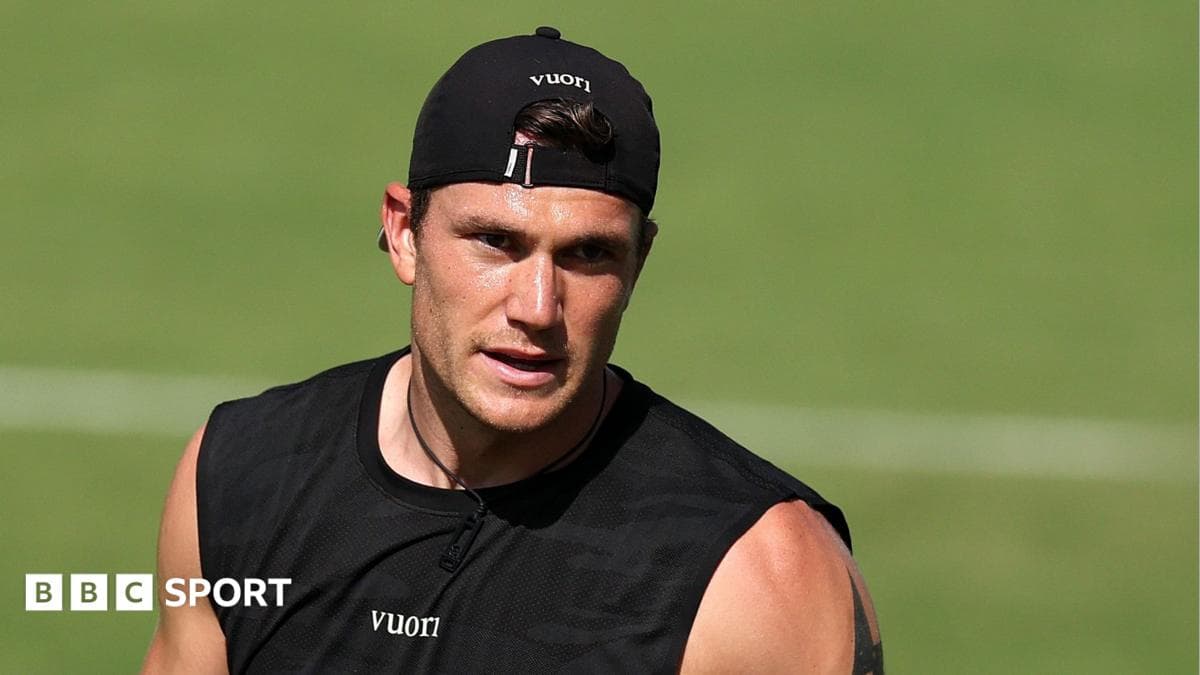
The night had been billed as a coronation for the next great American hope. Shelton, 23, electric, unfiltered, and fearless, had already lit up this tournament. He’d knocked out defending champion Carlos Alcaraz in a five-set quarterfinal that ended at 3:33 a.m., the latest finish in U.S. Open history. He’d ridden that wave all the way to his first major final.
The crowd treated his walk from the tunnel like a title already half-won. Fans stood, roared, waved flags. Then the match began, and reality bit.
Serving first, Shelton dropped the opening two points and never really settled. The game ended with a double-fault, a gut-punch of a start that set the tone. Zverev, calm and clinical, protected that early break and closed the set on — fittingly — another Shelton double-fault.
The stadium sagged. Shelton’s box urged him on. Zverev just kept bouncing the ball.
Silence as a weapon
Zverev’s deliberate routine between serves, the long strings of bounces — sometimes 10, sometimes closer to 20 — turned the biggest tennis stadium in the world into long stretches of enforced quiet. The rules demand silence as a player prepares to serve and during the point, and Zverev stretched that window to its limits.
For a crowd trying to drag Shelton into the match, it was suffocating.
They tried to puncture it. A few fans cheered when Zverev missed first serves, drawing a rebuke from the chair umpire. Zverev, who had said before the final that he relished hostile environments, barely reacted. He just reset, bounced, and hit his spots.
The pressure shifted from the stands to the baseline. That’s where Zverev thrives.
The tiebreak that broke American momentum
Shelton found his footing in the second set. The serve started to land. The forehand began to crack through. The rallies lengthened, and the noise followed. Suddenly, the American had a chance to level the match.
The tiebreak killed that hope.
Zverev opened with a heavy serve that Shelton pushed long. Then came a gorgeous passing shot, threading the needle and yanking the air out of the stadium. At 2-0, they played a grueling 16-shot rally. Zverev refused to miss, dragged Shelton corner to corner, and finished the point to go up 3-0.
From there, he turned to raw power. A 147 mph bomb. Then 124 mph. Shelton never touched either. Down 5-2, Shelton finally got a return in play, but Zverev took that point as well and sealed the breaker with a 139 mph serve.
Two sets to love. The No. 8 seed staring at an 0-6 career record against Zverev and a mountain to climb.
Shelton swings back — briefly
Shelton has never lacked for belief. Even with the scoreboard against him, he kept swinging, kept talking to himself, kept trying to ignite something in the stands. The third set rewarded that stubborn streak.
Zverev’s level dipped just enough. Shelton’s forehand began to land with more bite, his serve found the lines, and for the first time all night, Zverev looked a touch unsettled. The American broke through, dragged the match into a fourth set, and gave 23,000 people a reason to believe again.
It felt, for a few minutes, like the script might flip. Zverev knew this territory too well — the big lead, the charging opponent, the creeping tension.
This time, he slammed the door.
A champion’s finish
Any hint of a full-scale comeback vanished early in the fourth. Zverev tightened his patterns, cut out the cheap errors, and went after Shelton’s second serve. The rallies tilted his way again, and the scoreboard followed.
Shelton, who had hoped to become the first American man to win a Grand Slam since Andy Roddick in 2003 and the first Black man to claim the U.S. Open crown since Arthur Ashe in 1968, simply ran out of answers. The energy that had carried him past Alcaraz and through the draw couldn’t crack Zverev’s resolve.
By the time Zverev closed out the 6-2 fourth set, the contest felt less like a shootout and more like a statement. He didn’t just win another major. He backed up Paris, erased the scars of 2020, and owned the role of top seed in a way that leaves no asterisk.
Shelton’s run ends with a loss, but not a dead end. At 23, with a booming serve, a fearless game, and a taste of the biggest stage, he looks like a man who will be back.
The drought for American men, though, stretches into a 22nd year. The question now is simple: when the next chance comes, will anyone be able to do what Zverev finally learned to do in New York — finish?