
The £100m Midfielder: English Football's Transfer Dilemma
English football has fallen in love with the £100m midfielder.
Eight of the 10 most expensive transfers between English clubs this summer were for players who patrol the centre of the pitch. It is where games are controlled, where managers see problems and owners see solutions. It is also where the market has lost its mind.
Once Tottenham pushed £85m across to West Ham for Mateus Fernandes in June, the bar lurched upwards. Four days later they smashed their own record again, wiring £100m to Newcastle for Sandro Tonali. Those two deals didn’t just reshape Spurs’ midfield. They rewrote the price list for everyone else.
Suddenly Bruno Guimaraes, Morgan Rogers, Elliot Anderson, Carlos Baleba, Enzo Fernandez – all of them were being measured against that new reality. Agents had a benchmark. Selling clubs had leverage. Buying clubs had a problem.
By the end of a two‑month spree in which Premier League sides burned through a sum roughly comparable to the GDP of Andorra, plenty of people inside the game were left staring at the numbers. Supporters too. You can justify one huge deal as an outlier. You cannot ignore a market that behaves like this every summer.
The question hangs over all of it: can a footballer really be worth £100m to a club?
Strip it back and there are only two ways a player can pay that back. He has to change what happens on the pitch. Or he has to change what happens on the balance sheet.
Commercially, only a tiny group of global superstars genuinely shifts the dial for a major Premier League club. Shirt sales, sponsorships, international reach – those things move for a Messi, a Ronaldo in his pomp, maybe one or two others. Most players, even the very good ones, do not transform a brand.
So the weight falls on performance. And here, too, the evidence is less dramatic than the fees.
There are vivid examples of what happens when a team loses its cornerstone. When Virgil van Dijk missed most of Liverpool’s 2020/21 season, they finished 30 points worse off than the year before. Yet even that is not a clean experiment: Jürgen Klopp’s squad was ravaged by injuries, and wasteful finishing undermined them all year.
Manchester City’s 2024/25 wobble without Rodri told a similar story. The drop‑off was clear, the midfield imbalance obvious. But again, his absence was only one thread in a wider unraveling.
Omar Chaudhuri, chief intelligence officer at Twenty First Group, has spent years trying to quantify these effects. His firm advises clubs on how to spend – and how not to. The conclusion is awkward for an industry addicted to the transfer window: most signings, even the expensive ones, do not radically alter a club’s trajectory on their own.
So where is the justification for the £100m man?
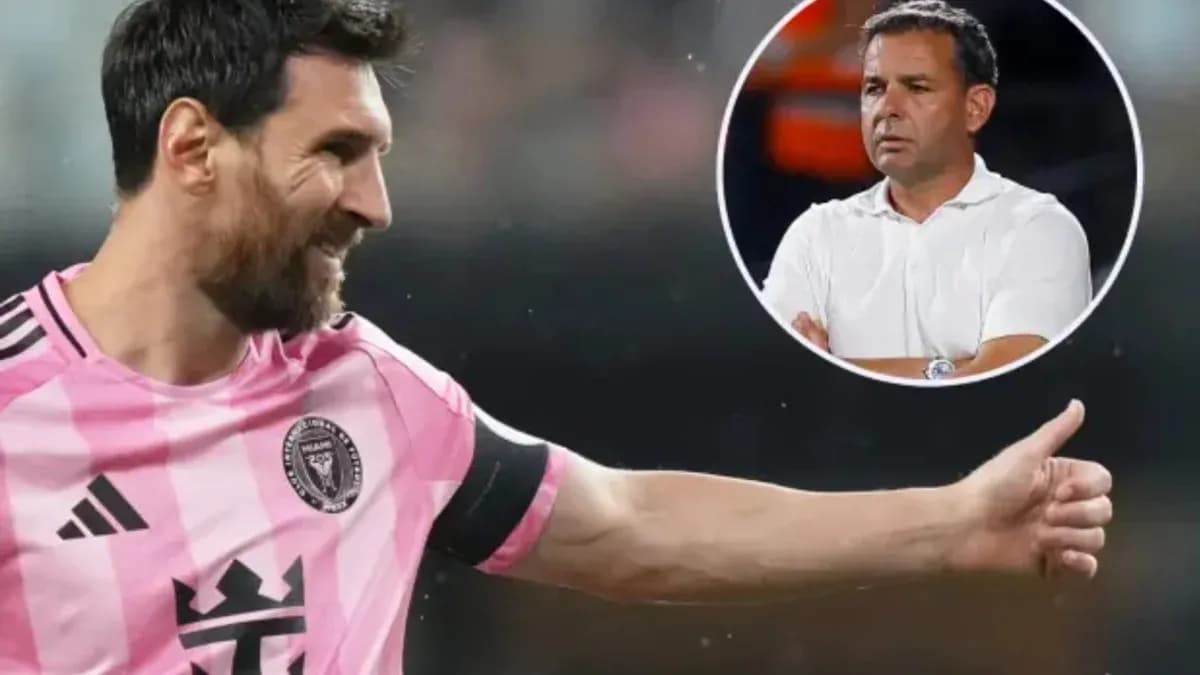
“In intrinsic value, no,” Chaudhuri says. Run the numbers on how much a single player can influence results over a season and you hit a ceiling. Three, four, maybe five points. The exception is when the gap in quality is absurd, like Lionel Messi at Inter Miami, operating several rungs above almost everyone around him.
Enzo Fernandez is a case study. An excellent midfielder, technically gifted, tactically intelligent. But not a one‑man revolution. In a league where the baseline quality is already elite, the idea of a “transformative” player becomes harder to sustain.
Manchester City’s £125m outlay on Fernandez, once wages and bonuses over the length of the deal are factored in, could edge towards £200m. The notion that the difference between having him and not having him is worth £200m in extra revenue is, as Chaudhuri puts it, difficult to make add up. Yet the logic of the market is unforgiving: if everyone is prepared to pay, then that becomes the going rate.
And so the distortion deepens. Clubs spend vast sums under pressure – from the table, from the crowd, from their own impatience. A poor run of results, a manager under fire, and the transfer market becomes a shortcut, a quick fix, a way to show ambition.
History keeps pointing to the same conclusion: that faith is misplaced.
“The transfer market is a vastly overrated opportunity to improve your team,” Chaudhuri says. The numbers back him up. Track clubs’ net spend against their change in league position and the correlation all but disappears. A side that splashes £200m net is, statistically, no more likely to climb than one that banks £200m in sales.
It is a staggering thought in an era defined by the window countdown clock. But it also explains why certain clubs keep punching above their weight.
Brighton and Brentford have turned the Premier League’s excess into their advantage. They sell at the frothy end of the market, cashing in when the big boys come calling. Then they wade into calmer waters to find replacements, armed with data, discipline and a clear idea of what they want.
When Twenty First Group sits down with clubs, executives often search for some hidden edge: an untapped league, a magical metric, a secret market. Chaudhuri’s answer is less glamorous and far more demanding.
You need a plan. Then you need the nerve to stick to it.
It almost doesn’t matter what the plan is, so long as it is coherent and consistent. That is where so many clubs fall down. They lurch from one idea to the next – change the manager, change the sporting director, rip up the playing style, pivot the recruitment strategy. One year they want high pressing, the next they want control, the year after that they want “experience”. The squad becomes a collage of half‑finished projects.
Brentford and Brighton are the exceptions precisely because they are not distracted. They are almost tunnel‑vision in their methods. Data informs decisions, but so does a clear football identity. They recruit to a model, not a mood.
The irony is that the financial engineering behind these huge transfers only encourages more of them. Many headline figures are padded with add‑ons that might never be triggered. Almost every deal is amortised, the cost sliced into annual chunks across a long contract.
That £125m on Fernandez? On the books it becomes £25m a year over five seasons. If City sell him after three years for half the original fee, the incoming money wipes out the remaining “debt” on the balance sheet. The risk looks smaller on paper than it feels in reality.
It is this kind of accounting that underpins the Premier League’s towering spending. As one recent report in The Independent laid out, the league is now built on a casual reliance on debt, a pile of sand disguised as concrete. Some inside the game are starting to wonder what happens if the tide comes in.
Until it does, the carousel keeps turning. Another bad run, another manager under scrutiny, another owner reaching for the chequebook. Another midfielder nudging closer to nine figures.
Chaudhuri sees a different route. He points to the wild swings in form that many teams experience within a single season. A side can look like Champions League material for two months and mid‑table fodder for the next two, with largely the same players on the pitch. That volatility tells its own story.
It suggests clubs can extract far more from what they already have.
Cohesion, coaching, tactical clarity, player development – these are the levers that rarely make the back page splash, but they move results. Yet too many clubs ignore them in favour of the dopamine hit of a big unveiling and a record fee.
“There’s so little focus on what clubs can actually do to build cohesive teams and improve their own players,” Chaudhuri says. In the rush to buy, many have forgotten how to build.
The £100m midfielder has become the symbol of this age: a statement, a gamble, a marketing asset, a lightning rod for hope and frustration. The real test for English football may not be who signs the next one, but who has the courage to stop trying.