2026 FIBA Women's World Cup Semifinals Preview: France vs Germany, Spain vs USA
The 2026 FIBA Women's World Cup has boiled down to four heavyweights and one unforgiving weekend in Berlin. The United States, France, Spain, and Germany all bulldozed their way through the quarterfinals. Now the margins shrink, the noise grows, and every possession starts to feel like a verdict.
Two semifinals. Two very different paths. One shared objective: survive Saturday and reach the final.
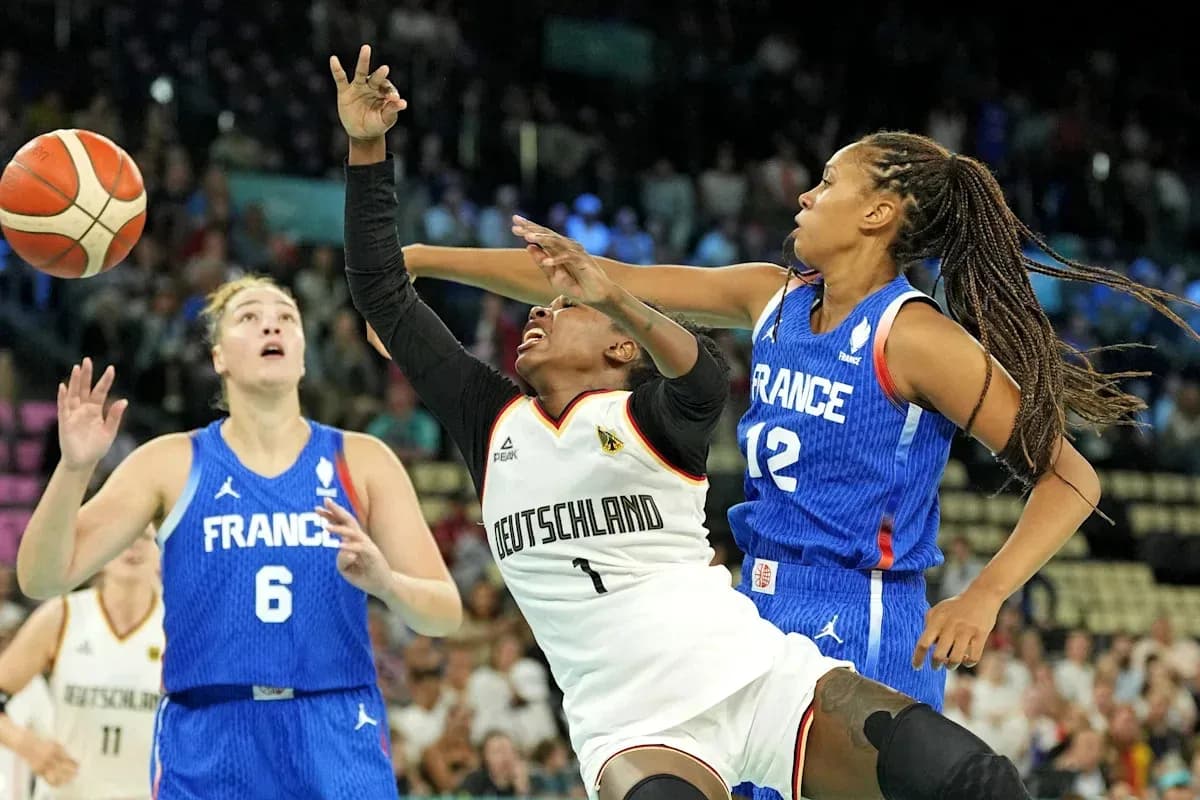
France vs Germany: Firepower Meets Home Floor
France have not just been winning. They’ve been dismantling people.
They’ve broken the single-game three-point record at this World Cup. They’ve piled up points and blown open games before halftime. Right now, they look like the team everyone else is trying to catch.
But this is Berlin. And Germany are not just another opponent on the schedule.
France’s relentless depth
What separates this French side is how the danger never really leaves the floor. The starting five set the tone, but the bench keeps the pressure suffocating.
Marine Johannès has become the symbol of that depth. She isn’t even starting, yet she’s eighth in the tournament in scoring at 16.5 points per game and leads the entire field with 16 made threes. Every time she checks in, the game tilts. She stretches the floor, punishes late closeouts, and turns any defensive lapse into three points.
Then there’s Gabby Williams. A starter, a tone-setter, and one of the form players of this World Cup. She has been playing some of her best basketball on this stage, driving France’s pace and edge. If she maintains this level, France’s path to the final stays wide open.
France have options everywhere. They can go big, go small, go fast, or grind. They can win from the arc or by wearing you down over 40 minutes. That’s what makes them so dangerous.
Germany’s belief and Berlin’s roar
Germany, though, walk into this semifinal with something France don’t have: home advantage.
Berlin changes the equation. Every defensive stop, every loose ball, every whistle will be met with a wall of sound behind the hosts. And this German team has grown into the tournament at exactly the right time.
Marie Gülich has been the anchor. She’s averaging 11.8 points per game and has been the spark plug for this run, giving Germany a steady interior presence and a focal point in the half court.
Around her, the supporting cast has surged. Against Belgium in the quarterfinals, Leonie Fiebich delivered a team-high 17 points and 10 rebounds, a double-double that underlined her rise as the competition has gone on. Nyara Sabally matched that energy with 16 points and 12 rebounds of her own. Two double-doubles, one statement: Germany can battle on the glass and score through contact.
If Fiebich and Sabally keep playing at that level, Germany have the weapons to turn this from a showcase for France into a genuine upset bid.
The bench has chipped in as well, but this is where the gap shows. Germany’s rotation does not run as deep as France’s, and in a high-tempo, high-stakes semifinal, that could bite. To compensate, Germany must defend with a level of intensity that rattles France’s shooters and drags the game into a more physical, half-court contest.
They know the alternative. The last time these teams met in a major knockout game, the 2024 Olympics quarterfinals, France ran out 84–71 winners. Germany cannot afford a repeat of that script.
The verdict
France arrive with a mission. The sting of that devastating loss to the USA at the 2024 Paris Olympics has not faded, and this World Cup has felt like a long, controlled response.
They’ve kept the pedal down all tournament. No let-up. No complacency.
Germany will have to dig deeper than they have yet. The crowd can fuel them, especially on the defensive end, and if they can disrupt France’s three-point rhythm, the upset door opens a crack.
But right now, France’s depth, shooting, and form make them the pick.
Prediction: France to advance.
Spain vs United States: Style Clash on the Big Stage
On the other side of the bracket, Spain and the United States bring a different kind of intrigue. Two teams that love to score, two backcourts in rhythm, and one looming question: whose defense holds first?
Spain’s sharp edge
Spain have been quietly excellent.
They topped Group A and earned a bye straight into the quarterfinals, then tore through Australia 89–66 to book their place in the last four. That performance looked like a team fully in sync.
Megan DiLeo (née Gustafson) led the way with 16 points on 7-of-11 shooting against Australia. Confident, efficient, decisive. Her time with the Portland Fire in the WNBA has clearly sharpened her game, and that composure has carried over into this World Cup run.
Alongside her, Iyana Martín has emerged as one of the standout scorers in the tournament. She’s averaging 16.5 points per game, seventh-best among all players, and gives Spain a guard who can create, finish, and punish any lapse in coverage.
As a unit, Spain hum on offense. They’re averaging 81.0 points per game, moving the ball, spacing the floor, and making defenses chase shadows. It’s been enough to break most teams.
But now comes the real test.
USA’s response and their overwhelming depth
The United States took a scare in the group stage against Italy. That wobble didn’t linger.
Since then, they’ve snapped back into their usual ruthless self. In the quarterfinals, they demolished Hungary 108–56, a scoreline that underlined both their firepower and their defensive bite.
Napheesa Collier led with 19 points, another strong outing from the former WNBA Defensive Player of the Year who has been a model of consistency throughout the tournament. Rhyne Howard added 15 points and went 3-for-5 from deep, showing exactly how punishing this roster can be when the perimeter shots fall.
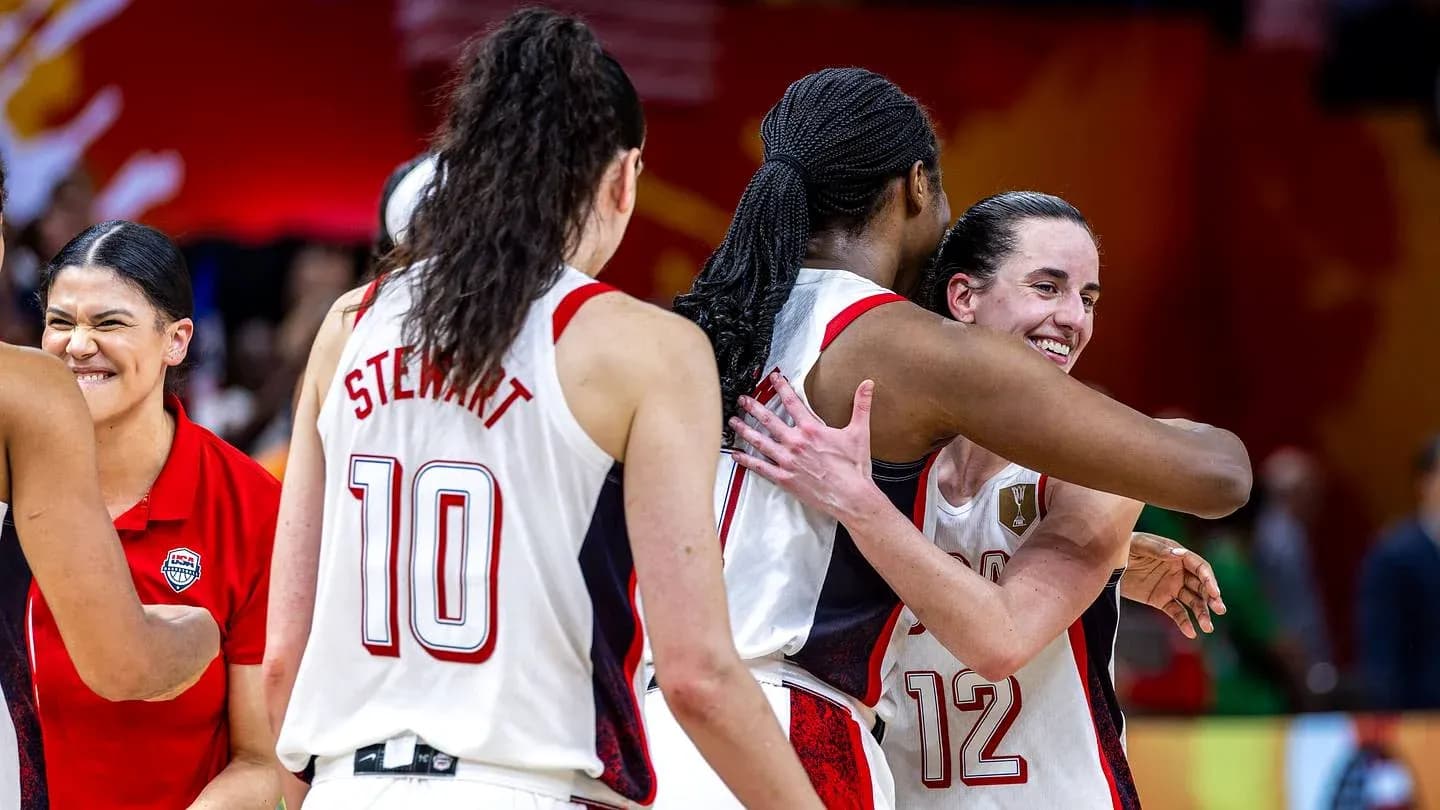
And then there’s the bench. Few teams in basketball history can bring on names like Caitlin Clark, Paige Bueckers, and Angel Reese as “supporting” pieces. All three have stepped in with major contributions whenever called upon, turning second units into mismatches and closing any gap in momentum before it even appears.
Defensively, the numbers tell their own story. Across four games, the USA have allowed just 58.3 points per contest. They control the glass as well, averaging 31.5 defensive rebounds per game, compared to Spain’s 26.3. That rebounding edge limits second chances, kills runs, and turns stops into quick transition points.
Spain can score. The USA can smother.
The verdict
Spain’s run has been impressive, and their offense is good enough to trouble anyone. They move the ball, they trust their scorers, and they won’t shrink from the moment.
But the United States bring something else: a long history of handling big stages, a roster loaded with players accustomed to pressure, and a balance across every department—offense, rebounding, defense, and depth.
If they keep owning the defensive glass and maintain their usual intensity, they should have too much for Spain over 40 minutes.
Prediction: USA to advance.
If the bracket plays to form, Berlin is staring at a France–USA final loaded with storylines and scars from Paris 2024. But semifinals have a way of tearing up scripts. On Saturday, it’s not reputations that matter. It’s who handles the noise, the nerves, and the moment.