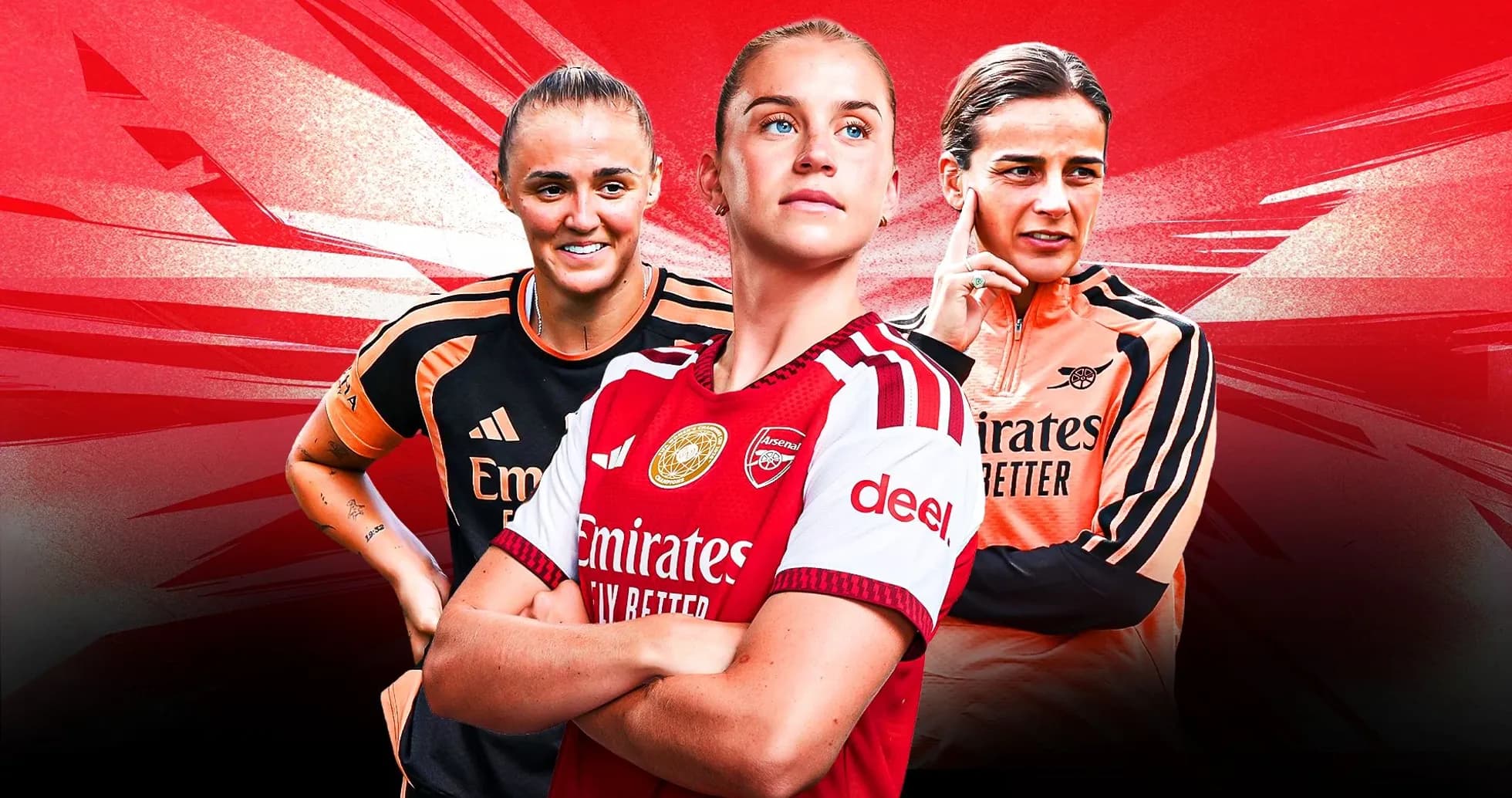
Arsenal's Squad Depth: A New Era for WSL Title Contenders
Arsenal have been here before: big expectations, big names, big talk. This time, though, the difference runs right through the squad list. It’s the depth. Real, proven, battle-tested depth.
Every line of the pitch now feels stacked. In most positions, Jonas Eidevall and his staff can look at the bench and see not a downgrade, but a different solution.
Even the “young” faces arrive with mileage.
Olivia Smith already has three strong senior seasons behind her, capped by a 2025-26 campaign where she carried the weight of a hefty price tag without flinching. Smilla Holmberg brings a similar bank of minutes and the experience of a European Championship, having started for Sweden and played an hour in their quarter-final loss to England last summer. Lisa Baum, the least decorated internationally of the trio, has been playing senior football since she was 15. These are not prospects learning on the job. They’re ready-made options.
One worry remains, and it sits right at the heart of the back line.
Leah Williamson’s fitness has been fragile, and Katie Reid is still working her way back from an ACL injury. If the England captain breaks down again, Arsenal are suddenly light, with only Lotte Wubben-Moy and Steph Catley as recognised centre-back choices. For a team with serious ambitions on multiple fronts, that’s a thin margin for error.
Everywhere else, though, the squad looks imposing. And for Arsenal supporters, that feels new. And exciting.
Midfield, once dangerously reliant on individuals, now looks like a loaded department. Last season, the drop-off when Kim Little or Mariona Caldentey were missing was stark. At 36, Little cannot be asked to carry the same load forever, no matter how often she bends time and space in the middle of the park. Caldentey, too, has been leaned on heavily as the creative fulcrum.
Enter Georgia Stanway and Geraldine Reuteler. Their arrivals change the picture. Suddenly, Arsenal are not crossing their fingers over Little’s minutes or Caldentey’s availability. They can manage them, protect them, and still field a midfield that can dominate.
The same theme runs up front.
Alessia Russo has been running at full throttle for club and country for years. That she has stayed largely injury-free is a testament to her conditioning and professionalism. But no elite striker should have to live on that edge indefinitely. Now, with Selina Cerci added to a group that already includes Stina Blackstenius and the recovering Michelle Agyemang, Russo finally has company capable of sharing the burden.
Cerci’s record speaks loudly: more Bundesliga goals than any other player across the last two seasons. That is not squad-filler. That is firepower.
This rebuild has also quietly unlocked a new dimension in the No.10 role.
Frida Maanum has been the default choice there, while the now-departed Victoria Pelova never fully stamped her authority on the position. Experiments with Kyra Cooney-Cross in that pocket did not quite click. Rosa Kafaji, brought in during 2024, has already moved on to London City Lionesses, trimming the list of natural options even further.
Now, though, Arsenal can attack the problem from different angles. Reuteler, Little, Caldentey and Stanway can all operate higher up the pitch, sliding into that advanced role when needed. Maanum, crucially, can also drop deeper. That flexibility means Eidevall can mix and match combinations, rotate without obvious weakening, and tailor his midfield to specific opponents or to the physical needs of his players across a long season.
All of this layers on top of what this team already is: Champions League winners under Renée Slegers, semi-finalists in a ferocious title defence, a side that has shown it can live and thrive at the very top level. The summer business doesn’t just pad out the squad. It sharpens it.
Ona Batlle arrives as a world-class full-back. Stanway is among the elite midfielders in the game. Cerci brings goals at a rate that turns tight matches. Reuteler’s quality shone on the Euro 2025 stage. Baum looks like a player for today and tomorrow, exactly the kind of profile that sustains a cycle of success rather than just chasing a single season.
The landscape around them, though, is unforgiving.
Manchester City come in as defending WSL champions and deserve every ounce of respect that status commands. Their title run last season, however, came without the strain of Champions League football. That changes now. European nights bring glamour, but they also bring fatigue, travel, and the kind of squad stress Arsenal know all about.
Chelsea, the long-time benchmark with six straight titles before City’s breakthrough, are in a different phase. Last season was their poorest WSL campaign in seven years. Questions hover over parts of their current squad and over an injury record that shredded their depth last term. They remain dangerous, but no longer untouchable.
Manchester United, after a muted summer and the surprise exit of head coach Marc Skinner, do not look primed to mount a serious title charge. London City Lionesses have made noise with heavy investment and headline arrivals like two-time Ballon d’Or winner Alexia Putellas, yet this still feels too early for a full-scale assault on the crown.
So the stage clears, just a little, and Arsenal step forward with something they have not truly owned in years: a squad that looks complete.
They have options in almost every area. They have tactical flexibility and positional versatility. They have the memory of what it takes to cross the line and lift the game’s biggest trophies.
Now comes the one hurdle they have not cleared since 2019.
The Champions League is in the cabinet. The squad looks ready. The rivals are strong but not invincible. For Arsenal, this season boils down to a simple, unforgiving question: is this finally the year the WSL title comes back to north London?