Bacary Sagna Questions Transfer Fees and Football's Financial Future
Bacary Sagna has watched this transfer window roar past with the same raised eyebrow as many in the game. The former Arsenal and Manchester City full-back, once part of a very different financial era in English football, now sees numbers that make even elite professionals wince.
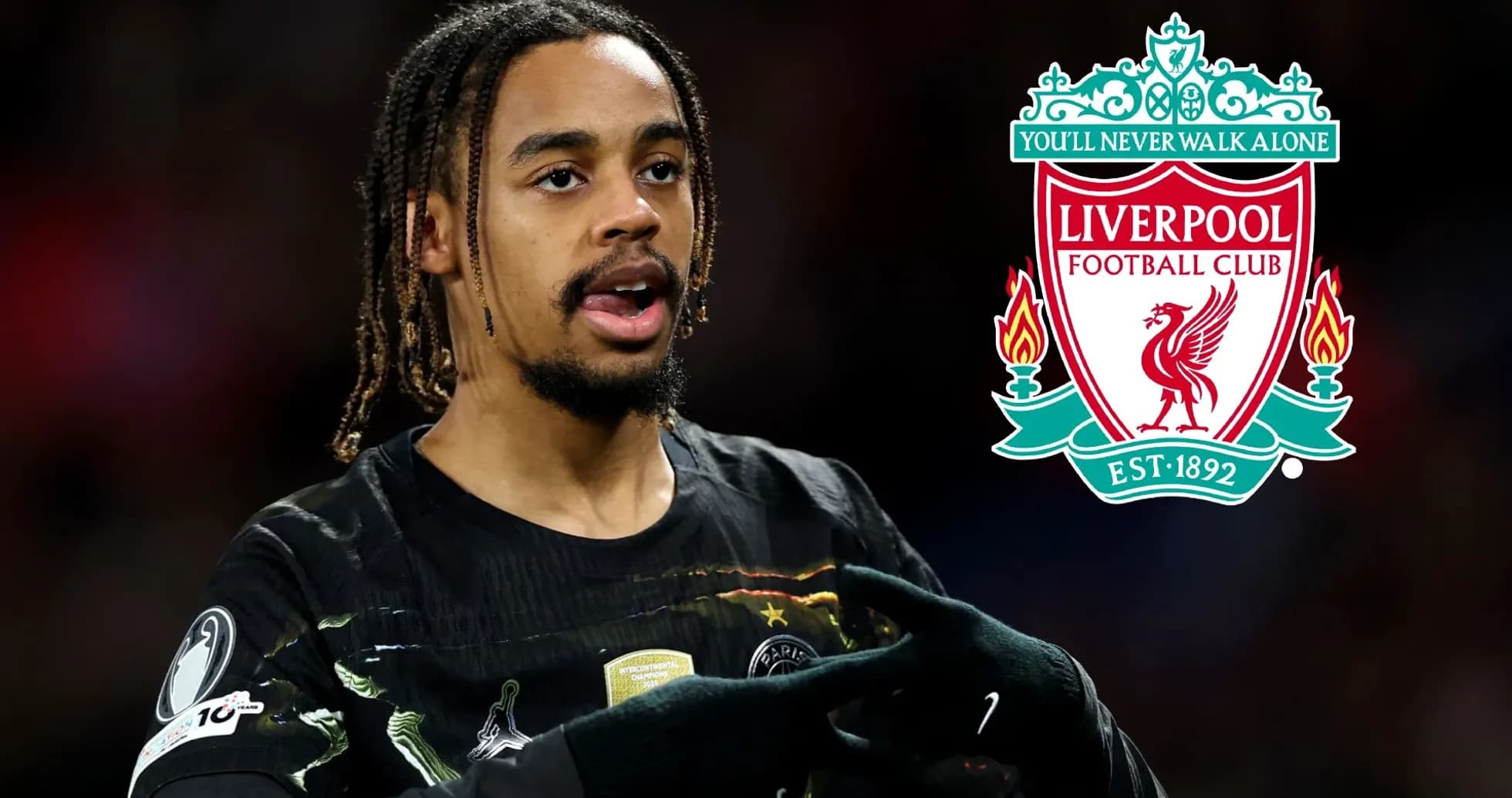
The Premier League has gorged itself again. Morgan Rogers, Enzo Fernandez, record fees, eye-watering instalments, and Chelsea in the thick of almost every major deal. At Anfield, Champions League winner Bradley Barcola has become the latest statement signing, another lavish piece added to a squad already rebuilt at huge cost over the last year.
Liverpool are not alone. Chelsea, City, Tottenham, Arsenal – all have spent heavily, all have helped drag the market into a place where nine-figure deals are no longer outliers but reference points. Ticket prices climb, commercial demands intensify, and Sagna can see where this might lead.
Speaking to GOAL in association with BetVictor Online Casino, he did not question Barcola’s pedigree. He questioned the price.
Barcola, he said, is “an amazing player”, 24 years old, proven at Paris and previously at Lyon. Nobody doubts the winger’s quality. Yet the fee – around €123 million – jars with him. It is not the player that troubles Sagna. It is what that number represents.
He accepts the usual argument: you cannot compare generations, the world has changed, the economy has shifted. When lesser players move for €100m, a better one will naturally cost more. Proportionally, it lines up. Logically, it still feels absurd.
For Sagna, there should be a line the sport refuses to cross. A limit. A ceiling. Something.
Because if €123m for a 24-year-old is now considered reasonable, where does this end? His fear is simple and blunt: if nothing changes, in five years, €500m deals may not sound like fantasy at all.
From there, his concerns widen. The modern game, he says, is a business – and that in itself is not the problem. Football becoming an industry has brought money, exposure, opportunity. But every booming business has a dark edge, a danger zone, especially when regulation falls behind ambition.
Sagna looks at recent scandals and investigations around FIFA and sees a pattern. Attempts to sell the World Cup, governance under fire, trust eroding. None of it shocks him. In a landscape where there are effectively no financial boundaries, where any player can move for almost any fee, excess becomes inevitable.
He believes football has lost touch with its own foundations. Just as a person is shaped by early education and values – the “roots” that make up most of who they are – the sport needs its own fixed principles. Without them, the basics get bent, then broken.
Once that happens, trouble follows. He sees it already in the battles around financial fair play, in clubs stretching or breaking rules to keep pace with rivals. The risk, in his eyes, is a future where only a handful of super-clubs can truly compete, while others fall away, unable to match the spending or the wages.
That is when the damage spreads beyond balance sheets. If competitive quality drops, the product suffers. When the product suffers, image rights suffer. Broadcasters pay less, sponsors hesitate, global appeal dips. Football has built itself into a premium spectacle; it cannot afford to chip away at the very thing that makes it valuable.
Sagna’s warning is not dressed up as nostalgia. It is a hard look at a market that has lost all sense of scale. The money keeps rising, the pressure on fans keeps rising, and the sport keeps telling itself this is normal.
At some point, someone will have to decide whether “normal” is still sustainable – or whether the game is sprinting towards a financial cliff it can no longer see.