BCCI Seeks Title Sponsor Amidst Strong Restrictions
BCCI still hunting for title sponsor as big brands locked out
More than two weeks after its deadline, the Board of Control for Cricket in India is still without a title sponsor for India’s home international matches. For a board that usually has brands lining up at the door, the delay is striking.
Talks are on. Quietly, and at the very top.
As first reported on August 22, BCCI is believed to be in direct negotiations with a clutch of heavyweight companies, including Google Gemini, SBI Life, IDFC First Bank and Spinny. No deal yet, no announcement, but the shortlist underlines the kind of financial muscle the board is targeting.
At the same time, BCCI has drawn some very firm red lines.
New money welcome, but not from everywhere
The Invitation to Tender (ITT) sent to potential bidders carries a clear message: certain sectors need not apply. And it’s not just the usual suspects like tobacco, liquor, fantasy gaming and gambling.
Tyre manufacturers, paint companies and sports apparel brands have been explicitly shut out of this title rights race.
The document spells it out in black and white: any bidder “engaged directly or indirectly in the tyres, tubes and flaps industry” is barred. That includes any group company involved in manufacturing, marketing, distributing or selling those products.
The ban stretches further. Firms “engaged directly or indirectly in athleisure wear, performance wear, and sports merchandise and equipment” are also blocked. So are companies in “paints, waterproofing and wallpapers.”
The logic is obvious. BCCI is ring-fencing the interests of its existing partners.
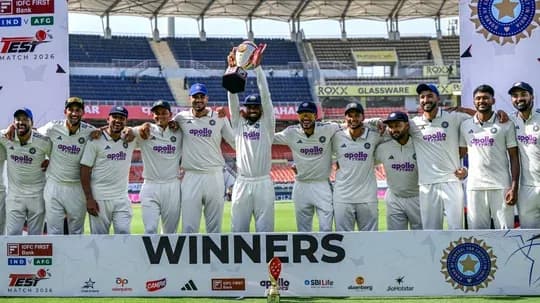
Apollo Tyres is the Indian team’s lead jersey sponsor. Adidas supplies the kit. Asian Paints is an Associate Partner. The clauses in the ITT are designed to ensure that the title sponsor does not collide with, or dilute, the rights of these established backers.
The fallout is significant. Brands like MRF, CEAT, Berger Paints, JSW Paints, Nike, Puma and Decathlon are effectively out of the running for this particular property. There is no indication that any of them had planned to bid, but the board has moved early to close that door.
A high-value property, tightly controlled
For all the restrictions, the asset on offer remains one of the most coveted in world cricket: title rights to India’s home international fixtures played by the senior men’s team.
The ITT outlines the scale. For tendering purposes, BCCI “presently expects” to host around 35 chargeable matches during the rights period. The caveat is important: this is not a guarantee. The final schedule, the board stresses, will be decided solely at its discretion.
A “Chargeable Match” is clearly defined. It covers international games involving the India Senior Men’s National Team in an international series or event. It does not include domestic fixtures, ACC events, ICC events, or any international match played by the India senior women’s national team.
The price of entry is steep.
The reserve price has been fixed at INR 4,85,00,000 per chargeable match — four crore eighty-five lakh rupees. Multiply that by the projected 35 matches and the floor value of the deal climbs into serious territory.
And this is not a playground for loosely structured consortiums or opportunistic tie-ups.
The ITT states that bids from individuals, unincorporated entities, consortia, joint ventures or joint bidders will not even be considered. Only properly incorporated entities with the financial heft to back a long-term commitment are welcome.
Only big balance sheets need apply
BCCI has also set a clear financial bar.
Each bidder must show an average turnover of at least INR 100 crores over the last three audited financial years. Alternatively, an average net worth of at least INR 100 crores over the same period will suffice.
Either way, this is a filter designed to keep the field limited to serious, well-capitalised players. No speculative punts, no fly-by-night outfits.
So the picture that emerges is of a premium property, aggressively protected and tightly curated. A handful of sectors have been shut out to shield existing sponsors. Only corporates with deep pockets and clean books can step forward. The reserve price is set at a level that underlines BCCI’s confidence in the enduring commercial power of Indian cricket.
The negotiations now move behind closed doors, with the board weighing its options and the clock quietly ticking towards India’s next home assignment. Who blinks first — the brands, or the most powerful cricket board in the world?