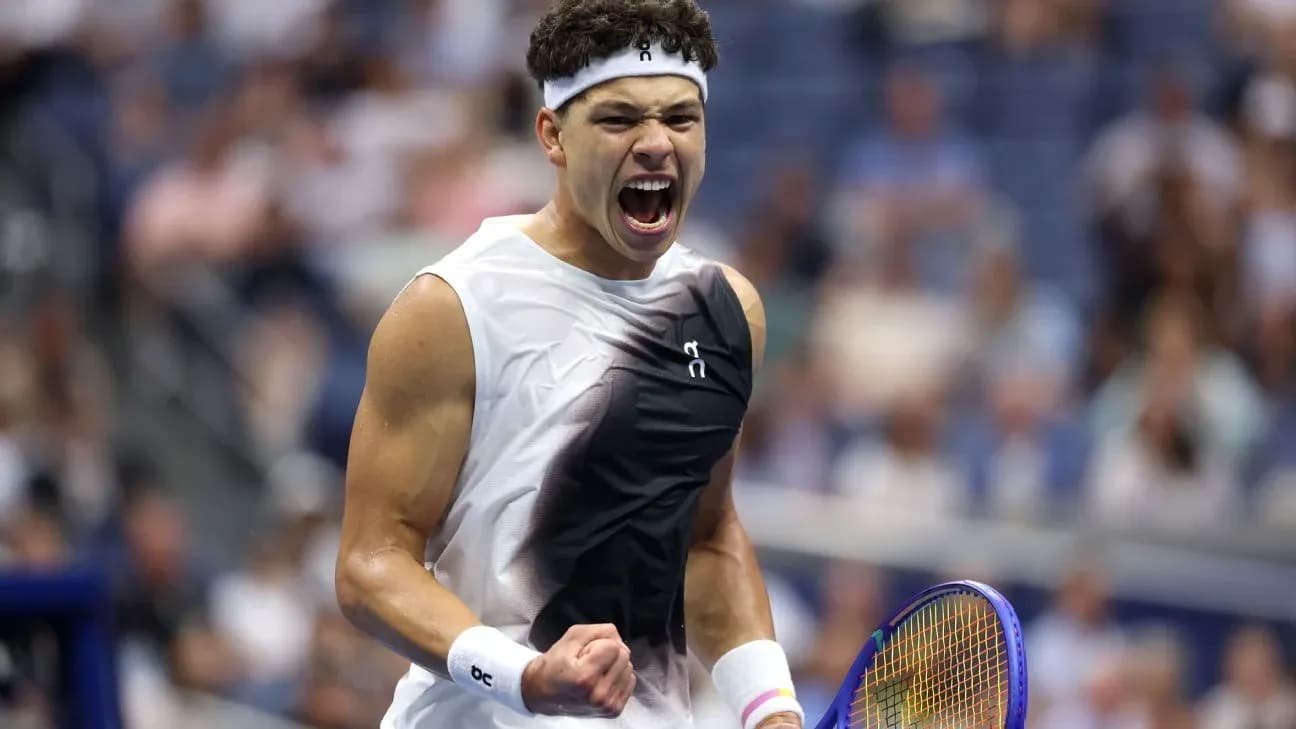
Ben Shelton Advances with Grit at US Open
Ben Shelton dug in, then punched through.
The American No. 8 seed rode out a bruising four-set duel with Hubert Hurkacz on Wednesday, winning 6-3, 5-7, 7-6 (3), 7-5 to reach the US Open third round and keep his hard-court Slam consistency alive. It’s now eight straight majors on this surface where he’s made it at least this far, a run that includes last year’s charge to the semifinals in New York.
This one, though, came with scar tissue.
Shelton, who had already gone four sets in the opening round, got dragged deep again by the big-serving Pole and had to solve a match that kept shifting underneath his feet. He controlled the first set, lost his grip in the second, then had to hold his nerve in a tight third-set tiebreak before finally breaking through late in the fourth.
Afterward, he leaned into the value of the grind.
“I think being battle-tested is great,” he said, even as he admitted this could have been a shorter day. “I don't think you want to be playing five-setters all the time. Maybe I could have won this match more efficiently today, but I thought that, you know, a lot of it was just credit to him and the level that he started to bring.”
The pressure Hurkacz applied forced Shelton to sharpen on the fly.
“I think that had I not got pushed the way he pushed me today, there are so many things that I've wanted to clean up over the last couple of days that naturally came out and continued to improve throughout the match,” Shelton said. “Playing a match like that definitely, you know, benefits me moving forward.”
Rain, delays and restless birds
While Shelton slugged it out, the tournament fought a different opponent: the weather.
For a second straight day, rain swept across New York and again shut down play on the outside courts. Only Arthur Ashe Stadium and Louis Armstrong Stadium, protected by their roofs, offered uninterrupted tennis as the schedule buckled and bent.
On Armstrong, No. 7 seed Daniil Medvedev wasted little time — except when nature intervened in a different way. He swept past Sebastian Gorzny 6-3, 6-3, 7-5, but the match produced one of those only-in-New-York moments when two birds decided to perch on the net mid-point.
Medvedev stopped, expecting the chair umpire to halt play. The umpire didn’t. They played on. Medvedev ripped a winner. Then came the call to replay the point.
“This would be definitely in the top five,” Medvedev said when asked where the incident ranked among his Flushing Meadows oddities. “But the thing is that when they came in, I thought, okay, the referee is going to stop the point, and he let it play, like, Okay, let's play. And the moment I hit the winner, he was, like, Stop, stop, stop.
“It's okay. It happens.”
Chaos in the schedule
The birds weren’t the only ones out of position.
The US Open’s move to a Sunday start last year was supposed to smooth the early rounds, stretching the first round across three days and setting up a clean second-round slate by Wednesday. The rain tore that plan apart. While Shelton and Medvedev were already booking spots in the third round, others were still trying to finish, or even start, their first matches.
Alex de Minaur felt the chaos firsthand. The No. 6 seed from Australia saw his match shifted twice from its original court before he finally stepped onto Court 11 to begin his tournament. Once he did, he made short work of Italy’s Andrea Guerrieri, winning 6-2, 6-2, 6-4 with the kind of ruthless efficiency the schedule makers could only envy.
“It's been a couple tough days. But I mean, these tournaments, it's all about adapting and that's the name of the game,” de Minaur said. “There's too much to play for to let something like this affect you.”
Some handled the stop-start rhythm better than others.
No. 12 seed Rafael Jodar, the 19-year-old Spaniard who arrived on the back of a strong summer, never found his footing. Once his delayed first-round match finally reached the finish line, he had been swept aside 6-2, 6-1, 6-1 by China’s Yunchaokete Bu.
“I knew it wasn't going to be easy because I was waiting a lot yesterday and today as well, but it is what it is,” Jodar said. “We cannot control the rain, so it's difficult for both players.”
By Wednesday night, the tournament’s scramble to catch up from Tuesday’s washout had produced a heavy workload: 25 men’s singles matches on the schedule, all aimed at one simple target — complete the first round. At last, they did.
Late shock in the all-American clash
One of the final acts of the day delivered a jolt.
American Alex Michelsen took out fellow countryman Brandon Nakashima, the No. 16 seed, 6-3, 6-4, 6-4 in a straight-sets upset that cut through the noise of the backlog. Michelsen handled the conditions, the delays and the ranking gap with a calm that belied the occasion, striking cleanly and never letting Nakashima settle.
By the time the last ball was struck, the rain had finally loosened its grip, the first round was in the books, and the draw had a different shape: Shelton still swinging, Medvedev cruising, de Minaur steady, Jodar gone, Michelsen suddenly a problem.
Now the question is simple: with the clouds clearing and the schedule finally back on track, who turns this messy, weather-beaten start into a deep New York run?