Ben Shelton Advances to US Open Final After Defeating Frances Tiafoe
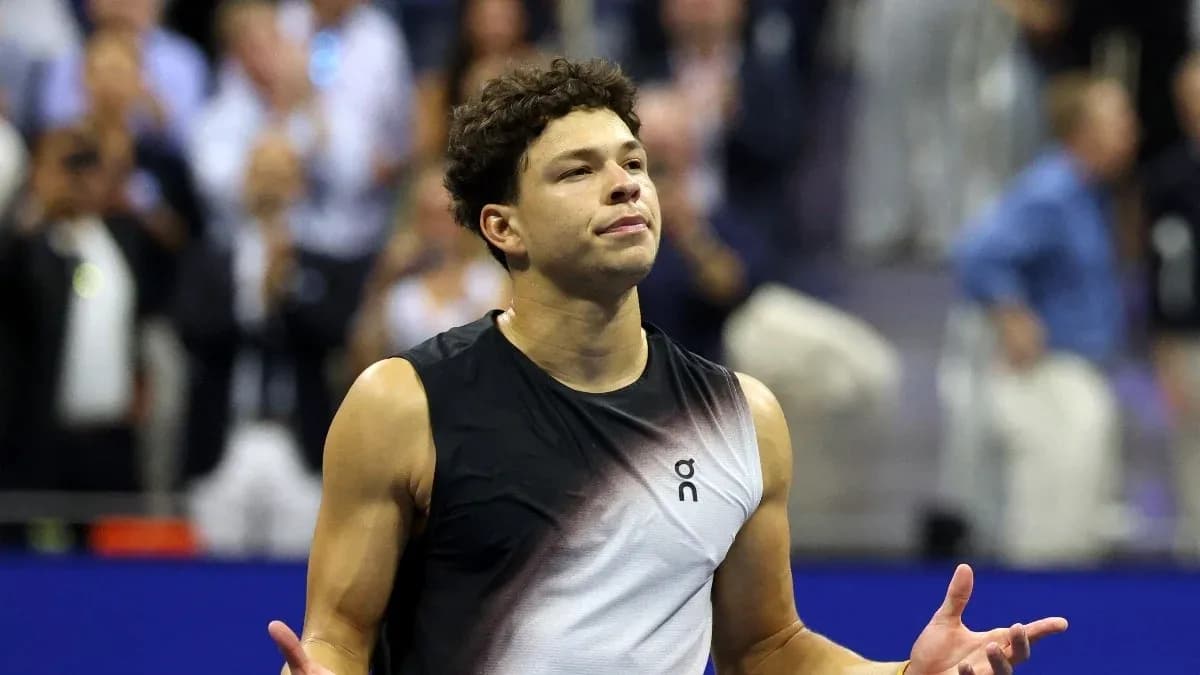
Ben Shelton walked off Arthur Ashe Stadium with his tongue out, a grin across his face and his first Grand Slam final finally in his pocket. The scoreline will say he beat Frances Tiafoe 4-6, 6-3, 6-3, 7-5 in the US Open semifinal. It will not capture how much growing up it took to get there.
“I think I’ve grown up. I’m more mature, more focused,” Shelton said afterward, still trying to process the scale of what he had just done. “I know what my goal is, I know what my job is out here, and I’m 100 percent committed to those goals.”
On this court, on this night, that maturity was the difference.
From starstruck kid to Arthur Ashe closer
A year ago, Shelton was the electric newcomer, the kid with the cannon serve and the wild celebrations, riding raw adrenaline to a semifinal. This time, he went one better. He steadied himself, rode out the storm, and managed the occasion like a man who understands how hard it is to keep your head when Arthur Ashe turns into a celebrity-packed cauldron.
“It’s not easy, playing here on Arthur Ashe,” he admitted. “You’re playing in front of all your favourite athletes and movie stars. So to keep your head down and focus for over three hours is not an easy task. I keep looking up at the screen like, ‘Oh, shoot, Jalen Brunson’s here.’”
The distractions were everywhere. The noise, the lights, the faces in the crowd. Shelton’s challenge was simple and brutal: ignore it all, or at least control it, for long enough to solve one of the trickiest puzzles in American tennis—Frances Tiafoe in full flight on his favourite stage.
Tiafoe strikes first
For a set, Tiafoe had the answers. He came out sharp, feeding off the energy, and took the opener 6-4. Shelton’s timing was off, his errors mounting, his court positioning a half-step behind. Tiafoe looked loose, dangerous, exactly like the man who has turned Arthur Ashe into his personal playground before.
Shelton needed a reset. He found it at the start of the second set, racing to a 2-0 lead. Then came the first twist.
From 0-2 down, Tiafoe surged. He clawed back to 3-3, helped by three errors from Shelton in one service game, and then slammed down an ace to underline the shift. Suddenly, Shelton’s early control had evaporated. The momentum, and the crowd, swung behind Tiafoe.
Shelton didn’t flinch.
At 4-5, with Tiafoe serving and the set hanging in the balance, Shelton dug in. Tiafoe moved ahead 30-15, but Shelton ripped a backhand winner to earn break point. One more heavy forehand forced an error, and with it came a crucial break. Shelton served out the set 6-3, sealing it when Tiafoe pushed a forehand wide. The semifinal was level, and the dynamic had changed.
The backhand that broke it open
Once Shelton settled, his game grew. The serve started to bite. The forehand found its range. The backhand—often overshadowed by his power—became a weapon.
In the third set, at 2-3 on Tiafoe’s serve, Shelton pounced. Tiafoe never looked comfortable in the game, coughing up two backhand errors and slipping to 0-40. Shelton then produced a brilliant backhand winner to pile on the pressure and followed it with another backhand winner to complete the break.
That was the hinge point. The moment when this stopped being a wild, back-and-forth scrap and became Shelton’s match to control.
He tightened his grip immediately. Serving at 5-3, he blasted two huge aces, held to love, and took the set 6-3 without dropping a point in that final game. Tiafoe, who had looked so fluid in the first set and so resilient early in the second, now found himself chasing.
Shelton was no longer chasing anything. He was dictating.
Composure under the lights
By the fourth set, the tension was thick. Every point felt like a swing in the story of American men’s tennis. One of these two would become the first American man to reach the US Open final in years; both knew it, both wanted it, both understood exactly what Arthur Ashe meant.
Tiafoe refused to go quietly. He fought, he held, he probed for a way back. Shelton, though, kept landing the big blows at the right moments, holding his nerve in the tight games and leaning on that serve whenever the scoreboard threatened to turn.
The pressure finally told late in the fourth. Shelton edged ahead, and when the match came to its conclusion, it did so not with a blazing winner, but with a mistake—Tiafoe’s double fault on match point.
Shelton didn’t celebrate immediately. He didn’t roar or collapse to the court. He went straight to his friend.
He crossed the net quickly and pulled Tiafoe into a long hug, the rivalry set aside in an instant. There was a grin, the trademark tongue wag, and a stream of quiet words between the two before Shelton finally turned to his box.
“First on Foe, he’s like a big brother to me, to be honest,” Shelton had said about Tiafoe. “Every time we get to take this court together, Arthur Ashe, and play each other is super special.
“This is where we want to be at the end of this tournament. This is both of our favourite tournament in the world, favourite court in the world. And to be able to light it up in front of you guys is the best feeling that there is.”
On this night, only one of them could stay.
A family moment on the biggest stage
Shelton’s initial reaction was almost understated, as if his body hadn’t quite caught up with the magnitude of the moment. Then he reached his box. He wrapped his father—his coach and a former pro himself—and the rest of his team in a huge hug. The emotion finally broke through.
In the stands, his girlfriend Trinity Rodman beamed, taking it all in as Shelton stood in the middle of Arthur Ashe, a stage he has dreamed about for years, now his platform for a Grand Slam final.
He has gone one better than last year’s semifinal. He has turned raw talent into something sharper, something tougher, something that holds under pressure for over three hours in front of movie stars, NBA players and a restless New York crowd.
And now, after all the growth, all the noise, all the hard points under the lights, there is one simple truth: there will be an American in the US Open men’s final—and his name is Ben Shelton.