Ben Shelton Advances to US Open Final, Ending 23-Year American Drought
On a night heavy with memory and noise in New York, Ben Shelton found a way to cut through it all.
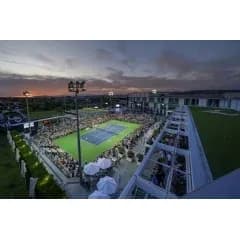
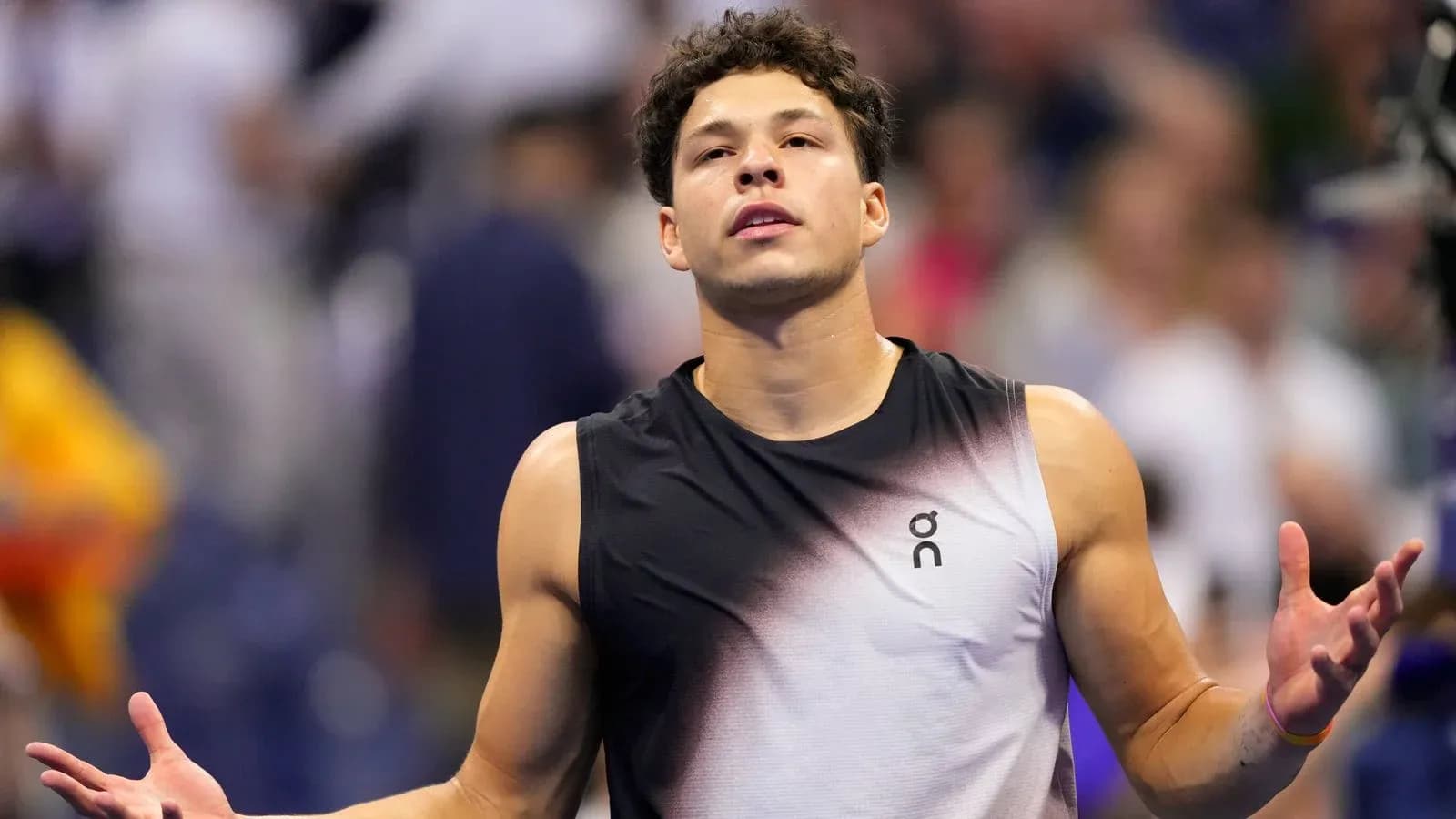
Under the Arthur Ashe Stadium lights, after a ceremony marking the 25th anniversary of the September 11 attacks, the 23-year-old left-hander came from a set down to overpower Frances Tiafoe 4-6 6-3 6-3 7-5 and march into his first Grand Slam final.
He did more than win a tennis match. He dragged a nation one step closer to the end of a 23-year drought.
No American man has lifted a Grand Slam singles trophy since Andy Roddick’s triumph at Flushing Meadows in 2003. Shelton now stands one match away from changing that, and the scale of the opportunity was not lost on him.
“First, ‘Foe’ is like a big brother to me. This is where we want to be, at the tail end of this tournament,” he said on court, still buzzing from the win. “I know what my goal is, what my job is. I'm going for it here. Let's do this for the USA!
“One more thing. It's a difficult day to be out here playing. My thoughts and prayers go to all the families who were impacted by 9/11.”
Shelton rides the storm, then takes over
For a set, Tiafoe looked every inch the senior partner. He went after Shelton’s backhand, dragged him into awkward positions, and when Shelton double-faulted at 4-5, the older American pounced. A hold later and the first set was his, the stadium roof almost lifting with the noise.
Shelton didn’t flinch. He reloaded.
Tiafoe kept probing that backhand in the second, but serving at 3-3 with new balls, Shelton detonated the match. First serve: 125 mph, Tiafoe barely getting his racket up and knocked backward to the court. Then 144. Then 139. Then 140. It felt less like a service game and more like a declaration.
The pressure told. Shelton levelled the match and, from that moment, the momentum belonged to the eighth seed.
He broke in the fifth game of the third set, and suddenly what had been a tight, nervy contest tilted sharply. Tiafoe, usually the showman, found himself chasing shadows as Shelton’s left-handed delivery and elastic defence took control.
The fourth set turned into a high-octane arm wrestle. Shelton’s serve boomed, his movement closed down angles, and his composure under pressure belied his years. Late in the set, with the match on a knife edge, he cranked up the intensity again, squeezing Tiafoe until the errors came.
When the final point landed, Shelton had stacked up 47 winners, including 20 aces. An emotional, brutal, and utterly convincing win.
Now, he gets Alexander Zverev for the title.
Zverev locks in, surges towards second major
Earlier in the day, Zverev had done his part, taking the court in daylight for once and methodically subduing Karen Khachanov 6-3 7-6 (9-7) 7-6 (8-6) to reach his third consecutive Grand Slam final and second at the US Open.
The French Open champion had been dragged into five sets in each of his opening two rounds. Since then, he has slammed the door shut on any drama, rattling off four straight matches without dropping a set.
“After the second round at 3am, me and my team were in the dressing room actually laughing at how bad I was playing. That sense of humour helped me,” he admitted on court. “I have improved a little bit, otherwise I wouldn't be in the US Open final.”
The numbers and the body language back him up.
Zverev, who lost the 2020 US Open final to Dominic Thiem, has quietly built a ruthless groove over the past week. He has also seized his moment. With Jannik Sinner absent, and Carlos Alcaraz and Novak Djokovic both out of the picture, the 29-year-old has driven through a draw that opened up in front of him and turned it into another deep run.
“I really started off the tournament, and I was like, ‘Well, this is pointless because I'm not going to do anything here,’ and here I am sitting and preparing for a Sunday final,” he told reporters, half amused, half incredulous.
Tight margins, big points
Against Khachanov, the match turned on the points that matter most.
A single break was enough for Zverev to pocket the first set, his serve and depth of shot keeping the Russian at arm’s length. When he broke again to start the second, it looked like a stress-free afternoon.
It wasn’t. A double fault let Khachanov back into the set, and from there the German had to fight. The tie-break became a slog, Zverev trailing 5-3 before digging in and finally snatching it after a lung-bursting 35-shot rally that left both men bent over their rackets.
The third set followed a similar script. No breaks, no quarter. Khachanov earned set points at 6-4 in the tie-break, but when it mattered, his forehand deserted him. Two errors, one Zverev ace, and suddenly the German had match point. He didn’t hesitate, closing it out at the first attempt.
The win sealed his place in another New York final, but this time the stage will feel very different.
A final built for noise
In 2020, Zverev played for the US Open title in a near-empty Arthur Ashe, the pandemic stripping the occasion of its usual chaos. This time, he wants the full New York experience.
“I think it's going to be a fantastic feeling playing, you know, a final in a sold-out Arthur Ashe and not in an empty one,” he said. “For me, a loud and energetic crowd is always great, as long as they're fair.”
He knows what awaits: a young American with a sledgehammer serve, chasing history on home soil, on a court that can feel like a basketball arena when the crowd senses blood.
From the commentary box, Martina Navratilova has been watching Zverev’s year unfold with admiration.
“What a year Zverev has had at the majors. It's been outstanding stuff,” she said on Sky Sports Tennis. “Okay, Sinner lost early at the French Open and Alcaraz didn't play, but there are no asterisks, he still had to get through even as a favourite.
“And that has given the confidence to play better tennis after that. I think he played better at Wimbledon than he did at Roland Garros, and now he started off badly here by his own admission, but he hasn't lost a set the last four matches. He's cooking now.”
So is Shelton.
One man chasing a second major, hardened by scars and near-misses. The other swinging free, trying to end two decades of American frustration in one fearless Sunday afternoon.
Arthur Ashe has seen eras begin and end. On this anniversary-marked New York weekend, it might be about to witness another.