Ben Shelton Makes History by Reaching US Open Final
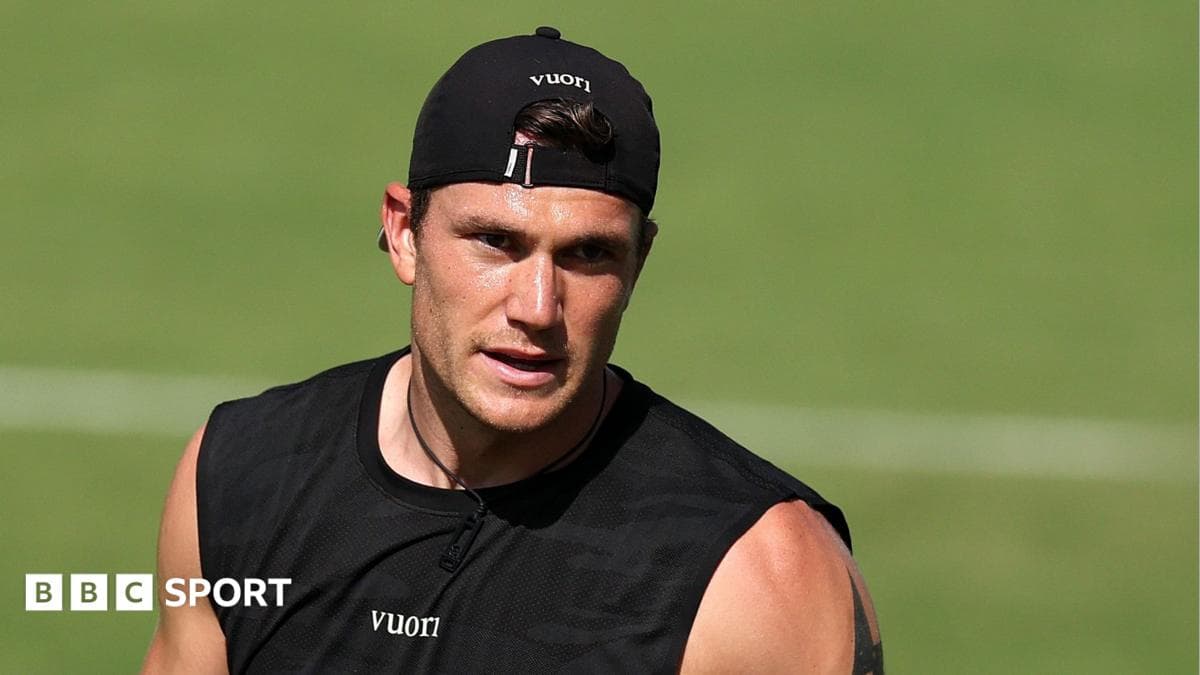
NEW YORK — Under the weight of history and the echo of memorials, Ben Shelton walked into Arthur Ashe Stadium on Friday night and kicked down a door that had been shut to Black American men for more than half a century.
He didn’t do it cleanly. He didn’t do it quietly. But he did it.
Shelton beat Frances Tiafoe 4-6, 6-3, 6-3, 7-5 in a bruising, emotional US Open semifinal, a 3-hour, 17-minute scrap that veered from brilliant to ragged and back again, and carried far more than a place in Sunday’s final on its shoulders.
On a night framed by tributes to the victims of the Sept. 11 attacks 25 years ago, two American sons — Shelton, born in Georgia and raised in Florida, and Tiafoe, the pride of Maryland — gave 24,000 fans exactly what they came for: pace, power, nerves, and a sense that something bigger was unfolding on the sport’s biggest court.
A night that rewrote the record book
With the win, Shelton becomes the first Black American man to reach a US Open singles final since Arthur Ashe in 1972. The first Black American man to reach any Grand Slam singles final since MaliVai Washington at Wimbledon in 1996.
Those are not just footnotes. They are fault lines in the sport’s history, and Shelton crossed them with that signature left-handed cannon of a serve and a stubborn refusal to blink when the match turned messy.
There was no theatrical “dialed-in” phone celebration this time when it ended. No choreographed punctuation. Just a double fault from Tiafoe into the net, a brief moment of disbelief, and a handshake between two men who know they are part of the same story.
“First on Foe, he’s like a big brother to me, to be honest,” Shelton told the crowd in his on-court interview, his voice still racing from the adrenaline. “Every time we get to take this court together, Arthur Ashe, and play each other is super special. This is where we want to be at the end of this tournament. This is both of our favorite tournament in the world, favorite court in the world. And to be able to light it up in front of you guys is the best feeling that there is.”
They lit it up, all right. Even when the quality dipped, the tension never did.
Tiafoe strikes first
The match began with a statement: a Shelton ace. It was a preview of what would come — serves over 150 miles per hour, 20 aces in total, and a constant barrage that kept Tiafoe on the stretch.
But the early discipline came from the No. 11 seed across the net. Tiafoe weathered the opening storm, held firm on serve, and waited for his chance. It came in the ninth game of the first set.
Shelton’s game suddenly frayed. Two backhand errors. A double fault. Three straight points lost. Tiafoe pounced for the break and then slammed the door with a flawless service game to take the set 6-4. The veteran of the two looked like the one with the answers.
Shelton looked like a man still trying to find the range on a weapon he knew could win him the match.
Then the serve truly arrived.
Shelton turns up the heat
Once Shelton locked in on his delivery, the match flipped. The lefty started ripping serves that blurred past Tiafoe’s racket, earning cheap points, short returns, and the kind of scoreboard pressure that breaks down even the most seasoned players.
He leveled the match by taking the second set 6-3, leaning heavily on those huge first serves and backing them up with forehands that exploded off the court. The rallies grew more physical, the errors more frequent, but Shelton owned the big swings.
The third set turned into a test of nerve. Shelton carved out chances, Tiafoe fought them off, and the crowd rode every change of momentum. The final game of that set became a small epic of its own — more than 15 minutes of thrust and counterthrust, break points saved, tension thickening with every swing.
On his fourth set point, Shelton finally broke through. Tiafoe came forward, tried to punch a forehand volley through the court, and found only the net. Shelton roared, a set away from the final and fully in command.
A scrap to the finish
Tiafoe did not go quietly. He never does.
The fourth set tightened again, both men feeling the weight of the occasion and the miles in their legs from brutal quarterfinals. Shelton had dragged Carlos Alcaraz into a five-set, four-hour-plus war that ended at 3:33 a.m. on Wednesday. Tiafoe had staged his own marathon comeback from two sets down against Alex Michelsen earlier that same day.
You wouldn’t have known it from the way they chased balls into the corners.
The rallies grew wild. Spectacular one point, scruffy the next. But as the finish line came into view, Shelton held his nerve just a fraction better. He kept swinging freely, trusted the serve, and leaned into the moment rather than shrinking from it.
At 6-5 in the fourth, the pressure finally broke Tiafoe. Serving to stay in the match, he faltered. A few loose points, a tightening arm, and then the fatal double fault into the net that sent Shelton into the final and Tiafoe to the net with a rueful smile and a hug for the man he calls a little brother.
A final, a drought, and a nemesis
Shelton’s reward is as daunting as it is enticing.
On Sept. 13, the No. 8 seed and highest-ranked American will face top seed Alexander Zverev, who handled Karen Khachanov 6-3, 7-6 (7), 7-6 (6) in a straight-sets win that was closer than the scoreline suggests. The stakes for Shelton could not be clearer: become the first American man to win a Grand Slam singles title since Andy Roddick lifted the trophy at this very tournament in 2003.
There is another barrier in front of him, and this one is personal. Shelton has never beaten Zverev. Not once in five career meetings. Their most recent clash, at the ATP Finals in November, ended in straight sets in favor of the German.
This is the mountain he has not yet climbed.
Whatever happens on Sunday, the rankings will reflect the scale of his surge. The 23-year-old will rise to No. 4 in the world, a new career high. Tiafoe, despite the loss, will also hit a personal best at No. 8 after his run to the semifinals.
Two Black American men, both in the top 10. One of them stepping into a US Open final that once belonged to Ashe, chasing a trophy no American man has touched in 21 years.
The numbers tell one story. The court on Sunday will tell the next.