Ben Shelton's Historic US Open Journey: Aiming to End 20-Year Drought
For 23 years, American men have chased a ghost in New York.
Andy Roddick swung hardest and actually caught it once. Andre Agassi made one last charge. James Blake, Mardy Fish, Sam Querrey, John Isner, Tommy Paul, Taylor Fritz – they all climbed into the second week of majors, only to run headlong into the same European wall.
On Friday night inside Arthur Ashe Stadium, under a roof that felt like it might lift off, Ben Shelton took his turn with history.
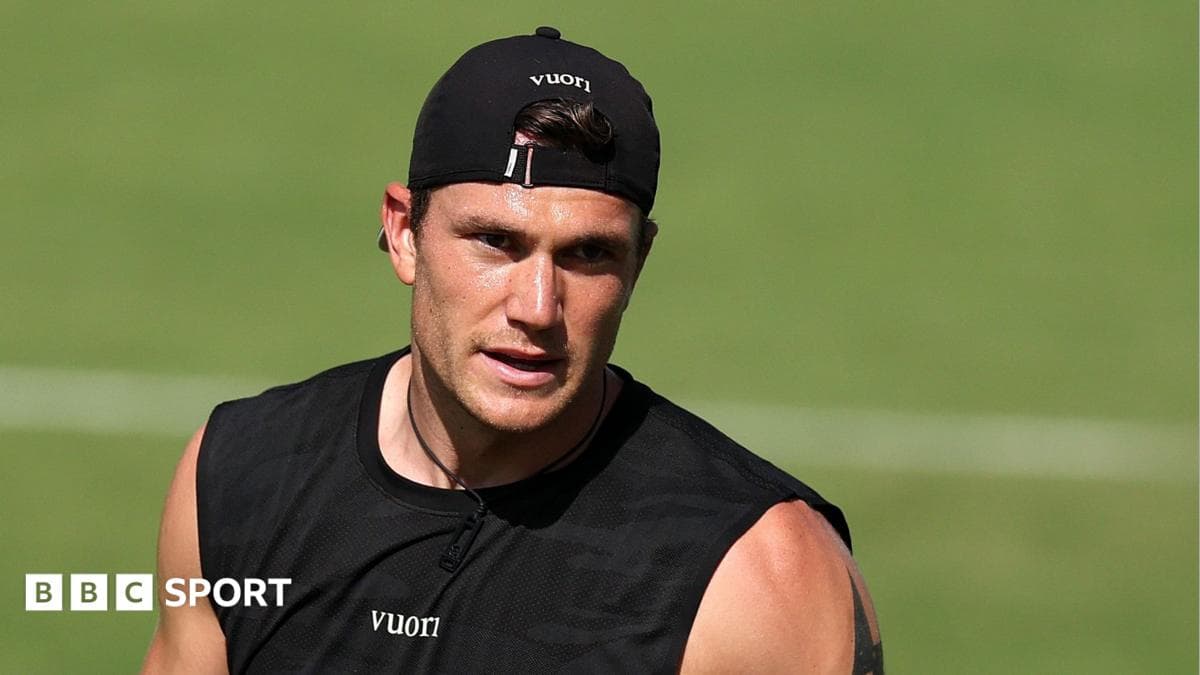
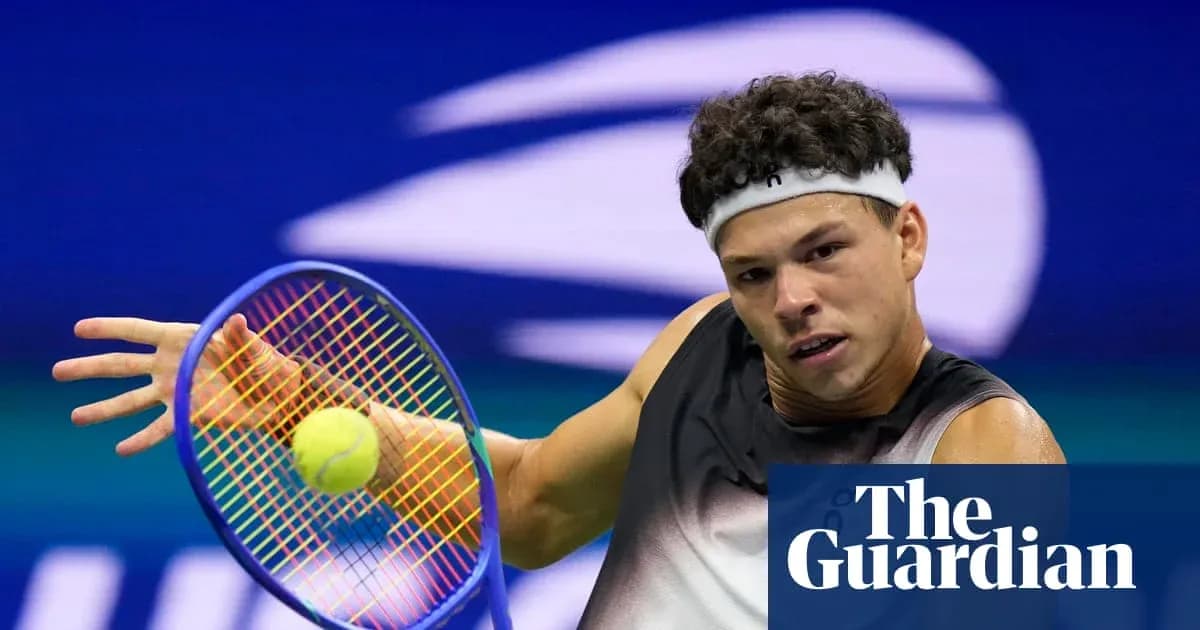
The 23-year-old from Atlanta, all fire and fearlessness, stormed into his first grand slam final with a 4-6, 6-3, 6-3, 7-5 win over Frances Tiafoe in a breathless, all-American US Open semi-final. One more victory, and he becomes the first American man to win a major since Roddick here in 2003.
He played like a man who believes that wait has gone on long enough.
A night that felt different
From the opening ball, Ashe was locked in. The usual murmur that floats through night sessions in the sport’s biggest stadium disappeared. Nearly 24,000 people leaned into every rally, every let cord, every second serve. No villain, no favorite – just two American showmen trading blows and dragging the crowd with them.
Tiafoe landed first.
Serving at 4-4, 30-0 in the opening set, Shelton suddenly lost his range. Four of the next five points went to Tiafoe, the last on a double fault. The 11th seed then shut the door at love, coolly serving out the set after 45 minutes. For a moment, it looked like the older man’s experience under the lights would tell.
Shelton’s answer was immediate and loud.
He broke at love for 2-0 in the second set, only to surrender the advantage straight back. That’s when the match tilted. The No 8 seed stopped trying to play his way into the night and started blasting through it, leaning fully on the serve that has powered his rise.
At 3-all, he uncorked a sequence that summed up the new reality for Tiafoe: 125mph, 144mph, 139mph, 140mph. The last two were aces. The message was unmistakable. He broke in the very next game and sealed the set with a 149mph first serve that felt less like a delivery and more like a declaration.
From shot-maker to problem-solver
The third set turned into a grind. Rallies lengthened. The temperature of the match changed.
Tiafoe wriggled out of trouble at 1-1, saving break points with gutsy hitting and heavy topspin. At 2-2, he ran out of road. Shelton ripped a string of backhand winners to break at love, then dragged his opponent into the deep end at 5-3.
That game – 15 minutes, 20 points – was the kind of test that once exposed Shelton’s raw edges. Not anymore. He kept coming, kept asking questions. Tiafoe saved three set points, but on the fourth he dumped a forehand into the net. Two sets to one, Shelton. The kid with the cannon had outlasted the street fighter in a war of patience.
“His game is starting to get more polished,” Tiafoe said. “Instead of just being a shot maker, he’s actually staying tough in the rallies.”
The fourth set offered Tiafoe his window, and it came instantly. Shelton, serving to start, slipped to 15-40. The crowd sensed a shift. Shelton slammed it shut.
A 140mph ace erased the first break point. A 144mph serve that Tiafoe couldn’t control wiped away the second. The danger passed. Both men held serve through 5-5, the match edging toward a tiebreak that felt destined to drag this into a fifth.
Shelton refused to let it.
He held for 6-5, then stepped on the gas. Two long rallies went his way, and suddenly he was up love-30 on Tiafoe’s serve. One more point, and he had three match points in his hand. Tiafoe saved the first. On the second, the double fault came – a stunned hush, then an eruption, as the clock stopped at 3 hours 16 minutes.
Shelton walked to his chair looking almost serene.
“I was honestly shocked with how calm I was out there today, especially towards the end of the match,” he said. “Calm, confident, focused. I think that that’s what it takes to be in these positions and win at the highest level.”
Carrying history, keeping it light
The scale of what Shelton has done stretches beyond one night.
He is the first Black American man to reach the US Open singles final since Arthur Ashe in 1972, and the first Black American man in any grand slam singles final since MaliVai Washington at Wimbledon in 1996. Those names hang heavy in tennis history. Shelton has chosen to carry them lightly.
“Yes, I can think about how cool this moment is and what I’m playing for,” he said. “At the end of the day, I’m here in New York, I’m hanging out with my team, I’m with my homies playing a little bit of tennis and I’ve been able to downplay the moment pretty well.”
Nothing about his route to Sunday has been gentle. Two nights earlier, he dragged the defending champion Carlos Alcaraz into a five-set street fight that ended at 3.33am. It was his first win over a top-three opponent after 17 failed attempts and snapped Alcaraz’s 18-match winning streak at the majors. There were no signs of that marathon in his legs against Tiafoe.
Tiafoe had come through his own epic, clawing back from two sets down and two points from defeat to edge Alex Michelsen in a final-set tiebreak. For the third time in five years, his US Open stopped one step short of the final.
“That’s why I just want to win it, man,” he said. “The love is incredible. It’s something that gives me definitely tears in my eyes from a kid starting how I did, and the love I have here is crazy.”
On this night, though, it belonged to someone else.
From college courts to the cusp
Shelton’s rise has not been a slow burn; it has been a controlled explosion.
He won the NCAA singles title for the University of Florida in 2022, turned pro, and within months reached the Australian Open quarter-finals. That same year, he broke through to the US Open semi-finals. The raw tools were obvious – the serve, the swagger, the athleticism. What followed was the hard part: turning a highlight reel into a complete player.
He has spent the last few seasons doing exactly that, adding layers to a game once built almost entirely around first-strike tennis. The payoff has been brutal for the rest of the tour. This year he has stacked titles in Dallas, Munich, Stuttgart and Montreal, and his own assessment of the transformation is blunt.
He points to his return game, his stability from the baseline, his concentration, even his sleeping habits as proof of that evolution.
“I feel that I’m a different player. I feel like I have so many more tools. I feel like I know my identity, am comfortable in my own skin, and I know what it takes for me to be playing top-level tennis.”
One last problem to solve
Now comes Alexander Zverev.
The top seed from Germany stands between Shelton and a rewriting of American tennis history. The record is stark: five meetings, five Zverev wins, all in a 16‑month span across 2024 and 2025. Sunday will be their first clash on a grand slam stage.
On paper, the matchup leans one way. Shelton does not sound remotely interested in paper.
“Problem-solving has been the name of the game here,” he said. “I‘m looking forward to the challenge, being able to problem-solve on Sunday. I know what I’m up against, and I’m also the most confident I’ve ever been in my game.”
For 23 years, American men have watched others lift the sport’s biggest trophies. On Sunday afternoon in New York, under the same Ashe lights that once crowned Roddick, Shelton walks out with a chance to end the drought, carry a legacy and, in his own words, just play “a little bit of tennis” with everything on the line.