Katie Boulter Struggles in US Open Against Karolina Muchova
Katie Boulter endured the kind of afternoon every player dreads and no one forgets.
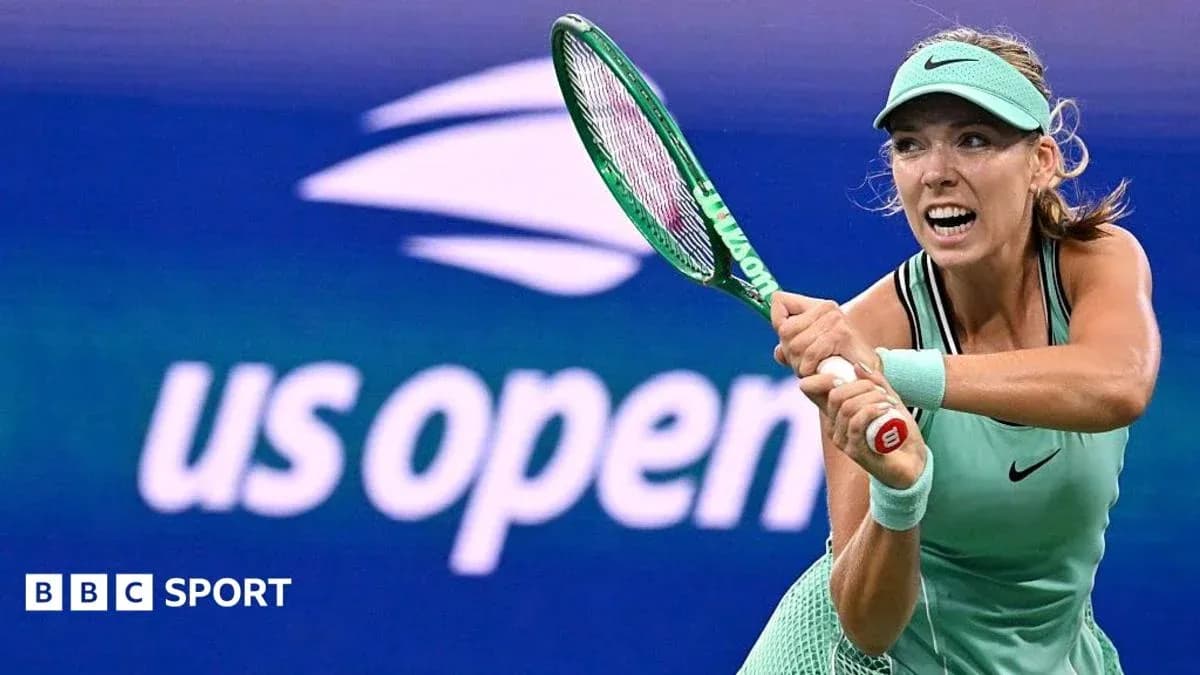
Promoted from an outside court to the 14,000-seat Louis Armstrong Stadium after heavy rain scrambled the schedule, Britain’s number one walked into one of the sport’s grand stages and was promptly swept off it. Karolina Muchova, the seventh seed from the Czech Republic and this year’s Wimbledon runner-up, dismantled her 6-1 6-0 in just 58 minutes in the US Open second round.
One game. That was all Boulter could cling to on a bruising day when the occasion, the conditions and a razor-sharp opponent closed in on her at once.
“I struggled with the conditions. I struggled with the roof, the noise, I let things distract me,” she admitted afterwards. “I let it get to me. I'm not usually aware of everything going on. It made me feel a little bit uncomfortable. I have to deal with it better.
“Ultimately, it was a bad day at the office – times two.”
Big stage, bigger problems
For those fans who thought they had struck lucky with a bonus match on their day-session ticket, the contest barely had time to breathe. Muchova walked out like a player who knows she belongs on the sport’s biggest courts. Boulter looked like someone still learning how to inhabit them.
The numbers told the story with brutal clarity.
Boulter’s serve, usually a cornerstone of her game, deserted her. Eight double faults, no aces, and just 33% of points won behind her first serve left her constantly under siege. She faced seven break points. She didn’t save a single one.
Every attempt to reset only seemed to drag her deeper into trouble. The unforced errors piled up – 22 in total – against a meagre four winners. Rallies that might have given her a foothold instead ended with a ball drifting long, a forehand slapped into the net, a second serve floating into Muchova’s hitting zone.
On the other side of the net, Muchova played with the poise of a woman who has spent the summer in the sport’s sharpest spotlight. Fourteen winners, just nine unforced errors, and a game plan that mixed delicate drop shots with heavy, penetrating groundstrokes. She probed, she dragged Boulter forward, she pushed her back. The gap in quality on the day was stark.
The pressure finally told early and never relented. Once Muchova broke in the opening stages, the match settled into a pattern Boulter could not disrupt. The scoreboard ran away from her. The stadium, roof closed and noise bouncing around, felt less like a stage and more like a cage.
Tough words, tougher truths
Former world number five Daniela Hantuchova did not sugar-coat what she had seen.
“I would be really humbled [if I was Boulter], I would sit down with my team and say ‘OK, we need to change something big time’,” she told BBC Radio 5 Live.
“First of all, it was very obvious today that it was the serve. I feel like it needs to be cleared up because she was losing the rhythm and not using her legs. That's the number one thing.
“If I am Boulter, I would be on the practice court tomorrow. If she still wants to invest everything into her tennis then she needs to be on the court.”
The message was clear: this wasn’t just an off-day to be filed away and forgotten. It was a warning sign.
Boulter, 30 and ranked 62 in the world, has enjoyed a memorable summer away from the court, marrying Australia’s world number seven Alex de Minaur in July. On the court, though, the story has been far less uplifting.
Across the four Grand Slams this year, she has managed only two match wins. Since her first-round exit at Wimbledon, she has won just two of six matches. For a player trying to cement herself in the top tier, that’s a trend that demands attention, not excuses.
Mixed fortunes for the Brits
It was a punishing day for British hopes in New York.
Jacob Fearnley, also chasing a place in the third round, fell 6-3 6-3 3-6 6-3 to Argentina’s Tomas Martin Etcheverry. Fearnley fought back to take the third set, but Etcheverry reasserted control in the fourth to close out a solid, professional win.
There was at least one bright note. Francesca Jones, whose opening-round match against Magda Linette had been interrupted by Tuesday’s rain, returned to finish the job. She completed a composed victory over the Pole to move into the next round, a reminder that British tennis still has emerging stories to tell in New York.
Where next for Boulter?
For Boulter, the questions now cut deeper than a single lopsided scoreline.
The raw tools are there. She has the power, the athleticism, the presence. She has shown, in flashes, that she can live with top players. But days like this on Louis Armstrong expose the difference between occasional threat and consistent contender.
The serve must be rebuilt. The mental armour on big stages must be strengthened. The comfort she craves under a closed roof and a restless crowd has to be earned, not hoped for.
She called it a bad day at the office. The real test is whether this becomes the catalyst for the kind of hard reset that can change a season – or just another painful chapter in a year that has already asked some searching questions of Britain’s number one.