Boulter's US Open Exit as Muchova Dominates
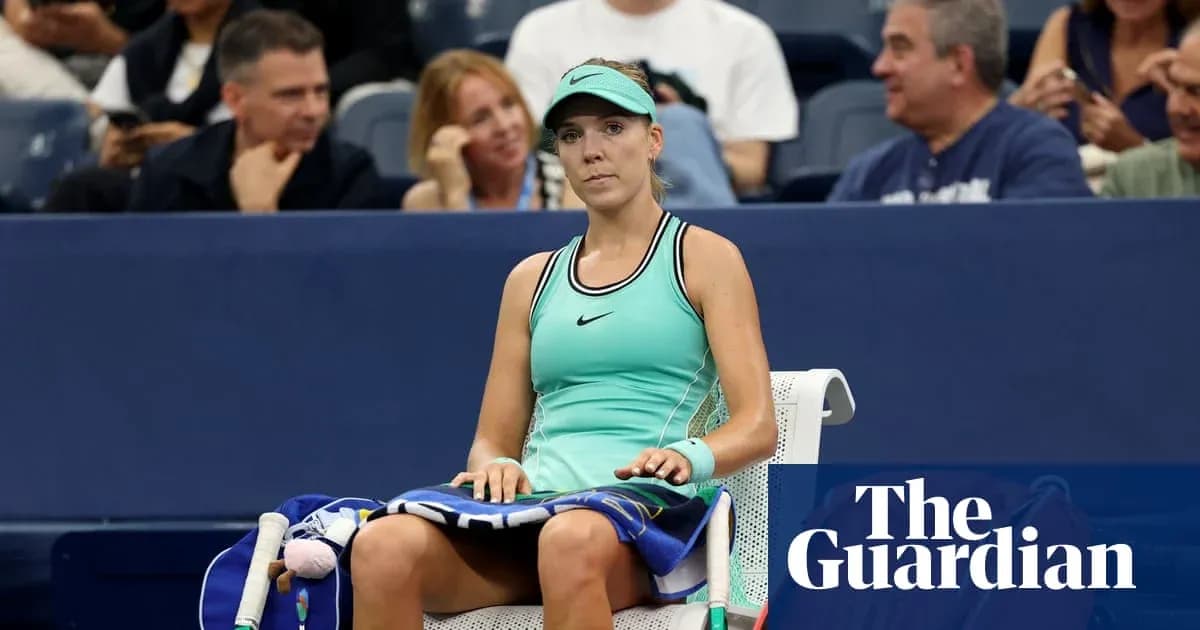
The rain lashed down on Flushing Meadows, play stopped on almost every outside court, and thousands of restless fans poured towards the only live stages left standing. Under the roof of Louis Armstrong Stadium, with nowhere to slip out of sight, Katie Boulter’s grand slam season ended in brutal, unforgiving fashion.
Karolina Muchova, the seventh seed, dismantled her 6-1, 6-0 in 59 merciless minutes.
This was supposed to be a lower-key assignment on Court 17, tucked in after the men’s first-round clash between rising prospect Rafael Jodar and Yunchaokete Bu. The downpour changed everything. The match was bumped to Armstrong, one of the noisiest arenas in tennis, and Boulter never found her footing – or her focus.
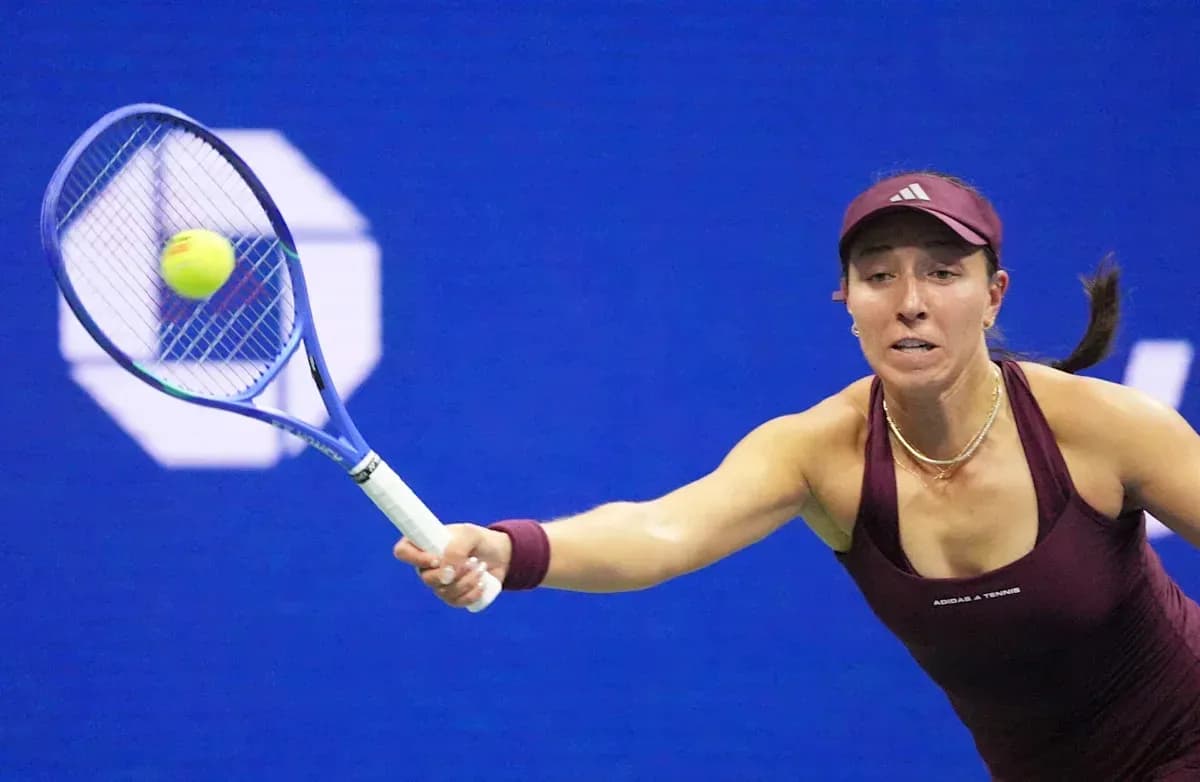
Muchova, by contrast, glided. She produced the full repertoire: delicate angles, disguised drop shots, heavy forehands, and seamless transitions to the net. It was the Czech at her silkiest, an all-court masterclass that left Boulter scrambling for answers.
“She was better than me today for sure,” Boulter admitted afterwards. She spoke candidly, trying to pick through the wreckage of a match that had slipped from her almost immediately. The new surroundings had jarred her from the opening point.
She struggled with the closed roof. She struggled with the constant murmur and chatter in the stands, the trademark soundtrack of the US Open that never quite fades to silence. She struggled, ultimately, with the scale of the stage on a day when nothing in her game would stick.
“I struggled with the conditions. I struggled with the roof, I struggled with the noise. I kind of let these little things distract me a little bit,” she said. “At the end of the day, it was a bad day at the office.”
It felt harsher than that. This has been a transformative summer for Boulter off the court – she married Alex de Minaur in July – and earlier in the year her tennis had seemed to be climbing in sync with her personal life. She captured a fourth WTA title in Ostrava and surged back into the top 60, highlighted by a superb win over world No 2 Elena Rybakina at Queen’s.
Then the momentum vanished.
Before her first-round victory in Cincinnati last month, Boulter had lost five matches in a row, a run that included a flat, straight-sets defeat in the opening round of Wimbledon. Confidence, once flowing, has been rationed ever since.
New York offered a fresh platform and, for the first time, a stadium court. Boulter had only practised once on Louis Armstrong. She expected the usual pre-match hum, then the hush that traditionally greets the first point. It never arrived.
“I actually expected it to kind of die down a little bit, but it didn’t,” she said. “From the first point of the match I was expecting the crowd to go silent, which is normally how it works. But it never changed.”
She tried to adjust on the fly, telling herself she needed to adapt, to work it out as the match unfolded. It never did. The errors mounted, Muchova tightened the screw, and the scoreline turned ugly.
The irony is that Boulter normally feeds off a crowd. “I always want to have an atmosphere. I always want to have noise. I love that. I normally relish that feeling,” she said. On this occasion, it felt alien, distracting, almost hostile in its indifference. By the time she began to process it, Muchova was long gone.
While Boulter wrestled with disappointment, another Briton found a very different kind of breakthrough on the outside courts.
Francesca Jones, a qualifier who has had to fight for every inch of her career, battled past former top-20 player Magda Linette 6-4, 1-6, 6-3 to reach the US Open second round for the first time. It was a win that owed everything to stubborn resolve.
The match spanned two rain-hit days and wild swings in momentum. Jones had sparkled on Tuesday, taking the opening set, only for the weather to force them off court. When they resumed on Wednesday, they barely finished the warmup before another downpour intervened.
When play finally settled, Linette came out blazing, racing through the second set and surging ahead in the third. Jones had to hang on, absorb the barrage, and trust that the storm at the other end of the net would pass.
“It was incredible how she was playing until about 4-0 and then started to equal out,” Jones said. “I just tried to show my northern grit, stick in there and do what I can.”
That grit has been her theme all year. After breaking into the top 100 last season, she spent much of this one sidelined by a string of injuries and a freak concussion. Only from July did she finally enjoy a sustained block of training, and the results followed: back-to-back WTA 125 titles on clay, a restored rhythm, and a renewed belief.
She arrived in New York hardened by three rounds of qualifying and with real match sharpness. The reward for that grind is one of the most significant victories of her career, and a place in a main-draw second round that once felt a distant prospect.
Not every British story on day three carried such uplift. Jan Choinski lost 6-3, 6-1, 7-6(5) to Botic van de Zandschulp, unable to recover after falling behind early. Jacob Fearnley, in the draw as a lucky loser, pushed 27th seed Tomas Etcheverry but went down 6-3, 6-3, 3-6, 6-3.
The biggest jolt of the day, though, came back on Court 17. Rafael Jodar, the 19-year-old heavily talked up in the build-up to the tournament, was routed 6-2, 6-1, 6-1 by Bu in a result that sliced through the pre-tournament hype.
On a rain-soaked day when roofs closed, plans shifted, and careers bent in different directions, Boulter walked out of Armstrong searching for perspective, Jones strode on with new belief, and the US Open reminded everyone how quickly the story can flip.