Coco Gauff's Remarkable Serve Transformation at US Open
Twelve months ago, Coco Gauff was standing alone in the rain on the US Open practice courts, serving into the gloom as if repetition could wash away doubt. The yips had crept into the most basic shot in tennis and wrapped themselves around a two-time major champion’s arm. Every double fault felt like a public unravelling.
On Tuesday in New York, the picture could not have been more different.
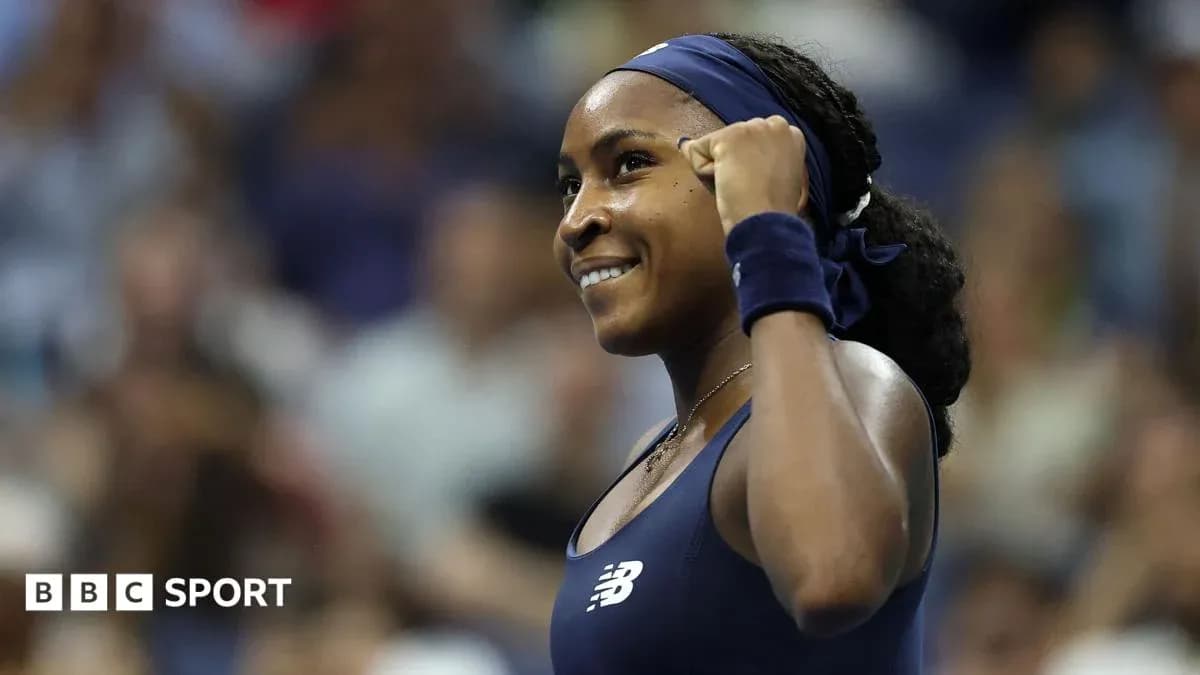
Gauff walked into Arthur Ashe Stadium with a rebuilt delivery and walked out with a straight-sets win, her serve the sharp edge of a 6-3 6-4 victory over Turkey’s Zeynep Sonmez in the first round. The 22-year-old American, seeded fourth at Flushing Meadows, did not just survive on serve. She imposed.
She opened the match with a statement. A 112mph ace down the middle. Then an unreturned first serve. Then another ace. One hold to love, wrapped up in less than 90 seconds, and the tone was set. Sonmez barely laid a racket on the ball whenever Gauff landed a first serve in that opening set; the world number four won 93% of those points, a number that would have felt unthinkable a year ago.
“Now it’s like I can look back a year on and think, ‘Oh, wow, it’s a big difference’,” Gauff said. “It feels good to come into a tournament feeling confident on that shot finally.”
That difference was born out of a drastic decision on the eve of this same tournament last year. Reeling from a rash of double faults in Cincinnati and with scrutiny intensifying at her home Slam, Gauff tore up her coaching set-up and brought in biomechanics specialist Gavin MacMillan, the man who had helped Aryna Sabalenka tame her own serving demons.
It was a bold move on the brink of the most high-pressure fortnight of her season. Tweaking technique with the New York spotlight about to blaze is the sort of gamble that can leave a player exposed. It did. Gauff exited in the fourth round, looking tight and tormented, reduced to tears mid-match as her serve buckled under the weight of expectation.
“Obviously last year I knew all the eyes were going to be on the serve,” she admitted. “Gavin is so great at what he does, I felt a lot of pressure to kind of prove that. It didn’t really show within the first two weeks, which is normal.”
The work has taken time, and it has been specific. A more consistent toss. No longer throwing the ball too far in front. A straighter wrist through contact. Small adjustments, but in elite tennis, those are the margins between a liability and a weapon.
The payoff started to show in Cincinnati earlier this month, where Gauff’s title run was underpinned by a serve that hugged the lines without losing pace. Analysis from that tournament highlighted the shift: she was hitting closer to the corners, maintaining speed, and significantly improving her accuracy.
That confidence travelled with her to Queens.
Gauff broke early for a 3-1 lead in the first set and never looked in danger. Sonmez, overmatched on return, could only watch as first serves whistled past her or kicked up too high and heavy to control. The American’s opening shot gave her cheap points, quick holds, and the freedom to swing more aggressively in rallies.
The second set, though, asked a more searching question.
Gauff broke again to lead 1-0, but the rhythm on serve wobbled. Sonmez dug in, levelled at 2-2, and suddenly began to read a few more returns. At 3-2, the Turk pushed hard, carving out three break points that would have put her 4-2 up and in command of the set.
This was the sort of moment that had haunted Gauff last year, the kind of game where tension climbed into her shoulder and refused to leave. Not this time. She reached for her serve and found it.
A precise ace out wide. Then a 115mph first serve that never came back. The danger passed, the hold secured. It felt like a hinge point, the sort of gutsy stand she simply did not have in her last New York campaign.
That hold broke Sonmez’s resistance. Gauff stepped in on the very next game, broke for 4-3, and never looked back. Serving for the match at 5-4, she didn’t flinch. Three more first serves, all just under 120mph, all unreturned, piled up three match points. Sonmez cracked on the first after a short rally, and it was over.
“Psychologically, I’m now going to go for the ace, or I know I can hit the serve and the return is probably not going to come back,” Gauff said. “Last year I literally was like I hope I make it in. It’s such a big difference knowing almost every serve I’m trying to basically hit 110, 115, 120mph if I can.”
She still throws in the occasional double fault. The motion is not flawless, and the scars from last year will not vanish overnight. But the numbers, the body language, the willingness to aim big under pressure all point in the same direction: this is no longer a shot she hides. It is a shot she leans on.
From a soaked, solitary figure rehearsing serves in the rain to a fourth seed blasting aces under the Ashe lights, Gauff has rewritten the story of her own weakness. The rest of the draw, starting with Paula Badosa or Daria Kastakina in round two, will now have to deal with a version of Coco Gauff who steps to the line expecting to dictate, not to survive.