Curtis Jones' Departure: A Turning Point for Liverpool
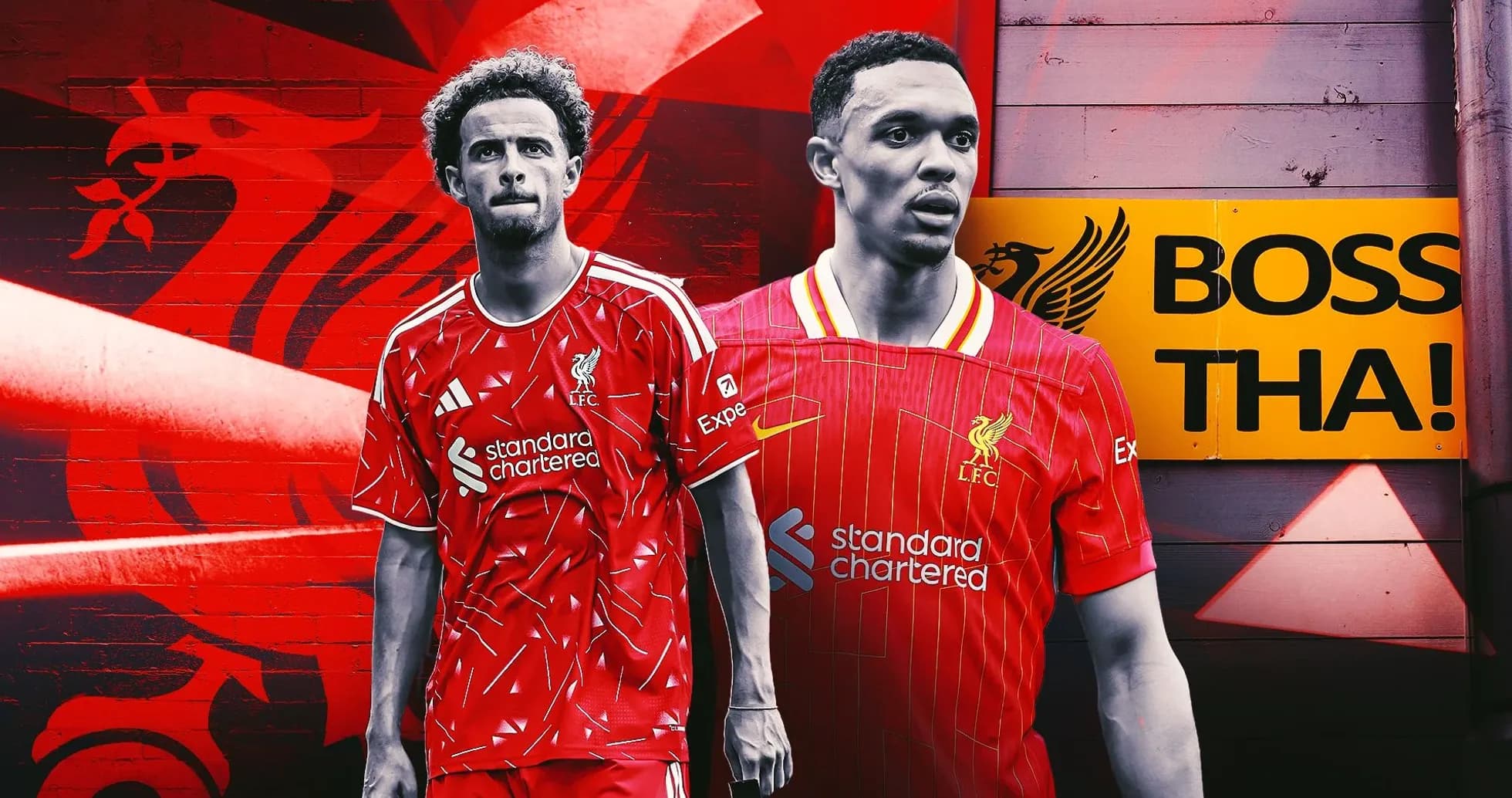
Curtis Jones’ departure from Liverpool was months in the making, but when it finally landed on August 21, the feeling on Merseyside was still one of quiet shock.
Not because he left. Because of what he took with him.
The 25-year-old, a boyhood Red and one of the last visible threads tying Jürgen Klopp’s era to the streets around Anfield, walked away with a year left on his contract, no intention of renewing and a clear demand: play me in midfield, or I’ll go. Liverpool couldn’t guarantee that under Andoni Iraola. Inter could. The deal, long expected, became unavoidable.
The fee – just £25 million – only deepened the unease. In the same window that relegated West Ham moved Mateus Fernandes to Spurs for more than three times that figure, Liverpool lost a homegrown England international for a sum that felt out of step with the modern market. The concern wasn’t only about value. It was about what came next.
Because no replacement arrived.
Iraola had been open from the moment he walked through the door. He wanted more midfielders, not fewer. More options, more variety, more legs. Publicly, he’d also made it clear he wanted Jones to stay, and not only because he rated him “very highly” as a player. For the Spaniard, there was something deeper at stake.
“It’s very important that he’s Scouse, that he’s from here,” he said in July when quizzed on Jones’ future.
For Iraola, that wasn’t a throwaway line. A proud Basque who spent most of his playing days at Athletic Club, he knows what it means when the badge on your chest is also the badge in your blood. He’d drawn the parallel himself during pre-season in the United States.
“I see a lot of similarities between Liverpool and Bilbao,” he told reporters. “This sense of belonging, of being a little bit different, and this connection, also, with players from the academy.”
And yet, here Liverpool are, heading into a new campaign without a single Scouser in the senior squad for the first time in the modern era.
The symbolism is impossible to ignore. Long before Jones boarded his flight to Milan, supporters had begun to wonder if the club was drifting away from its roots. From its accent. From its edge.
Fenway Sports Group can point to balance sheets and silverware. They took a club teetering on the brink of bankruptcy in 2010 and turned it into one of the most profitable operations in world football. On the global stage, Liverpool have never been stronger.
But at street level, the mood is more complicated.
Groups such as Spirit of Shankly have railed against rising ticket prices and the sense that local fans are being squeezed out of their own ground. In an open letter to FSG earlier this year, SOS underlined the frustration: matchday income, they argued, represents a relatively small slice of total revenue, yet the pursuit of that extra cash “comes at the expense of affordability, loyalty and trust.”
Then came the news that 1892 Holdings, a consortium backed by Amazon founder Jeff Bezos, had acquired a 38 percent stake in the club and could complete a full takeover within 12 months. For many, that wasn’t just another business story. It was a warning flare.
Kieran Maguire of The Price of Football Podcast summed up the mood to GOAL. Liverpool, he said, is “a very proud working-class city” already fearful of the marginalisation of its traditional fanbase. The Bezos involvement has “only been exacerbated” those fears.
“A lot of supporters are already concerned that more tickets will be going to more rich people, and for extortionate prices, and that would continue to dilute what makes a trip to Anfield unique,” Maguire said. “For the people of Liverpool, the club is far more than a tourist attraction and you don't want the continued 'Disney-fication' of something that is part of the history, heritage and identity of the city."
Strip away the local voices on the pitch and that anxiety only grows.
Even Steven Gerrard, a man who knows the power of that connection better than anyone, admitted this summer he didn’t want Jones sold for one simple reason: he was Scouse.
“I just think that, naturally, being around Liverpool, growing up in the city, we understand the demands of the club, the style, what the fans want,” Gerrard told BFM Radio. “It’s embedded in us because we know the city inside out. For that reason, I think the academy at our club is crucial, as I think it's key that we keep producing homegrown talent.
“Liverpool have always been very good at that. If you look back, Michael Owen, Jamie Carragher, Robbie Fowler, Steve McManaman, Trent Alexander-Arnold, myself, even the likes of players like Jay Spearing and Stephen Warnock who don’t play the [same] amount of games, they come into the team and they understand the values and the principles of what we’re about.”
Those names are more than nostalgia. They are proof that the club’s heartbeat once came from within a few miles of the Kop.
Yet even Carragher is now looking at Liverpool’s transfer strategy and wondering what, exactly, they are about.
“What we did last summer, I didn't really like it,” he told Football Ramble. “It felt like a Real Madrid summer – Florian Wirtz, Alexander Isak, we're gonna get Hugo Ekitike, another striker, for £80m even though we've got one for £125m.
“This summer, it's all about Bradley Barcola. What about the days we had before when we built that team under Klopp and we were getting players who people weren't quite sure about and getting great value? I almost want to go back to that.”
He is far from alone. The transfer market at Anfield has shifted sharply. The four most expensive signings in Liverpool’s history have all arrived in the last two summers. The club that once prided itself on smart, surgical recruitment now looks far more comfortable swimming with the super clubs in the £100m lane.
That change has consequences. When you routinely drop nine-figure sums on ready-made stars, the pathway from Kirkby to the first team narrows. For some, it closes altogether.
There are still academy fingerprints on the squad. Rio Ngumoha, recruited from Chelsea, technically returns as a former youth player. Trey Nyoni, an unused substitute in the Carabao Cup final win over Chelsea that left Klopp swelling with pride, is expected to feature more prominently this season. The soon-to-be fit-again Danns could also be back in the mix, with Isak the only orthodox No.9 available and Ekitike unlikely to return before 2027.
The production line hasn’t stopped. It’s just that the bar for breaking through has been raised to a height where only the exceptional survive.
And so, on Friday night at Portman Road, Liverpool could send out a team containing three players who each cost more than £100m, including new arrival Barcola from Paris Saint-Germain. Iraola will have world-class talent across the pitch.
He will not have a single local lad to call on.
Klopp once said that Liverpool’s Carabao Cup triumph with a side laced with kids was unique. He was right. It felt like a throwback to a different era, when the club’s future could be seen in the faces of teenagers taking their first steps under the Anfield lights.
It may also prove unrepeatable for another reason: somewhere along the way, amid the money, the global reach and the supercharged recruitment, people in and around Liverpool appear to have forgotten a simple truth.
For this club, a Scouse soul has always meant more than everything else. The question now is whether that still matters when the team on the pitch no longer sounds like the city it claims to represent.