Dallas Mavericks' Clutch Struggles: The Impact of Kyrie Irving
There’s one number that cuts through all the noise around the Dallas Mavericks’ 26-win season.
Forty-five.
Dallas played 45 clutch games in 2025-26 — tied for the most in the league. Clutch defined the NBA way: score within five points either way in the final five minutes. The Mavericks went 17-28 in those games.
That’s the season, right there. Not a talent crisis. Not a teardown gone wrong. Just a young team walking a tightrope 45 times and slipping far too often.
They lost 56 games, yet they were rarely humiliated. They didn’t spend many nights buried by 25, emptying the bench by the third quarter. They were in it. Over and over again. They just couldn’t land the plane.
That part is fixable.
A Young Team, Alone in the Deep End
The context matters. Dallas spent last season leaning on one of the youngest rotations in the league and asking it to navigate the exact moments that expose inexperience most brutally.
Cooper Flagg was a teenager, thrown straight into the fire, trying to learn late-game basketball against veteran defenders who have seen every trick in the book. The players around him? Talented, but untested in those final-possession decisions that separate winning from learning.
In the first 43 minutes, youth can fly. Energy, length, pace, creativity — all of it plays. In the last five, the game shrinks. Matchups slow down. Every possession becomes a puzzle. That’s where experience has more weight than at any other time on the floor.
Dallas barely had any.
Now it does.
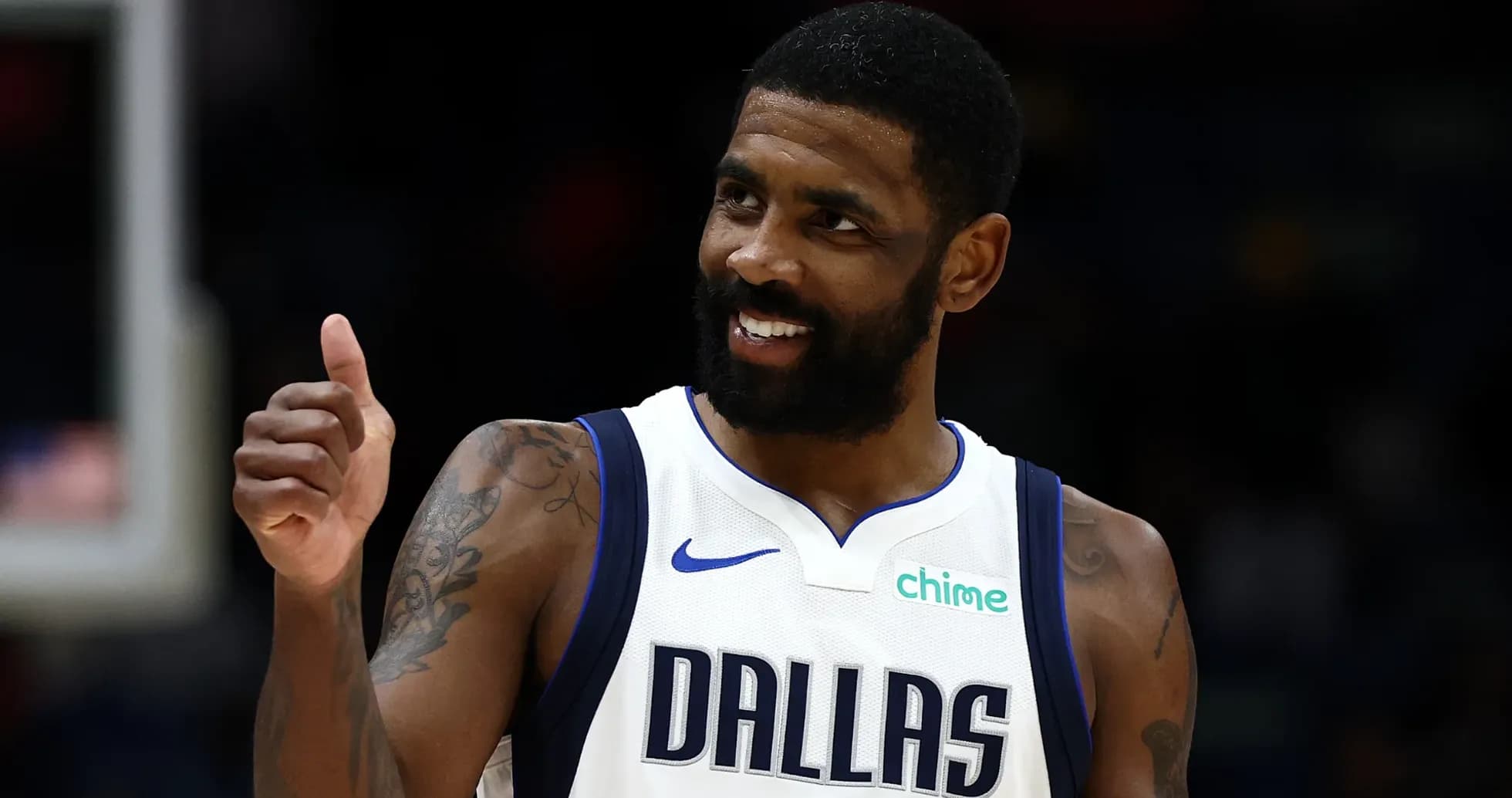
Kyrie Irving changes the equation the second he steps on the floor.
Enter the Closer
Few active players carry a late-game résumé like Irving’s.
His defining moment still loops on NBA montages: Game 7 of the 2016 Finals, isolation against Stephen Curry, the step-back 3 that sealed Cleveland’s title. That shot turned “clutch” from a label into a legacy.
He’s stacked more of those moments since. In 2024, he beat Denver with a left-handed floater from the free-throw line that looked improvised, almost reckless, until it dropped and reminded everyone: this is what he does. His playoff track record in closeout games is staggering — 15-1, with 23.5 points per game in those situations.
This isn’t myth-building. The numbers in Dallas already tell the story.
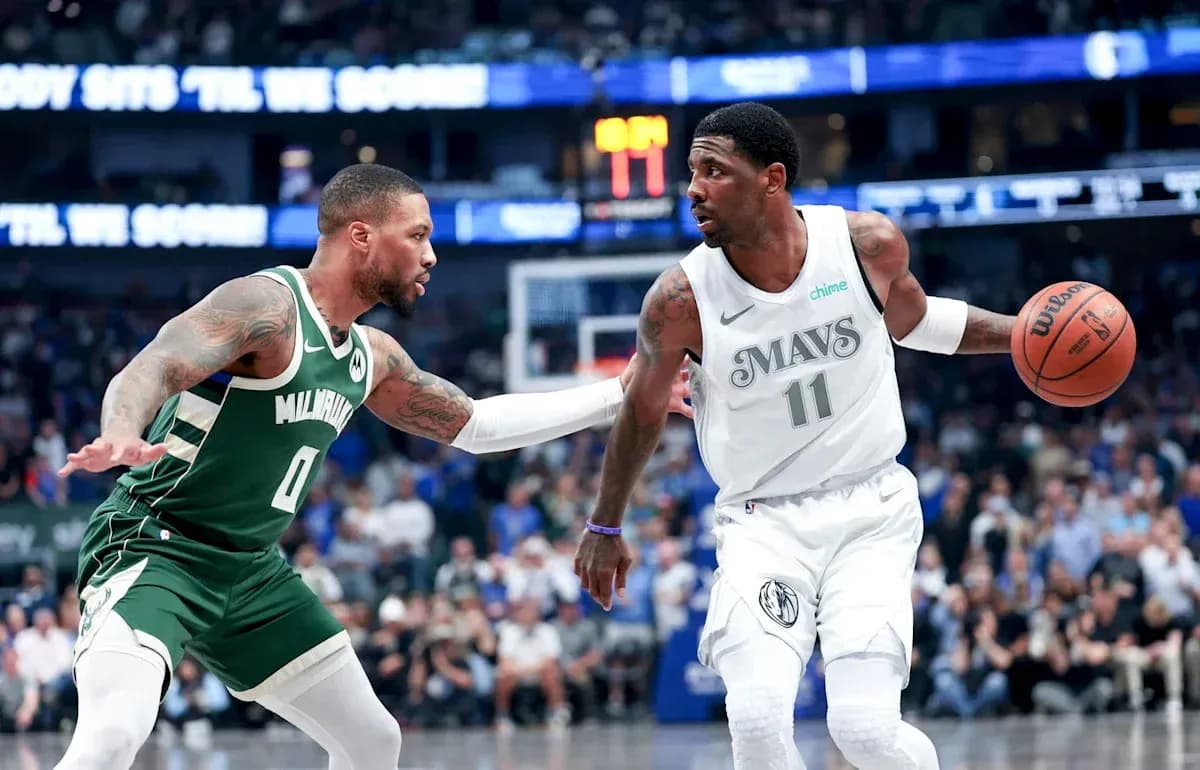
In 2023-24, with Irving on the roster, the Mavericks went 16-4 in clutch games, one of the best marks in the league. Irving ranked among the top 10 clutch scorers, averaging 4.2 points in those minutes while shooting 60% from the field and 42% from 3. Those are closer’s numbers. Those are “give me the ball and get out of the way” numbers.
That’s the difference between having a finisher and asking a committee to figure it out on the fly.
Late-game offense usually strips down to its barest form: isolation against a set defense, one-on-one, help ready to pounce. Only a handful of players can consistently turn that into good looks. Irving is on that short list.
He doesn’t just score. He warps the floor. Defenses tilt toward him, send extra help, shade a second defender his way. For a roster loaded with young players still learning how to read rotating defenses, that attention is a gift. The game simplifies: catch, shoot, drive the closeout, make the obvious pass. Irving handles the hard part.
Lessons in Losing
There’s another layer to Dallas’ season that shouldn’t be overlooked: those 28 clutch losses weren’t empty.
Flagg and the rest of the young core spent an entire year living in pressure possessions. Down three with 90 seconds left. Up two with the ball and 30 on the clock. Needing a stop out of a timeout. Needing a bucket when the offense has stalled.
They failed often. But they saw it. Felt it. Repped it in real time against real stakes.
Players don’t only learn from the nights when the buzzer-beater falls. They learn from the misreads, the rushed shots, the forced drives into traffic. Dallas now has a group that has been through those reps, even if the scoreboard turned against them.
Now that group gets paired with a veteran who has made a career out of solving those exact situations.
The Path to a Jump
The Mavericks don’t need to morph into a juggernaut overnight to change their trajectory. They just need to stop bleeding so many of those one-possession games.
This roster already proved it can hang. Forty-five clutch games say they were competitive. The problem wasn’t getting to the final five minutes. It was surviving them.
Flip even a modest slice of those 28 clutch losses — say, six or seven — and the win total looks very different. The season feels very different. The narrative around the franchise shifts from “developing and losing” to “developing and winning.”
Irving gives them a closer. Last year’s pain gives them experience.
Now the question is simple: with those pieces in place, how many of those 45 tight finishes turn the right way this time?