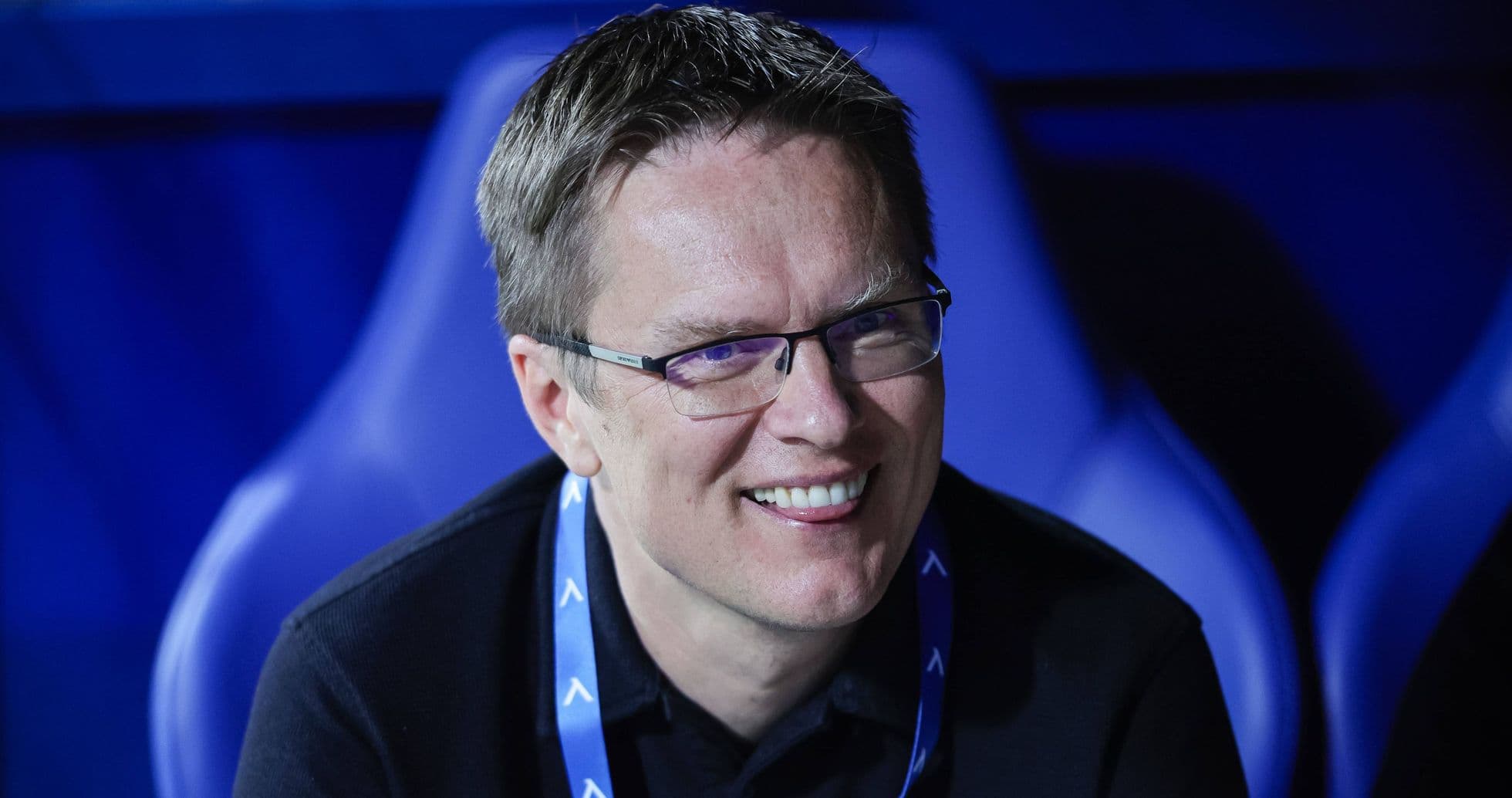
Dambrauskas’ Journey from Quiz Show to Old Trafford
Valdas Dambrauskas will walk out at Old Trafford this week and, for a moment, the noise will fade. The scale of it all, the red stands, the Champions League anthem – it’s a long way from Masazir, a town of 19,000 on the shores of the Caspian Sea, and an even longer way from a Lithuanian TV studio in 2002.
Yet that is where this story really starts.
A Millionaire Question, a Manager’s Answer
Back in basketball-obsessed Lithuania, football coaching was not the obvious dream. But a 12‑year‑old Dambrauskas had already decided that his future was on the touchline, not the court. The problem was simple: no money, no pathway, no clear route out.
So he went on Lithuania’s version of Who Wants to Be a Millionaire?
He didn’t win a fortune. He didn’t need to. The 4,000 litas he collected – roughly six months’ average wages – became his escape fund. That game show cheque paid for a one-way ticket to London and a chance to chase coaching badges in the country he saw as football’s classroom.
“My idea was to somehow try to go on these coaching courses to gain the badge,” he later explained. “England for me sounds like opportunities.”
London delivered those opportunities, but not gently. To pay his way through London Metropolitan University and the coaching pathway, Dambrauskas juggled up to four jobs at a time. Gardener. Handyman. Floor polisher. Newspaper deliverer. Long days, late nights, and early alarms, all for a future that still existed only in his head.
The breakthrough came in 2004. Manchester United Soccer Schools brought him in to work with youth players. It was a foothold, a validation, and an education rolled into one. Two years earlier he had been a contestant on a quiz show. Now he was coaching kids in United colours and making his first trip to Old Trafford as a youth trainer.
Twenty years on, he returns as a Champions League manager.
A Nomad Who Collected Trophies
Dambrauskas’ path since leaving England in 2010 has rarely been straight. He has built a career on the road, moving across Europe and lifting trophies wherever he went.
Thirteen of them, in fact, spread across five countries: Lithuania, Latvia, Bulgaria, Croatia, and Azerbaijan. Along the way he became the first Lithuanian coach to earn a UEFA licence through the London FA, sharpening his tactical ideas in different cultures, different dressing rooms, different pressures.
That nomadic streak eventually led him to Sabah, a club founded only nine years ago and based in Masazir, just outside Baku. When he arrived, they were ambitious but unproven. Under him, they became champions.
In his debut season in 2026, Dambrauskas delivered a domestic league and cup double, a statement that Sabah were not just a project but a force. The rise since then has been staggering.
Sabah’s Impossible Climb
This summer, Sabah rewrote the modern Champions League script.
Starting from the very first qualifying round, the Azerbaijani champions survived four knockout ties to reach the main phase. No one else had ever managed that particular climb from such an early rung on the ladder.
Each round carried its own jeopardy, each away leg a test of nerve and depth. Sabah kept clearing the bar. For a club barely a decade old, from a town smaller than many European suburbs, it was a run that stretched belief.
Now comes the reward – and the reality check.
Their group is a heavyweight’s playground. After Old Trafford and Manchester United, Sabah will host Borussia Dortmund, Barcelona, and Napoli in Baku. They will also travel to Arsenal and Villarreal. For many clubs, that’s a decade of glamour ties. For Dambrauskas and Sabah, it is a single campaign.
“To go through that tunnel on to that pitch is beyond my imagination,” he admitted, looking ahead to United. “Now is the time to show that we can compete.”
Full Circle at Old Trafford
The symmetry is hard to ignore. The young coach who once arrived at Old Trafford as part of Manchester United Soccer Schools now returns as the architect of one of the competition’s most unlikely entrants.
Back then, he was a hopeful assistant on the fringes of the game’s elite. Now he stands as the first Lithuanian coach to have carved this particular path, armed with a UEFA licence, 13 trophies, and a belief forged in the grind of four jobs and countless training pitches.
He comes from a country where basketball rules, from a TV studio where a quiz show host once read out the question that changed his life, from a London flat where sleep was a luxury between shifts and study.
On Champions League nights, stories like that usually belong to the players. This time, the spotlight falls on the man in the technical area, leading Sabah out of Masazir and into the glare of Europe’s biggest stage.
The tunnel at Old Trafford is waiting. How far can that 4,000‑litas gamble carry him now?