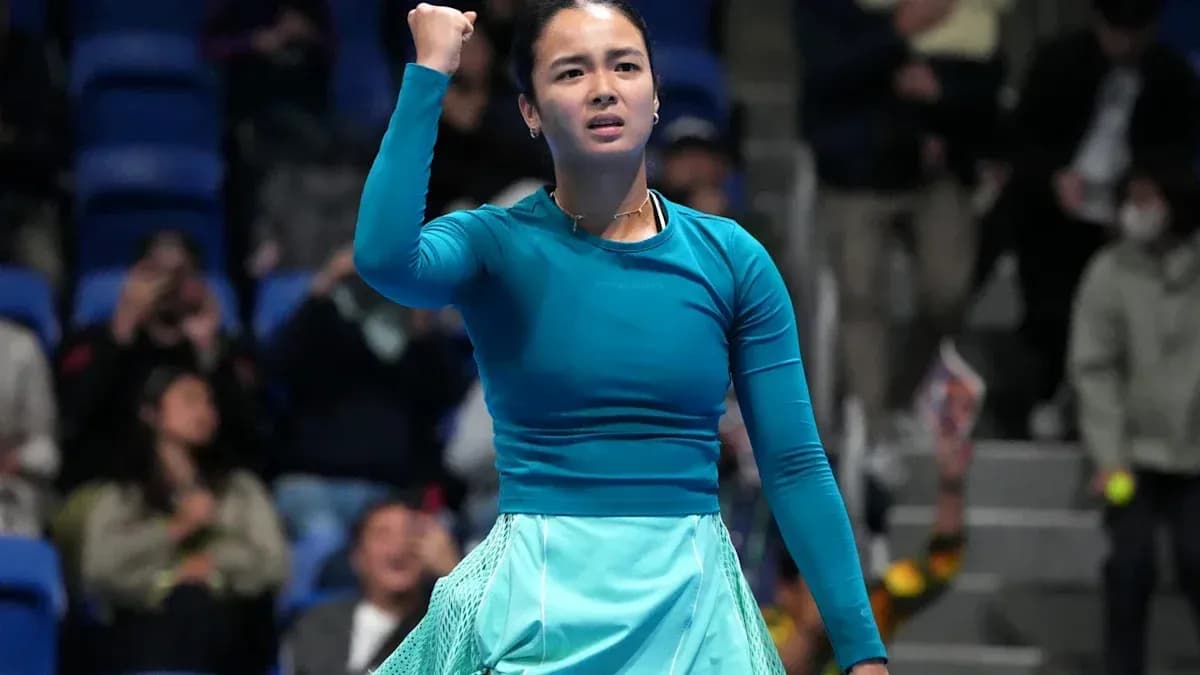
Alex Eala's Narrow Defeat in Tokyo Signals Potential Breakthrough
Alex Eala walked out of Tokyo without a trophy, without even a semi-final to her name. On paper, it was a quarter-final exit. In reality, it looked a lot like a warning shot to the rest of the tour.
The 2026 season has already been the best of her young career: a maiden WTA title in Washington, a run to the fourth round at Wimbledon, and a surge into the world’s top 20. Those are the kind of milestones that change how a locker room talks about you.
Then came the post‑US Open dip. Seven matches on the WTA Tour, only three wins. The rhythm that carried her through the summer seemed to slip, the results flattening just as the calendar turned towards its final stretch.
And waiting for her in that stretch, twice, was Diana Shnaider.
The Champion She Almost Stopped
Shnaider beat Eala in Ningbo. Routine enough. But Tokyo was different.
In the Japanese capital, Eala came out swinging and took the first set 6-2. She had Shnaider scrambling, rushed, uncomfortable. For long spells, it looked like the Russian’s season-long wait for a title would extend at least one more week.
Then the match tightened. Shnaider dug in, forced a second-set tiebreak and edged it 7-6(5). The pressure, the noise, the weight of the moment – Eala was two points away from a straight-sets win over the woman who would end up lifting the trophy. Two points from turning a wobbling autumn into a statement victory.
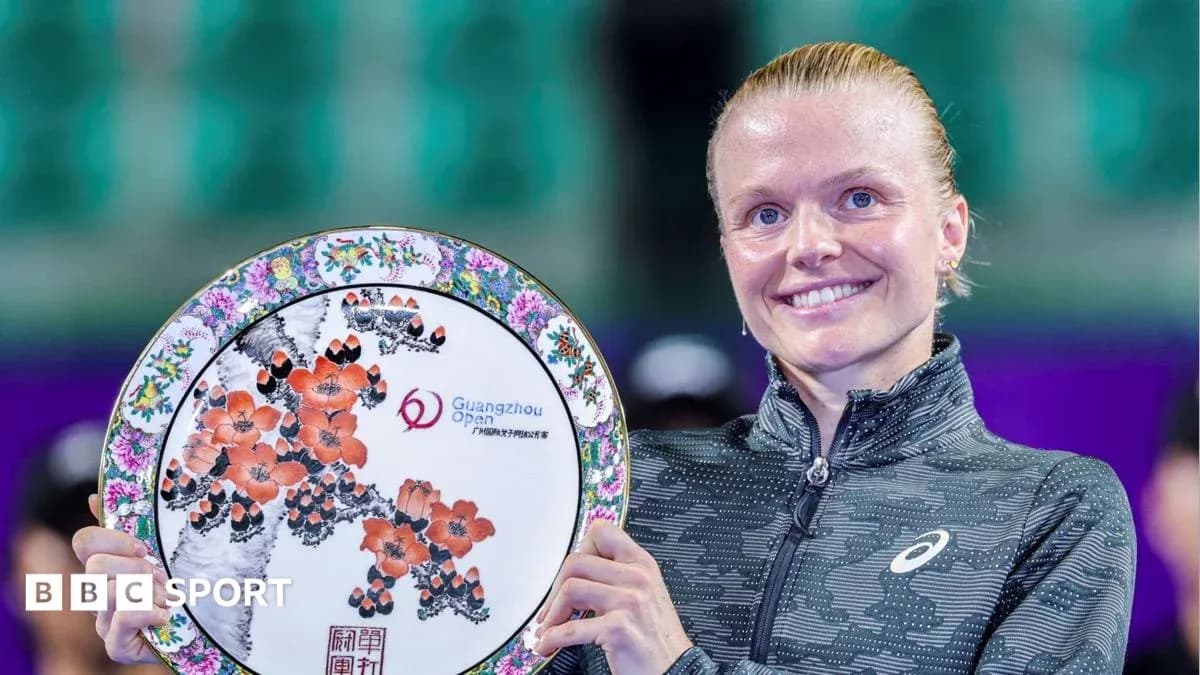
Instead, Shnaider held her nerve, turned the tide, and closed it out 6-4 in the third. She then rode that momentum all the way to her first title of 2026, beating Leylah Fernandez in the final.
Several players stretched Shnaider to three sets that week. Only one came that close to knocking her out. Eala did not leave with the trophy, but she left having pushed the eventual champion harder than anyone else in the draw.
For a player searching for form, that matters.
Margins That Define a Week
The line between a quarter-finalist and a champion can be cruelly thin. Tokyo underlined that reality.
Eala’s run in Japan, framed by recent disappointments, was her sharpest tournament since the US Open. The level she found against Shnaider – the aggression off the return, the willingness to take the ball early, the refusal to back off even as the match slipped away – closed the gap between them in a way the scoreboard in Ningbo never hinted at.
It also reframed her late-season narrative. This wasn’t a player fading. It was a player one swing, one point, one decision away from flipping a draw on its head.
Now she carries that into her final stop of the year.
A Tricky Path in Hong Kong
Next up is the Hong Kong Open, the last tournament of Eala’s 2026 campaign. Shnaider is nowhere in the draw this time, which will feel like a small mercy, but the route to a second WTA title is anything but clear.
Her first assignment: Alycia Parks. On ranking, it’s a manageable opener. On court, it’s anything but simple. Their head-to-head stands at 1-1, with Eala winning their most recent meeting. Parks brings power and streakiness; if Eala isn’t sharp from the first ball, the match can get away from her quickly.
Beyond that, the projected names are familiar: Tereza Valentova, Xinyu Wang, Maria Sakkari, Sorana Cirstea. Aside from Sakkari, whom she has never faced, Eala knows all of them well. She is 1-1 against Wang and Cirstea too, and again, she claimed the most recent encounters. Those records tell a story of a player who learns fast and adjusts even faster.
Then there is Valentova – the surprising, lingering problem.
The Valentova Question
At 19, Tereza Valentova is still in the early chapters of her career, but she already occupies an awkward place in Eala’s personal scouting report. They have played twice, at the Japan Open in 2025 and the Qatar Open in 2026. Eala has lost both.
Valentova climbed as high as world No. 42 in May after a breakout 2025, only for injuries and a dip in form to drag her outside the top 80. The ranking slide doesn’t erase the matchup history. Styles make fights, and so far, this one has belonged to the Czech.
For them to meet again in Hong Kong, both need to handle business early. Eala must get past Parks in round one. Valentova has to beat qualifier Himeno Sakatsume in her opener. Only then does the unresolved question between them return to centre stage.
The main draw begins on Monday, November 2, with both Eala and Valentova scheduled to start on Tuesday. By then, the stakes will be clear. For Eala, it’s not just about ending a career-best season on a high. It’s about proving that the narrow miss in Tokyo was not an isolated surge, but the new standard of where her game belongs.