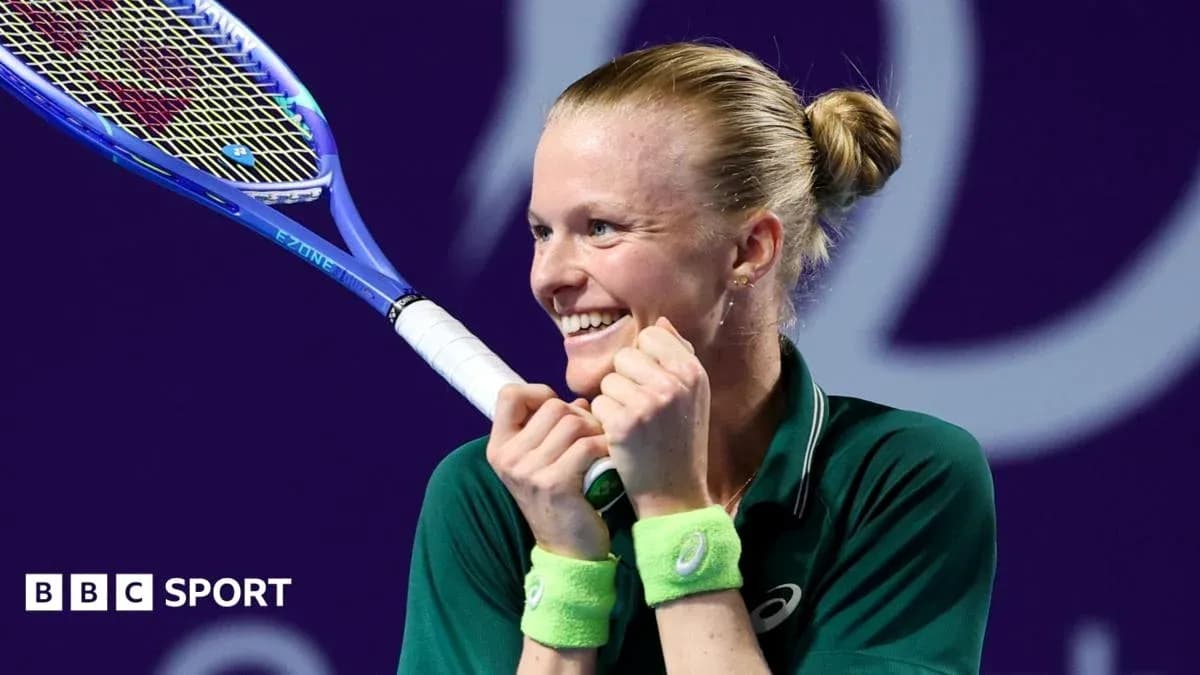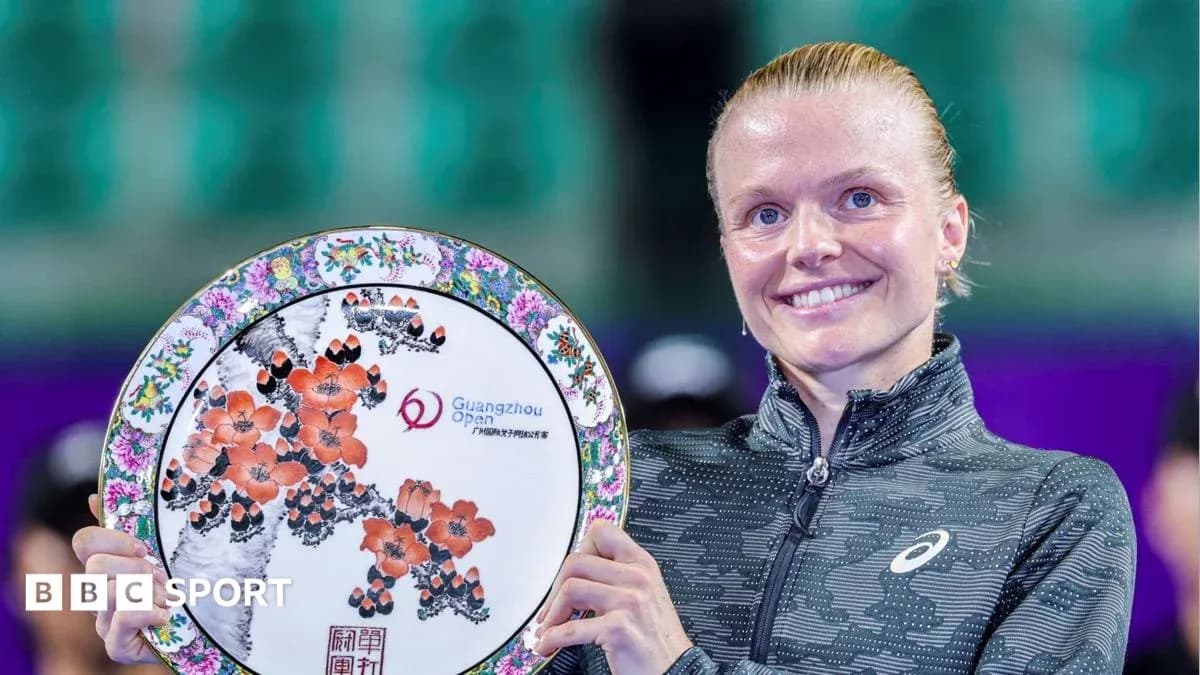
Harriet Dart Wins First WTA Title at Guangzhou Open
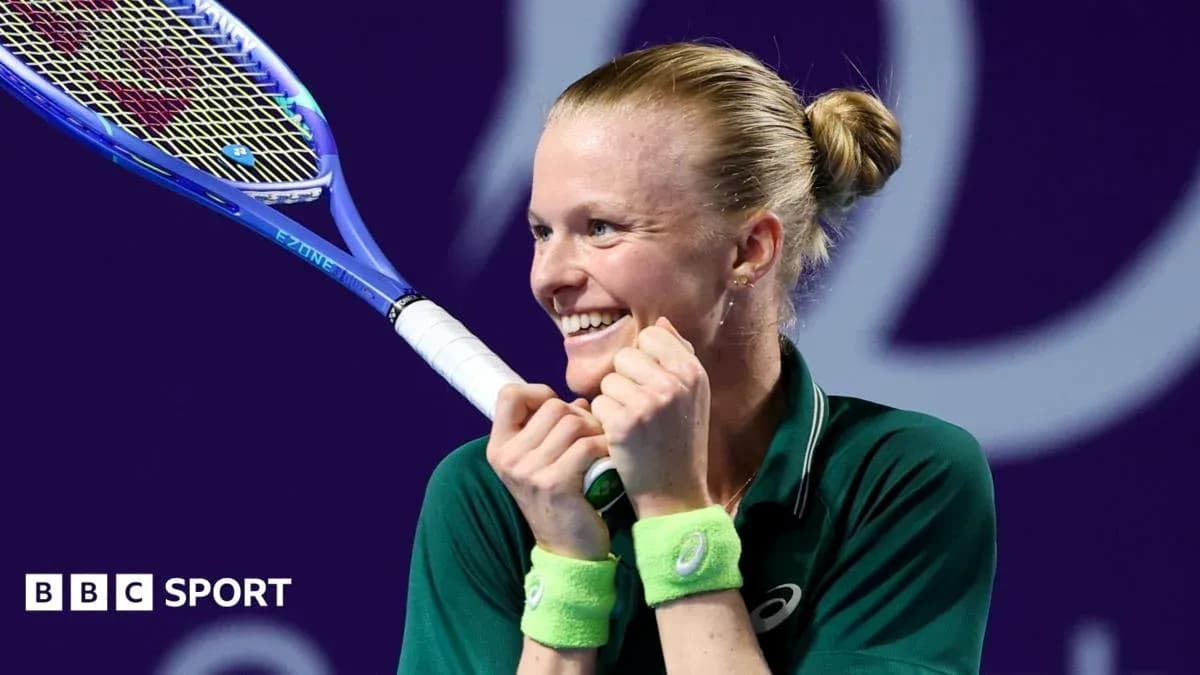
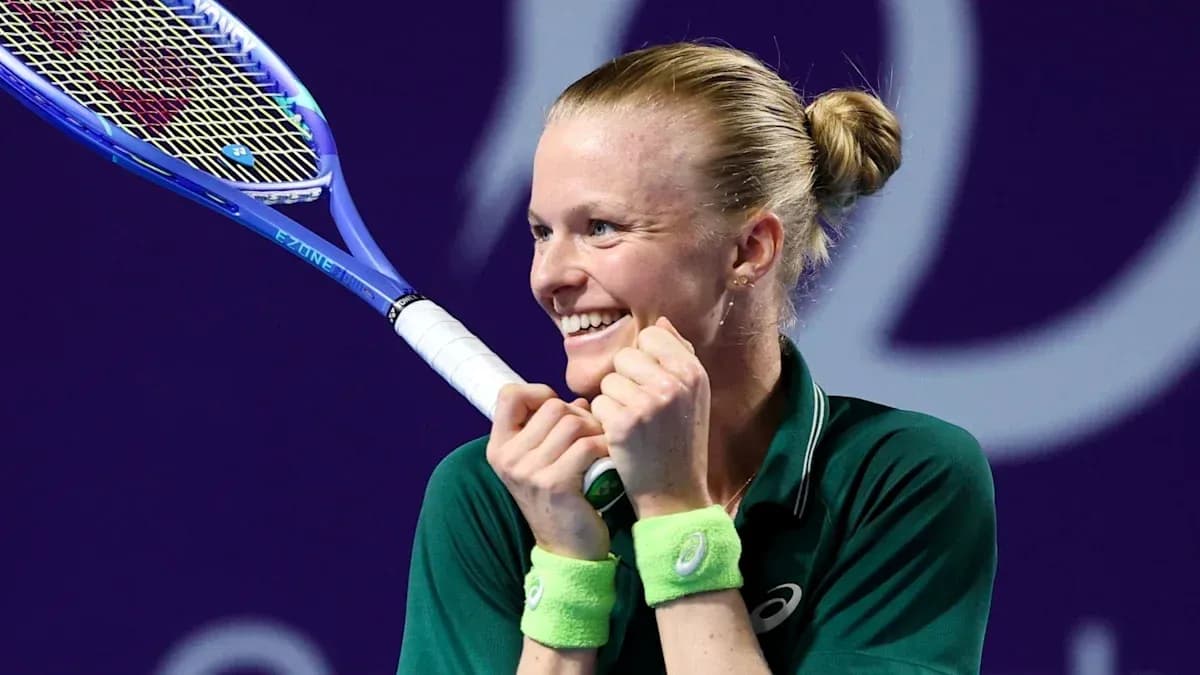
Harriet Dart’s phone would not stop buzzing. Messages stacked up, calls flashed through, social media filled with congratulations. For a few minutes, Britain’s newest WTA champion could barely look at any of it.
There were more important calls to make.
From a room in Guangzhou, still riding the adrenaline of her first tour title, Dart rang home to north London. Her parents, Nick and Susie, had been watching the final with friends at their local tennis club. Her sister Phoebe was next. Only after the family debrief did she move on to another key figure in this late-career surge.
A Grand Slam champion in her corner
Dart has been working part-time this season with the 2013 Wimbledon champion, a former world number seven whose presence has quietly reshaped the 30-year-old’s career.
"It's been quite incredible to work with Marion, and I was really fortunate she was open to working with me," Dart told BBC Sport from Guangzhou. "She really believes in me - that means the world to me."
That belief now has a trophy to go with it. On Sunday, with Bartoli watching from home, the world number 115 beat rising Austrian teenager Lilli Tagger to win the Guangzhou Open, her first WTA title. On Monday she is projected to climb to 83rd, the reward for a blistering run on hard courts since Wimbledon.
This is not the profile of a player on the way out. Dart is 30, yes, but she is adamant her ceiling has not yet been reached.
"I'm obviously at a very different stage of my career to someone who is, say, 20. But I still feel I have a lot to improve and there are gains to be made," she said. "Seeing a Grand Slam champion having that belief has made me believe a lot more in myself."
From outside the top 160 to a title
When Dart and Bartoli started working together, Dart sat outside the top 160. The pair are based close to each other in Dubai, sharing training blocks there whenever the tour schedule allows. Bartoli, now 42 and juggling coaching with a young family, cannot travel full-time, but their work has been targeted: Grand Slams, key training weeks, the moments that shape a season.
Dart insists the benefits are tangible, and not just in the tactical plans or video sessions.
Bartoli still hits. And hits well.
For Dart, drilling with someone who once ruled Centre Court at Wimbledon adds a different edge. It lifts standards. It sharpens focus. It makes the idea of competing with the best feel less remote.
In Guangzhou, though, Bartoli was not in the stands. Dart travelled with fitness trainer Dario Gonfiantini and boyfriend Stephen Falck, leaning on them day to day and on Bartoli’s observational notes sent from afar. On court, the responsibility was hers alone.
She handled it.
A season turned on its head
The Guangzhou title crowns a second half of the season that has quietly become the best of Dart’s career. Since Wimbledon, she has won 19 of 24 tour-level matches on hard courts. Across the whole WTA season she has 23 victories from 34 matches – the highest winning percentage she has ever produced at this level.
The raw numbers matter because they sit in stark contrast to the doubts that had begun to cling to her name over the past two years.
Dart briefly hit a career high of 70 in 2024, helped by a run to the Wimbledon third round and the US Open second round, but for long stretches she drifted outside the top 100. Opponents knew where to go: at the second serve, at the nerves, at the moments when the match tightened.
Her second serve, in particular, became a target. Too slow, too attackable, too prone to double faults. The question followed her from tournament to tournament: could she really be trusted under pressure?
In Guangzhou, she did not just hold up. She pushed back. Several of her wins demanded comebacks, demanded that she stay in rallies and in matches when the momentum had turned against her. The weaknesses that had been circled on scouting reports did not disappear, but she managed them, played through them, and, crucially, did not let them define her.
Belief, finally matching the work
Those who have watched Dart up close are not surprised by the shift in tone around her game. Anne Keothavong, Britain’s Billie Jean King Cup captain, has long praised her attitude.
"She's always had a fantastic work ethic and has always set the bar high with her professionalism," Keothavong told BBC Sport. "But there is certainly more belief and confidence now. She's in a very good place."
Dart has indeed been grinding on tour for years, often in the shadows of bigger British stories, fighting through qualifying draws and long weeks on the road. A “big title” – even at WTA 250 level – changes how that grind is viewed. It validates the hours. It reframes the narrative.
Keothavong named Dart in her squad for September’s Billie Jean King Cup Finals. Dart did not get the nod to play in the tie, but she left a mark in practice, where her ball-striking caught the captain’s eye. She then carried that standard straight back onto the tour.
For Dart, the connection with Bartoli stretches beyond forehands and footwork.
"More than anything, Marion is just a great person. She cares about me as a person first and foremost, as well as improving me as a tennis player, of course," Dart said. "It's been invaluable and amazing for her to share her experiences to make me better."
The plan now is simple: keep building. "I've learned a lot from her and look forward to continuing to learn more. I hope we will be able to spend more weeks together next year."
A wider surge for British women
Dart’s breakthrough does not stand alone. It drops into a broader upswing for British women during the Asian hard-court swing.
Sonay Kartal reached the final of a WTA 1000 in Wuhan, a result that would have felt improbable not long ago. Katie Boulter pushed through to the semi-finals of a WTA 250 in Osaka. Back home, teenager Hannah Klugman claimed the biggest title of her young career at the Wrexham Open, a W100 event on the Challenger circuit.
Across levels, from juniors to the main tour, the results are stacking up.
"The way they're all performing towards the end of the season - at whatever level - has been impressive," said Keothavong. "It's not easy at this time of the season because there has been a lot of tennis played, but they've all capitalised and risen to the occasion."
The calendar is long. Bodies are tired. Yet the late-season push has delivered something tangible for British tennis: trophies, ranking jumps, and a sense that more is coming.
For Dart, the Guangzhou title is more than a line on a CV. It is proof that the player who once hovered in the rankings’ middle ground can step out of it. Proof that a 30-year-old can still change the story of her career with the right guidance, the right work, and the right belief.
The phone will quieten eventually. The messages will stop pinging. The tour, relentless as ever, will move on.
The question now is whether this is a single bright week in China – or the moment Harriet Dart truly joins the conversation at the top end of the game.