Alan Shearer Reflects on Premier League Record as Haaland Approaches
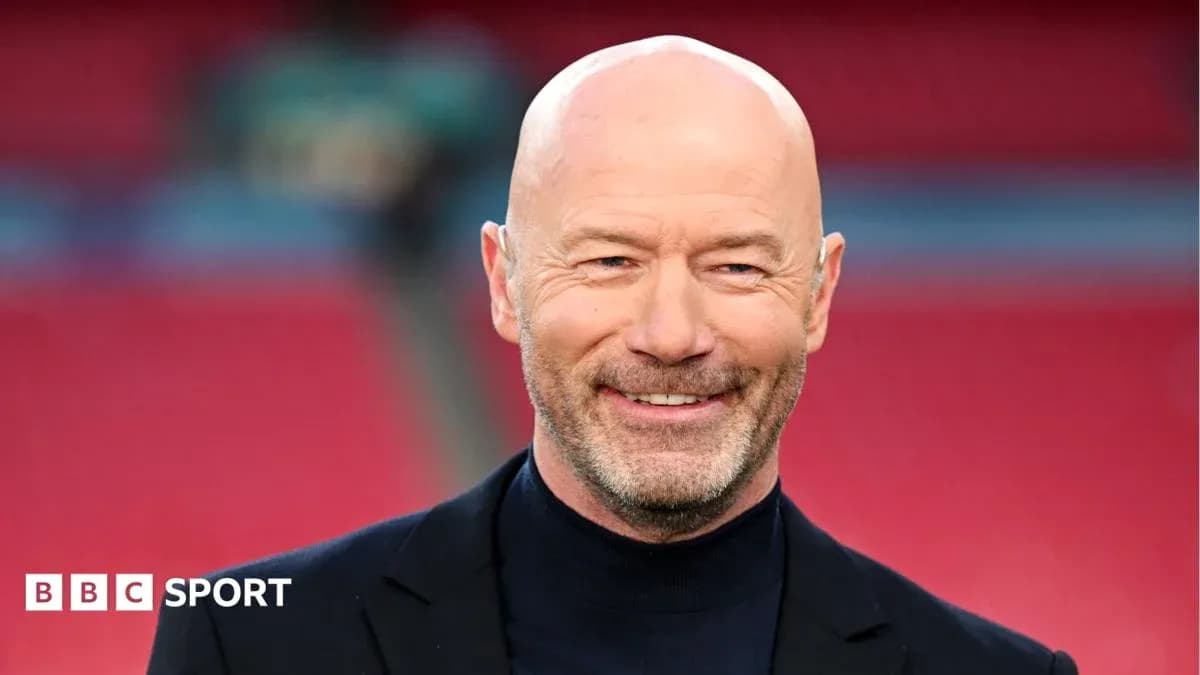
Alan Shearer has spent a lifetime bullying Premier League defenders. Now, at 54, he is reduced to one last, faintly desperate tactic to protect his record: hoping Erling Haaland gets on a plane.
The league’s all-time leading scorer sits on 260 goals, a mountain built over 14 seasons with Blackburn Rovers and Newcastle United. Haaland, still only in his fourth full campaign with Manchester City, already has 120. The maths is unforgiving. If the Norwegian stays fit, stays ruthless and, crucially, stays in England, Shearer’s summit is there to be scaled.
He knows it.
"I'm sure it will be broken one day, but I'll enjoy it while it lasts," Shearer told the Football Interview. Then came the punchline, delivered with the kind of dry humour honed on Match of the Day. "If we can get Haaland out to Real Madrid or somewhere like that in the next couple of years then it should be alright."
He isn’t really joking. Or not entirely.
Harry Kane once looked the more likely threat. The England captain surged to 213 Premier League goals with Tottenham Hotspur and had Shearer’s total firmly in his sights. Then came Bayern Munich in 2023, and the chase stopped dead. Kane left the story mid-sentence. Haaland has simply ripped up the script and started a new one.
Shearer, though, has long since made peace with the idea that records are there to be chased. Twenty years after retiring, he sat down with Kelly Somers to talk not just about goals and numbers, but about the journey that took him from a tearful platform at Newcastle Central station to the Gallowgate End, the Blackburn title win, the Newcastle armband, the dugout, and finally the studio chair.
Leaving home, finding home
Shearer and Newcastle are now inseparable in the public imagination. The reality, as he remembers it, began with a wrench.
At 15, he left his home city for Southampton, moving into digs with another family on the south coast. It was a brutal cut of the umbilical cord.
"I wouldn't change anything - one of the best things I did was move away from home at 15," he said. Then he admitted that parenthood had reframed the whole episode. "But when my kids got to 15 I thought 'how on earth did my parents let me leave home at that age?'
"There's no way I could have let my two girls and my son walk away from their home at 15 years of age.
"I remember getting on the train at Newcastle Central station, looking at my mum and dad and the tears rolling down my mum's face when I was pulling out of the station and waving thinking, 'is this the last time I'm ever going to live back home?'"
It wasn’t. The route back took him first to Blackburn Rovers in 1992, a move that edged him closer to Tyneside and into the orbit of Sir Kenny Dalglish. At Ewood Park, Shearer became the spearhead of a side that crashed the established order, winning the Premier League title in 1995 and confirming his status as the division’s most ruthless finisher.
From there, the return to Newcastle in 1996 felt inevitable, a homecoming delayed rather than denied. It also proved to be his last taste of silverware as a player. Two FA Cup finals ended in defeat, and the Newcastle team he led never quite became the trophy-winning force many had imagined.
But the bond between player and city only deepened.
From the Gallowgate to the pitch
Long before he pulled on the black-and-white shirt, Shearer stood on the Gallowgate End as a kid, swept up in the noise and the mythology of St James’ Park. At the heart of it all was Kevin Keegan.
"I saw the adulation that he [Keegan] had. He was like the pied piper in Newcastle, everyone followed him everywhere," Shearer said. "I was one of those little kids that went to the training ground, to the ground - and I wanted a piece of that."
Years later he got more than a piece. He signed for his boyhood club and for his boyhood hero. Surreal doesn’t quite cover it.
Over a decade in Newcastle colours, Shearer delivered 206 goals in 405 games in all competitions, the captain and talisman of a club that often flirted with greatness without ever quite sealing it. The medals cabinet might be lighter than his talent deserved, but his status is unshakeable. In the North East, he isn’t just remembered. He’s revered.
That reverence has its complications. On the rare occasions he goes to St James’ Park as a fan, he has to go undercover.
"My friend owns a pub in Newcastle called Harry's and I get dropped off outside the pub and then I walk up from the ground," he said. "I've got a cap on and I very rarely look up because it would take me forever to get from the pub to the ground. But I often do it.
"They've [friends] done that all their life and I'm able to do that now and I love it."
The image is disarming: the Premier League’s record scorer, head down, cap pulled low, shuffling through the crowds he once electrified.
Eight games, one brutal lesson
For all his certainty in front of goal, Shearer’s post-playing path was anything but straightforward.
Management or media? Dugout or studio? For a while, he genuinely didn’t know.
Newcastle forced the issue in 2009. The club was in crisis, the team sinking, the mood toxic. They turned to their greatest modern icon for salvation. Shearer could have walked away. He didn’t.
"Newcastle were in desperate trouble and I could never say no - we were bottom of the league, fighting for our lives," he said.
The appointment came with a cruel twist of fate. "I should have known that when I signed the contract on April Fool's Day that it wasn't going to work out!"
Eight games later, Newcastle were relegated. Shearer never returned to the dugout.
He did think about it. "I always felt that I was going to go into it again and I wanted to. I had a couple of interviews and got offered the job at Cardiff. And then things changed ... and I thought, 'what am I doing here?'"
That was it. The managerial chapter closed almost as quickly as it had opened. The next act would be played out under studio lights.
The long road to 10:30pm
These days, Shearer’s weekends are still dominated by football, just in a different uniform.
He has become a fixture on Match of the Day, a regular voice on England games, and a central presence alongside Gary Lineker and Micah Richards on The Rest Is Football podcast. The former No 9 has morphed into one of the game’s most respected analysts, his blunt assessments and striker’s eye cutting through the noise.
It sounds glamorous. Parts of it are. The reality, he points out, is often a slog.
"It is such a long day. For me travelling from Newcastle, it's a probably 19-20 hour day," he said. "What people don't realise is that you're meant to be at your brightest and your liveliest when you go on live at 10:30, whereas if you're watching football all day on the settee, you're ready to nod off at that time."
He doesn’t nod off. He can’t. The Premier League keeps him busy, keeps him sharp, keeps him talking. It also keeps his record permanently in his eyeline.
Every weekend, every highlight reel, every Manchester City game offers another reminder that the numbers on his throne are no longer untouchable. Haaland is coming, one ruthless finish at a time.
Shearer can joke about Madrid and transfer windows. He can cling, with a grin, to the hope that the Norwegian will seek a new challenge somewhere else. But he knows how this works. He once hunted down records himself.
The only real question now is whether he’ll be in the Match of the Day studio, bright and lively at 10:30pm, when someone finally knocks him off the top.