Ed Cowan Warns Against Big Bash League Privatization
Ed Cowan has sounded a warning shot over Australian cricket’s rush toward privatising the Big Bash League, arguing the competition is far from broken and does not need to sell itself off to stay relevant.
The former Test opener, now a Cricket NSW board member, believes the fear of a looming player drain to rival T20 leagues is being overstated – and that a hasty move to private ownership risks doing lasting damage.
“Burning the furniture to warm the house”
Speaking on the ABC Cricket Podcast, Cowan pushed back against the idea that the BBL must open its doors to private investors to survive.
“Ben Stokes is going to Adelaide, Finn Allen has just signed a mega deal,” he said, pointing to the calibre of players still heading to Australia. “So the argument that is put forward is we're gonna lose players to the South African League. We haven't lost one yet.”
For Cowan, the logic is simple: the league has already shown it can adapt without handing over control.
“[In previous seasons] they've been able to reshape scheduling, to reshape international stars and the salary cap around that. We've seen already there's no friction to attracting some of the world's best players,” he said.
His sharpest line carried the sting of a veteran who has seen sporting projects overreach.
“There's a view that the business could be run more effectively, which would enable some time to work out whether you actually do need to sell your star assets or not. Because when you start burning the furniture to warm the house, it can spiral quickly out of control from there.”
That is the heart of his concern: once the league starts selling off its core assets, it may not control where the game goes next.
A league that has already reinvented itself
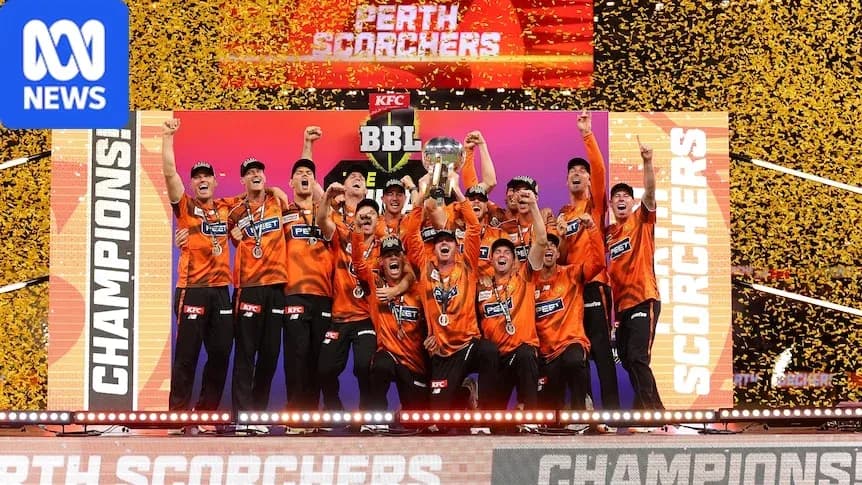
The BBL has not stood still. After years of criticism about bloated schedules and dwindling interest, the competition trimmed its fixture list. The response was clear: shorter seasons, bigger audiences, stronger playing rosters.
By the 2025/26 season, fans were watching Colin Munro, Chris Jordan, Muhammed Rizwan and Sam Billings lighting up grounds around the country. When the Test summer eased, the domestic stars rolled in too – Steve Smith, Alex Carey, Mitchell Starc. The product looked sharp again, and crucially, it still felt Australian.
Put that next to The Hundred in England, which has boasted names like Mitchell Marsh, Adam Zampa, Jos Buttler and Trent Boult. All of them have played in the BBL, or are set to appear in BBL16. The supposed talent drain has not yet materialised. If anything, the same global names are bouncing between leagues, and Australia remains a key stop on that circuit.
CA pushes hard for private money
Cricket Australia sees it differently. Earlier this month, CA confirmed it would press ahead with an opt-in model that allows states to take their BBL clubs to market, with the option to sell partial stakes or entire franchises to private investors.
For CA chief executive Todd Greenberg, the urgency is real.
“There are opportunities now for our best Australian players to play in other leagues at the same time potentially with bigger salary caps. So when we talk about should we wait for two years or four years? No, we can't wait,” Greenberg said.
“Those challenges are on our doorstep today. So we've got to make some decisions about how we compete.
“We’re a relatively small country in a big global sport. So it's incumbent on us to make decisions that we can compete with elsewhere and that's exactly what we're doing.”
In his view, the global T20 arms race is already in full swing. The Hundred in the UK, the SA20 in South Africa, and other emerging tournaments are raising salary caps and attracting investors. If Australia does not follow, CA fears the BBL will slip from the top tier of leagues and become a stepping stone rather than a destination.
A split across the states
That vision has not landed evenly across the country.
Cricket NSW has been the most outspoken critic of the current privatisation model, with Cowan one of the prominent voices calling for restraint. Queensland Cricket has also stepped carefully, signalling caution rather than open resistance.
“We will closely monitor the sales process and at this stage, intend to retain 100 percent ownership of the Brisbane Heat, but of course remain open to private investment at the appropriate time,” Qld Cricket Chair Kirsten Pike and CEO Terry Svenson said in a statement.
That is a watch-and-wait position, not a rush to cash in.
In Victoria, the mood is very different. Cricket Victoria has embraced the move and is set to become the first major test case for the new era, with the Melbourne Renegades to be put on the market and sold in full.
“Private investment will unlock value for reinvestment across Victorian cricket, from the grassroots through to the elite game,” Cricket Victoria Director Shaun Richardson said.
Two states, two philosophies: one wary of losing control of a prized asset, the other eyeing a windfall to pour back into its pathways and infrastructure.
The last stand of the original eight?
Behind the boardroom language and strategic positioning lies a simple reality: the BBL is on the brink of structural change.
CA and the state associations will continue negotiations in the lead-up to BBL16 and WBBL12, seasons that are likely to be the final chapter for the league in its current, eight-franchise, fully state-owned form.
On one side sits the promise of fresh capital, bigger salary caps and a stronger hand in the global market. On the other sits Cowan’s warning: once you sell, you cannot easily buy back the soul of a competition.
Australian cricket now has to decide which risk it fears more.